
10 criteria for selecting an orthopedic and spine CRO.
Not all CROs understand the nuances of musculoskeletal device trials. Under EU MDR 2017/745, orthopedic and spine studies demand in-house clinicians, registry integration, ISO 14155:2026 compliance and PRO-certified platforms.
These criteria matter most when you choose a specialist medical device CRO in Europe to run your clinical investigation, CER and PMCF under the EU MDR.
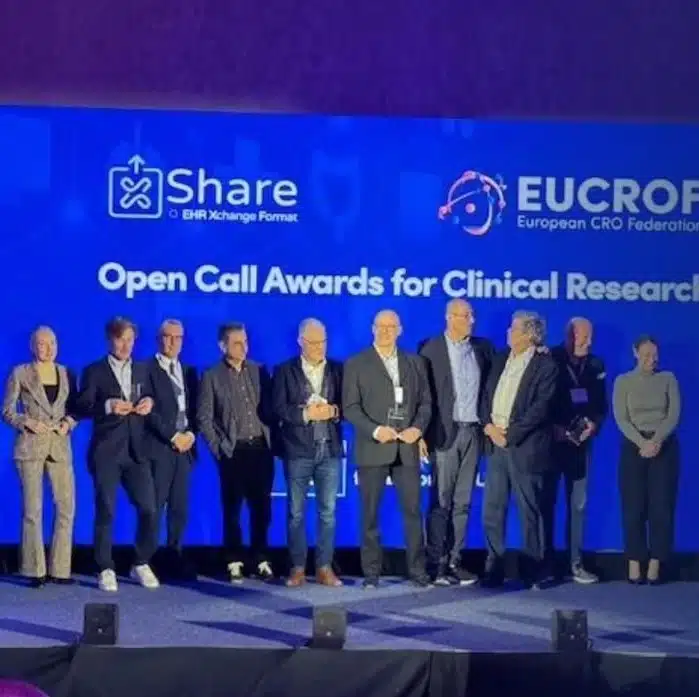 Platinum Award 2026
Eclevar MedTech and Milo took the Platinum Award at xShare & EUCROF.
Top prize in the xShare x European CRO Federation "EHDS & Clinical Research" Open Call, awarded to Eclevar MedTech and its Milo Health platform, presented at the EUCROF 2026 conference in Amsterdam.
Horizon Europe · Grant Agreement No. 101136734 · Amsterdam, 2 Feb 2026
Orthopedic and spine sponsors.
Implant makers rely on Eclevar for clinician-led trials, registry integration and PRO-grade data. Read all client success stories.





Ortho and spine trials designed by a surgeon and ex-reviewer.
Dr Nikhil Khadabadi (MD, MS, MRCS), CMO for Orthopedics and Spine, brings over 15 years of orthopedic surgery across the UK, Germany, UAE and India to every trial we design and execute. A former TÜV SÜD reviewer and Director of Clinical Innovation for the Milo Healthcare platform, he builds musculoskeletal evidence the way a Notified Body reads it.
Criteria 1 to 5.
A CRO should have expertise in your product type and therapeutic area, and apply the right regulations and standards, customised to your device.
Understanding of regulatory frameworks
Comprehensive command of EU MDR 2017/745 and device-equivalence rules, including pre-market and Early Feasibility Studies across multiple EU jurisdictions.
Experience with regulatory submissions
A proven track record with Notified Bodies and Competent Authorities, and an internal full-time study start-up team, not subcontracted resources, across France, Germany, Spain and the UK.
Clinical knowledge & in-house expertise
Orthopaedic surgeons, spine specialists and musculoskeletal researchers on staff, not borrowed clinical advisors brought in only at protocol design.
Compliance with GCP
Robust SOPs aligned with ISO 14155:2026, plus ISO 13485 for devices, ISO 27001 for cybersecurity and full GDPR compliance.
Efficient patient recruitment
Access to databases, EHR interoperability, patient-advocacy relationships and AI-powered site selection that predicts enrollment before launch.
Criteria 6 to 10.
Established clinical site networks
Strong relationships with leading centers across France, Germany, Spain and the UK, cutting activation time by an average of 6 to 8 weeks versus building a network from scratch.
Advanced data collection (EDC/eCRF)
Data integrity to 21 CFR Part 11 and ISO 14155:2026. MILO EDC adds automated data-quality checks, CDISC-ready export, multi-language support and an inspection dashboard.
Patient-reported outcomes (PRO)
Around 70% of spine and orthopedic trials include a PRO measure, so an ISO-certified PRO platform is critical. MILO ePRO enables native questionnaires, mobile-responsive surveys and real-time notifications.
Patient safety & adverse-event monitoring
Real-time adverse-event monitoring, rapid reporting per MDR Articles 87 to 90, risk-mitigation strategies and contingency planning for unexpected safety signals.
Financial stability & multinational reach
Backing sufficient for long-term PMCF programs. Eclevar is venture-capital backed with proven capabilities across four EU countries.
What each criterion protects.
Reduces delays, rejection risk and costly protocol amendments.
Ensures accurate trial design and high-quality, credible data.
Accelerates timelines and reduces per-patient costs.
Protects patient welfare and keeps the study MDR-compliant throughout.
Ensures accuracy, traceability and regulatory acceptance.
Enables seamless execution across multiple countries.
How Eclevar meets all ten.
- Regulatory expertise in EU MDR, Early Feasibility Studies, PMCF and Notified Body interactions.
- In-house clinical team with orthopedic and spine specialists (MD, MS, MRCS).
- MILO EDC platform, ISO 13485 and 21 CFR Part 11 compliant, with MILO ePRO mobile-responsive surveys.
- Established site networks across France, Germany, Spain and the UK, with AI-powered recruitment and site selection.
- Venture-capital financial backing and 165+ trials managed for EU MDR submissions.
- A full study start-up team entirely in-house, with DSMB experience for Class IIb and Class III implant investigations.
Our content, signed Eclevar.
Whitepapers, client testimonials and publications produced by our teams and partners (BSI, TÜV SÜD, RegenLab).
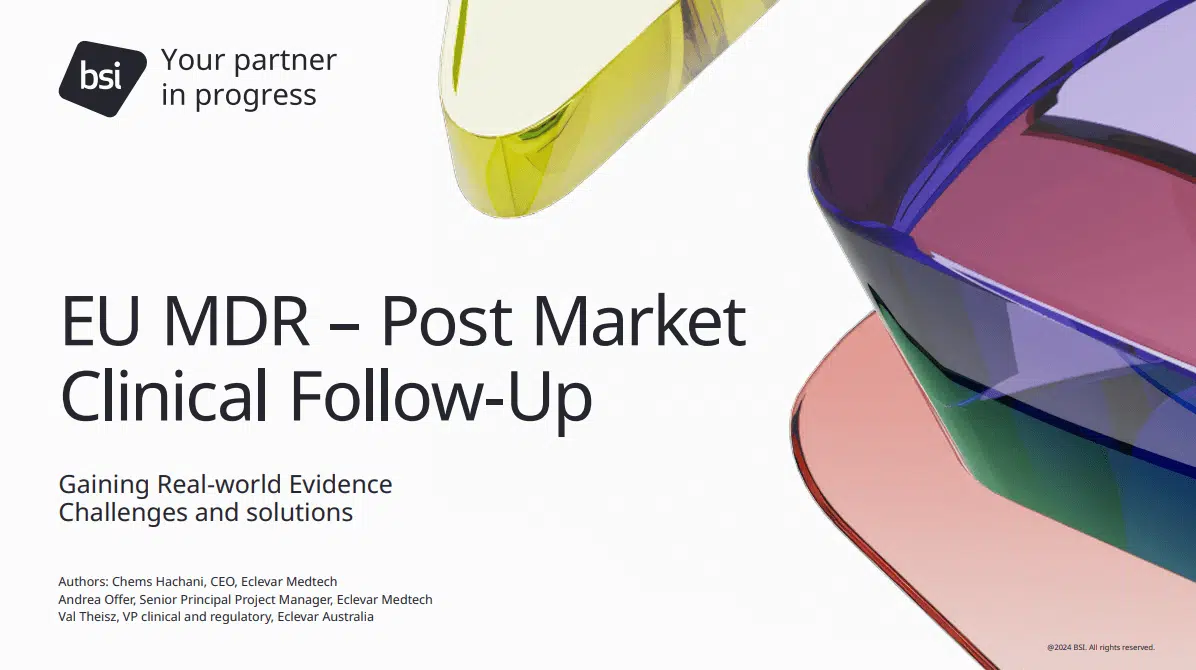
A BSI and Eclevar whitepaper on the EU MDR.
Written with Notified Body BSI: a practical reading of the clinical evidence expectations under EU MDR 2017/745, directly relevant to orthopedic and spine devices.
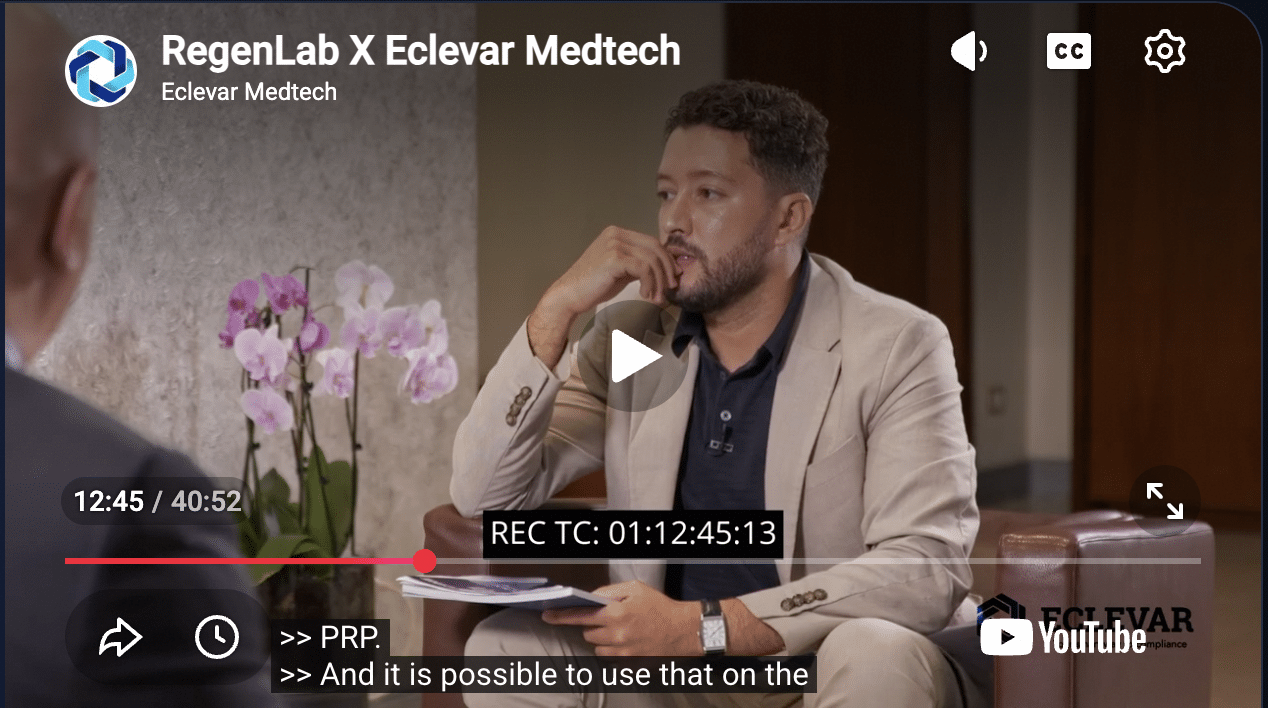
A client's live testimonial on Eclevar's capability to run complex trials.
Eclevar manages RegenLab's PMCF program on chronic wound devices. This is a randomized study of 160 patients across 14 sites in 5 EU countries, covering both diabetic foot ulcer (DFU) and venous leg ulcer (VLU) indications, combining Eclevar's ISO 14155 clinical expertise with the Milo Studio platform.
« Eclevar, with its tailor-made approach and advanced Milo Studio platform, represents a major strategic asset. »Antoine Turzi, CEO, RegenLab
Choosing an ortho CRO, answered.
What makes an orthopedic and spine CRO different from a general CRO?
Musculoskeletal device trials demand in-house orthopedic and spine clinicians, national implant registry integration (NJR, EPRD), ISO 14155:2026 compliance and PRO-certified platforms. A generalist that borrows clinical advisors only at protocol design rarely captures these nuances.
Why does in-house clinical expertise matter for spine and orthopedic trials?
Orthopaedic surgeons, spine specialists and musculoskeletal researchers on staff design trials and endpoints correctly. Borrowed advisors brought in only at protocol stage cannot provide the same continuity or frontline judgment during the study.
How important are patient-reported outcomes (PRO) in spine and orthopedic trials?
Around 70% of spine and orthopedic clinical trials include at least one PRO measure, so an ISO-certified PRO platform is critical. MILO ePRO supports native questionnaire creation, mobile-responsive surveys and real-time notifications.
Should the CRO have a full-time study start-up team?
Yes. Look for an internal, full-time study start-up team rather than subcontracted resources, with established site networks across countries such as France, Germany, Spain and the UK to cut activation time.
Why does financial stability matter when selecting a CRO?
PMCF programs run for years, so the CRO must have the financial backing to see them through. Eclevar is venture-capital backed with proven capabilities across four EU countries.
Run your ortho or spine trial with a clinician-led CRO.
Tell us about your implant, endpoints and target markets. We will show you how a specialist meets all ten criteria and give you a clear, costed plan.
Book a free consultation