Germany × Structural Heart · Clinical Programs

Structural Heart Clinical Trials in Germany

Assess whether Germany is the right country for your structural heart program, identify centers that can recruit and contract, and define the regulatory, imaging and evidence model before start up. Avoid country delays caused by weak site selection, the wrong German route, or imaging and endpoint data that cannot support the CER.

EUCROF Platinum Award 2026 · xShare Open Call, clinical data innovation Led by Dr Mark Da Costa, cardiac surgeon and former Notified Body reviewer German sites, submission, imaging, core lab, adjudication and PMCF
The program Five decisions a German study turns on
Structural heart program decisions in GermanyA generic illustrative structural heart implant, not representing a specific manufacturer or commercial device, at the center of five connected decision domains: centers and recruitment, the German regulatory route, imaging and core lab, endpoint adjudication, and the CER and PMCF evidence the study must eventually support.Illustrative structural heart implantCenters and recruitmenteligible patients, not volumeGerman routeMDR, MPDG, ethicsImaging and core labeligibility and endpointsEndpoint adjudicationreconciled before analysisCER, PMCF and PSURwhat the evidence must support
The team

The team accountable for your German structural heart program

Cardiovascular clinical leadership and German clinical operations, named before you commit a site. The contracted team is confirmed for each device, program and country.

Dr Mark Da Costa

Chief Operating Officer and Head of Cardiovascular

NB experience Former Notified Body team leader and senior clinical reviewer

Cardiac surgeon

400+cardiovascular devices assessed during his former Notified Body reviewing career

Mark leads clinical and regulatory strategy for cardiovascular and structural heart programs, combining 25 years of consultant cardiac surgery experience with first hand senior leadership experience inside a Notified Body.

  • Cardiovascular clinical evidence strategy
  • Structural heart and Class III programs
  • Notified Body review and deficiency support

Susanne Höfer

Head of Clinical Operations, DACH region

DACH region

European multicenter program delivery experience

Susanne leads clinical operations across Germany, Austria and Switzerland: feasibility, site activation, monitoring strategy and operational escalation.

  • DACH clinical operations
  • Site feasibility and activation
  • Monitoring strategy and site performance

Sébastien Meier Piantanida

Chief Data Officer

Sébastien leads the data architecture, case report form design, and the reconciliation of imaging, safety and adjudication data within the clinical database.

On a German programpatient anchored data model, imaging and event reconciliation, and the statistical analysis plan.

Jimmy Andrew Hayek

Head of Quality and Compliance

Jimmy provides quality oversight of study documentation, device accountability records, deviations and documentation traceability.

On a German programquality controls at country start up and during conduct, and documentation traceability for the evidence that reaches the CER.

Former positions are stated for biographical context only. Eclevar MedTech is independent and is not affiliated with or endorsed by any Notified Body. The engagement team and individual responsibilities are confirmed for each program according to the device, study design, countries and contracted scope. Executive team

Four pillars

Structural heart services in Germany, four pillars

Figure 1 From Germany feasibility to regulatory evidence
PROGRAM MAPFrom Germany feasibility to regulatory evidenceOne connected method, from the country decision to the documents your Notified Body reads.01Germany fit02Route03Centers04Imaging05Adjudication06Follow up07CER · PMCF · PSUREach step is designed against the next one, sites are chosen for the evidence model, imaging for adjudication, follow up for the CER.Eclevar MedTech · Structural Heart · Germany
PillarDelivery
Country and routeGermany fit assessment, regulatory pathway (MDR/MPDG, ethics, authority and DMIDS support) and country start up plan.
Centers and recruitmentGerman center landscape and prioritized site shortlist, investigator identification, outreach strategy and feasibility engagement, recruitment model.
Evidence modelEndpoints and follow up design, imaging and core lab model, endpoint adjudication and event reconciliation.
Execution and outputsSubmission, contracts, activation, monitoring, data management, statistics, PMCF and CER integration.
Who this is for

Designed for sponsors who

  • are adding Germany to a multinational structural heart program
  • are planning a TAVI, mitral or tricuspid study
  • need German centers able to recruit and contract
  • require high quality imaging and independent adjudication
  • need a German structural heart PMCF or long term follow up program
  • have already selected Germany but need to confirm the country can deliver the required recruitment, imaging and follow up
  • are responding to an evidence gap or a Notified Body request for additional clinical data
Typical starting situations

Where you are, and where to start

Where you areStart here
You have a protocol but no German centersGermany Structural Heart Feasibility
You have sites but no confirmed submission routeGerman Route and Start Up Assessment
You need imaging and adjudicationCore Lab and CEC Design Package
You need long term evidenceGermany Structural Heart PMCF Program
You are adding Germany to a multinational trialGermany Structural Heart Feasibility
Your Notified Body requested more evidenceStructural Heart Evidence Remediation

Structural Heart Evidence Remediation: the Notified Body response process and the substantive evidence remediation strategy are delivered through Eclevar's dedicated Notified Body deficiency and cardiovascular evidence services. This page covers the application of that work in Germany only.

The deliverable

Germany structural heart feasibility and evidence assessment

A successful structural heart program in Germany depends on connecting the right centers, regulatory route, imaging, adjudication and long term evidence model, before the first site is selected.

We assess whether Germany is the right country for your structural heart program, identify the centers and the route, and define the imaging, adjudication and follow up model before study start up. The recommendation can be go, no go or conditional, with the conditions stated.

Figure 2 Go, conditional or no go
THE DELIVERABLEGo, conditional or no goEvery Germany Structural Heart Assessment ends in one of three recommendations, with the conditions stated.GoGermany fits the population, the sitesand the evidence plan.ConditionalGermany is suitable if route, imaging,contracting or recruitment risks areresolved.No goAnother country or another evidencemodel is more appropriate.An honest no go protects your program as much as a go.The recommendation is independent, it is not conditioned on Eclevar delivering the study.Eclevar MedTech · Structural Heart · Germany

An honest no go protects your program as much as a go. The recommendation is independent, it is not conditioned on Eclevar delivering the study.

What the sponsor sends

What we need to start

  • device family, intended indication, development stage, synopsis or protocol, CE status, target population
  • endpoints, imaging requirements, follow up duration, target number of sites and patients, current evidence gaps, target regulatory and PMCF objectives

A mutual CDA can be executed before document exchange, and materials are handled through Eclevar's controlled document sharing process.

What the sponsor receives

The assessment deliverables

BlockDeliverables
Country and routeGerman center landscape and prioritized site shortlist, German regulatory route, ethics and authority pathway.
Sites and recruitmentCenter and investigator shortlist, documented eligible patient assumptions and evidence based recruitment scenarios, start up risks.
Evidence modelImaging and core lab model, adjudication requirements, endpoint and follow up review, PMCF and CER integration plan.
CommercialWork packages, timeline, budget.

Request a confidential Germany assessment

Why Germany

Why Germany for structural heart

Structural heart valueExecution risks
Established specialist centers with structural heart research experienceCenter competition
Experienced interventional teamsContracting delays
Multidisciplinary heart teamsNarrow eligible populations
Advanced imaging capabilityReferral leakage
Access to complex populationsInvestigator workload
Strong follow up infrastructureImaging transfer constraints
Registry and hospital data potentialRadiation assessment
Payer and reimbursement relevanceLong term retention and high site costs
Germany is valuable for structural heart when the centers are selected for more than procedure volume. Research capacity, referral access, contracting readiness, imaging quality and follow up reliability matter equally.
Device families

Device families and program types

Structural heart programs in Germany span TAVI and THV, transcatheter mitral repair and replacement, transcatheter tricuspid repair and replacement, left atrial appendage closure, PFO and ASD closure, paravalvular leak closure, valve in valve and emerging transcatheter implants, each with a distinct population, procedural risk profile, imaging need, typical endpoints, follow up and study phase.

Regulatory route

German route by study type

Study typeGerman routeDelivered through
Pre market Class III investigationArticle 62 assessment; authority and ethics; full investigational dossierSubmission in Germany
CE marked PMCF with added proceduresArticle 74 assessment; German notification or ethics routeSubmission in Germany, PMCF in Germany
Observational PMCFGerman classification; ethics, data and site pathwayPMCF in Germany
Registry or retrospectiveData governance and hospital pathwayPMCF in Germany
Investigator initiated researchArticle 82 or national route assessmentSubmission in Germany

Indicative routing, subject to protocol specific assessment and verification at the date of submission.

Figure 3 The German route by study type
REGULATORY ROUTEThe German route by study typeThe route is a property of the protocol, not of the device, it is confirmed at the date of submission.Study typeLikely German pathwayDelivered throughPre market Class III investigationArticle 62authority and ethics, full investigational dossierSubmission in GermanyCE marked PMCF with added proceduresArticle 74German notification or ethics routeSubmission in Germany · PMCF in GermanyObservational PMCFCase specificclassification, ethics, data and site pathwayPMCF in GermanyRegistry or retrospectiveData pathwaydata governance and hospital pathwayPMCF in GermanyInvestigator initiated researchArticle 82or national route assessment under MPDGSubmission in GermanyIndicative routing only, every study is confirmed by a protocol specific assessment at the date of submission.Eclevar MedTech · Structural Heart · Germany
Site feasibility

Site and investigator feasibility

German Structural Heart Site Feasibility Report: each center scored on the dimensions below.

Score dimensionScore dimension
Annual procedure volumeCT and echo capability
Eligible populationICU and surgical backup
Indication specific experienceFollow up infrastructure
Competing studiesContracting history
PI commitmentRealistic activation date
Research coordinator capacityRecommended center mix
High procedure volume does not automatically translate into study recruitment. The eligible population is filtered by anatomy, risk, indication, heart team decision and competing trials.

The output is not a directory. It is a German center landscape and a prioritized site shortlist matched to your protocol. Investigator work is delivered as investigator identification, outreach strategy and feasibility engagement.

Figure 4 The German structural heart site scorecard
SITE FEASIBILITYThe German structural heart site scorecardEvery candidate center is scored 1 to 5 against the protocol, not against its reputation.Center A · highest procedure volumeNot selectedClinical volume5/5Eligible population3/5Research capacity2/5Imaging capability4/5Contracting readiness1/5Follow up reliability2/5Competing studies2/5Activation risk2/5High volume, but weak contracting, follow up and coordinatorcapacity.Center B · research ready profileSelectedClinical volume3/5Eligible population4/5Research capacity4/5Imaging capability4/5Contracting readiness4/5Follow up reliability4/5Competing studies4/5Activation risk4/5Slightly lower volume, deliverable recruitment, imaging andretention.Procedure volume alone does not qualify a center.Illustrative scoring for method demonstration only, no real centers, volumes or identities are shown.Eclevar MedTech · Structural Heart · Germany
Patient recruitment

Recruitment is modeled center by center

The structural heart recruitment funnel runs through the referral network, the heart team decision, the screening funnel, anatomical eligibility, frailty, competing treatment options, procedural scheduling, consent timing, screen failures and follow up retention. Recruitment is modeled center by center, from the eligible population down, not from procedure volume, and presented as documented eligible patient assumptions and evidence based recruitment scenarios with stated assumptions, not as guarantees.

Figure 5 The structural heart recruitment funnel
RECRUITMENTThe structural heart recruitment funnelRecruitment is modeled center by center from the eligible population down, never from procedure volume.Annual proceduresTarget indicationAnatomical eligibilityHeart team decisionStudy eligibilityConsentEnrolled patientEach step removes patients:· referral network and heart team decision· anatomy, risk and frailty· competing treatment options and trials· screen failures and consent timing· scheduling and follow up retentionProcedure volume is not recruitment.Recruitment is presented as documented eligible patient assumptions and evidence based scenarios, never as guarantees.Eclevar MedTech · Structural Heart · Germany
Imaging and core lab

Imaging and core lab

Structural heart imaging spans transthoracic and transoesophageal echo, CT, angiography, fluoroscopy, procedural imaging, discharge, 30 day, annual and long term durability assessment. Key questions: site read or central read; blinded or unblinded; independent core lab; eligibility confirmation; image transfer workflow; DICOM pseudonymization; inter reader variability; adjudication reconciliation; and handling missing or non evaluable imaging.

This page defines what imaging the German program needs. The core lab and adjudication execution, read models, charters and reconciliation, is delivered through Eclevar's cardiovascular core lab and adjudication service.
Figure 6 From site imaging to statistical analysis
IMAGING AND ADJUDICATIONFrom site imaging to statistical analysisOne controlled pipeline, so the same clinical event never exists in three inconsistent forms.01Site imaging02DICOM transfer03Core lab read04CECadjudication05EDCreconciliation06StatisticalanalysisCONTROL POINTSPseudonymizationNon evaluable imagingReader disagreementEvent reconciliationThese four points are where structural heart data is most often lost, each has an owner, a charter and a reconciliation rule.Eclevar MedTech · Structural Heart · Germany

Request a confidential Germany assessment

Endpoint adjudication

Endpoint adjudication

Adjudication domains: mortality, stroke, bleeding, vascular complications, acute kidney injury, pacemaker implantation, rehospitalization, valve thrombosis, reintervention, structural valve deterioration and device deficiency.

Site reported outcomes, core lab findings and adjudicated events must be reconciled before analysis. Otherwise, the same clinical event may exist in three inconsistent forms.

VARC-3

VARC-3 and study specific endpoints

This page covers how VARC-3 is applied in a German structural heart program: timing, component level reporting, composite endpoints, independent adjudication, imaging dependencies, device specific adaptation, and endpoints beyond TAVI for mitral and tricuspid programs. It does not restate the definitions.

This page describes the German application of VARC-3. The canonical definitions and endpoint taxonomy are maintained on the dedicated VARC-3 endpoints page.
Safety and follow up

Safety and follow up

Structural heart safety covers procedural complications, device related and access site events, neurological events, conduction disturbances, bleeding, renal injury, rehospitalization, thrombosis, reintervention and long term durability. Follow up typically runs discharge → 30 days → 6 and 12 months → annual → extended durability, with the duration set by the device, claim, phase, failure mode, PMCF commitment and regulatory expectations.

PMCF and registries

PMCF and registry models

German structural heart PMCF spans prospective cohort, post market investigation, long term follow up extension, existing registry, hospital data network, retrospective review and hybrid programs.

Structural heart PMCF must be selected according to the residual uncertainty. Durability, rare neurological events, device thrombosis and generation changes do not require the same evidence model.

PMCF in Germany · Cardiovascular PMCF model.

Data and biostatistics

Data management and biostatistics

The data model is patient anchored: anatomy, procedure, implanted device and configuration, imaging, clinical events, reinterventions, follow up and survival status. Statistics cover sample size, event driven design, composite endpoints, time to event, competing risks, repeated imaging, missing follow up, site effects, device generation analysis, external controls and registry comparisons, supported through Eclevar's validated clinical data environment where applicable.

Evidence integration

CER and benefit risk integration

Clinical study output → CSR → PMCF Evaluation Report → CER update → PSUR → RMF → benefit risk → claims and IFU.

The study should be designed around the document decisions it must eventually support, not only around a publication endpoint.

Cardiovascular Clinical Strategy and CER.

Figure 7 The study does not end at the CSR
EVIDENCE INTEGRATIONThe study does not end at the CSREvery design decision propagates into the documents your Notified Body will read.ClinicalstudyCSRPMCFEvaluationReportCERPSURRMFClaims andIFUWhere the Notified Body reads your evidenceDesign the study around the document decisions it must support, not only around a publication endpoint.Eclevar MedTech · Structural Heart · Germany
Ways to engage

Ways to engage Eclevar

EngagementBest forOutput
Germany Structural Heart AssessmentEarly country decisionRoute, sites, evidence and budget
Site and Investigator FeasibilityCenter selectionShortlist and recruitment model
Study Design PackageProtocol conceptCIP, endpoints, imaging and SAP
Full Service Germany StudyEnd to end execution, including adding Germany to an existing European trialSubmission through reporting
Core Lab and CEC PackageIndependent review neededCharters, workflow and reconciled outputs
Structural Heart PMCF and Study RescueCE marked implant or delayed programLong term evidence program or recovery plan

Request a confidential Germany assessment

Selected experience

Selected European structural heart experience

CaseProgram summary
Case 1 · TAVI multicountry reimbursement programOngoing program, currently enrollingDevice: transcatheter aortic valve implantation (TAVI) platform of a global structural heart manufacturer. Program challenge: generate reimbursement grade clinical evidence across multiple European countries, with endpoints, follow up and data standards able to support payer requirements and the MDR clinical evaluation in parallel. Eclevar intervention: design of a multicenter reimbursement clinical study, endpoint and follow up model, prioritized site network across leading European cardiology centers, and start up coordination combining cardiovascular clinical expertise with independent data oversight. Intended evidence output: a costed, executable study design package, a prioritized and engaged network of leading cardiology centers, and a reimbursement evidence framework integrated with the sponsor's MDR clinical evidence obligations.
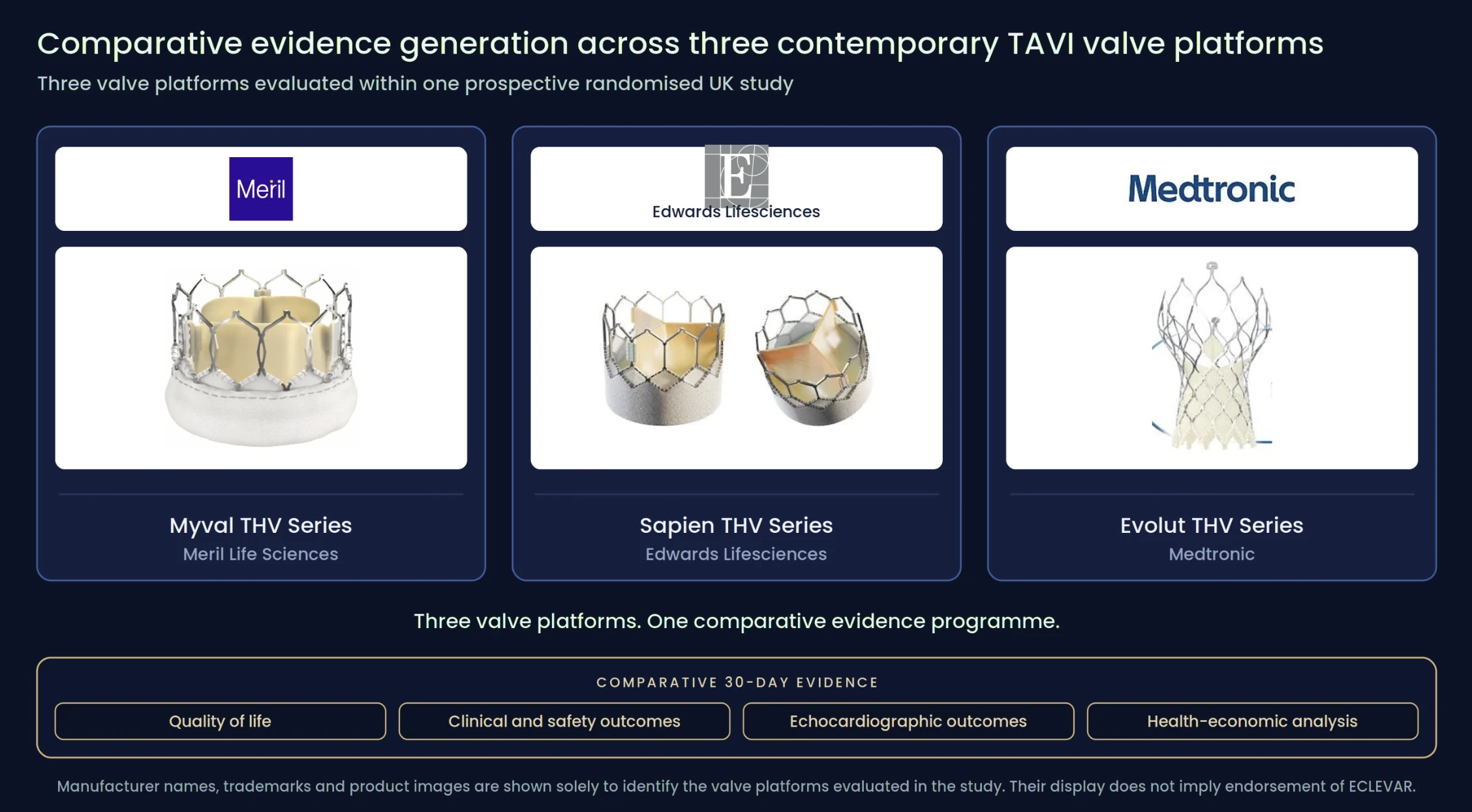
Figure 8 Comparative evidence generation across three contemporary TAVI valve platforms, Meril Life Sciences
Three transcatheter aortic valve platforms shown side by side, Myval, Sapien and Evolut, above four comparative 30 day evidence domains: quality of life, clinical and safety outcomes, echocardiographic outcomes and health economic analysis.

Manufacturer names, trademarks and product images identify the valve platforms evaluated in the study. They do not imply endorsement of Eclevar by, or affiliation with, Meril Life Sciences, Edwards Lifesciences or Medtronic.

Timeline and cost

Timeline and cost drivers

Timeline drivers: the Article 62, 74 or 82 route, protocol maturity, device readiness, authority and ethics review, radiation assessment, contracts, insurance, core lab setup, imaging transfer, site capacity and patient eligibility.

No universal German structural heart timeline or cost is published. Contracting, core lab setup and long term follow up frequently drive both more than the formal review does.

Cost drivers: number of centers, procedural complexity, patient volume, follow up duration, imaging frequency, core lab, CEC, monitoring intensity, safety burden, device logistics, translations and long term retention.

Frequently asked

Questions sponsors ask first

Why run a structural heart study in Germany?
Germany combines high volume specialist centers, advanced imaging and access to complex structural heart populations. Its value depends on selecting centers with proven research capacity, referral access and long term follow up, not procedure volume alone.
Does every German structural heart study follow Article 62?
No. The route depends on CE mark status, intended purpose alignment, study objective and additional procedures. Pre market investigations may follow Article 62, while certain post market studies may fall under Article 74 or another applicable route. Every routing is confirmed by a protocol specific assessment at the date of submission.
Does a TAVI study need an independent core lab?
Not automatically. The need depends on whether imaging supports eligibility, primary endpoints, device performance, durability or independent regulatory interpretation.
Can Germany be added to an existing European study?
Yes, but the protocol, German submission route, ethics materials, site contracts, data flows, insurance and safety workflow must be assessed before country activation.

Is Germany the right country for your structural heart program?

Share your protocol, device status and study objectives. Receive the center landscape and prioritized shortlist, the German route, the imaging and adjudication model, and a costed plan, before the first site is selected. A mutual CDA is available before any exchange.

Request a confidential Germany assessment

Reforming Clinical Evaluation of Medical Devices in Europe