
Interventional cardiology CRO

Coronary device clinical trials in the U.S. and Europe

ECLEVAR is a medical device CRO for coronary stent, drug-coated balloon and catheter trials. We help sponsors select cath labs, coordinate independent imaging review and follow patients through the study endpoint.

Cardiovascular client experience. Our work includes a UK valve study with Meril Life Sciences and a French vascular implant program with Perouse Medical, part of Vygon Group.

From cath lab feasibility to the study report
  1. Site feasibilityEligible patients, operator experience and follow-up capacity
  2. Study start-upProtocol, site training and a core lab test case
  3. Trial deliveryScreening, imaging reads and clinical event review
  4. Clinical study reportReconciled endpoints and findings for the sponsor

Clinical study design for coronary stents, balloons and catheters

A drug-coated balloon, a stent and a delivery catheter can all be used in the same cath lab. They ask different questions of the operator, the patient and the study team.

Drug-eluting stents and scaffolds

If a patient has two lesions treated during percutaneous coronary intervention (PCI), which one does a later procedure belong to? We define the unit of analysis, distinguish planned staged procedures from repeat interventions and record which device treated each lesion.
Drug-coated balloons

A drug-coated balloon (DCB) study needs a plan for cases that also require a stent. We specify how to record lesion preparation and unplanned stenting, which angiograms go to independent review, and what that adds to the site budget.

Delivery and support catheters

For a device intended to reach or cross a target lesion, the operator’s definition of success matters. We agree what counts as an attempt, how to document a device exchange and which follow-up is justified by the intended use. Sites can then train against the same examples.

How ECLEVAR delivers a coronary device trial

You can commission a feasibility assessment, a defined part of the trial or study delivery through the final report. We agree responsibilities with your team and existing vendors at the outset.

Feasibility and site selection
We ask cath labs for eligible cases by indication, competing studies, image-transfer arrangements and follow-up capacity. You receive a ranked site shortlist, enrollment assumptions and a budget showing how slower recruitment would affect the study. Procedure volume alone can hide a small eligible population. How we assess site feasibility
Protocol and start-up
From an early feasibility series to a pivotal investigation, we align the protocol, consent materials, case report forms and monitoring plan. Before enrolling the first participant, we can test a representative case with the site, the imaging core lab and the clinical events committee to find gaps in data collection.
Enrollment and monitoring
Your project manager reviews screening failures, missed follow-up and outstanding images with the sites. You can see which center needs training, which records are outstanding and who owns the next action. A plan for reviewing the first cases gives you a decision point before opening further sites.
Analysis and reporting
We reconcile procedure records, imaging reads and event decisions before database lock. The statistical outputs and clinical study report use agreed definitions and document missing observations. For post-market clinical follow-up (PMCF), we can map the findings back to the evidence gaps in your clinical evaluation.

Coronary trial endpoints and independent imaging review

Consider a participant treated at two lesions who later returns to another hospital. The first procedure record, the images and the new hospital notes each answer a different part of the same question.

Cath lab recordMatch patient, vessel, lesion and device identifiers.Verified procedure record
AngiogramsThe core lab checks image quality and reads the specified views.Lesion-level imaging measurements
Follow-up eventCollect outside records. Submit the case for adjudication when the charter calls for it.Classified clinical event
One reconciled datasetThe study statistician links these inputs before database lock and analysis for the clinical study report.

For a stent study, the protocol may specify target lesion failure or an imaging measure such as late lumen loss. We agree the definition and timing with the sponsor, then specify the source records and imaging views each center must supply. ARC-2 coronary endpoint definitions · FDA example of clinical and angiographic endpoints (PDF) · Explore endpoint adjudication and core lab support

What we delivered for Meril and Perouse Medical

Two cardiovascular clients have made their work with ECLEVAR public. The Meril study shows how we coordinated imaging across trial arms. The Perouse studies show how we collected comparable outcomes across device variants.

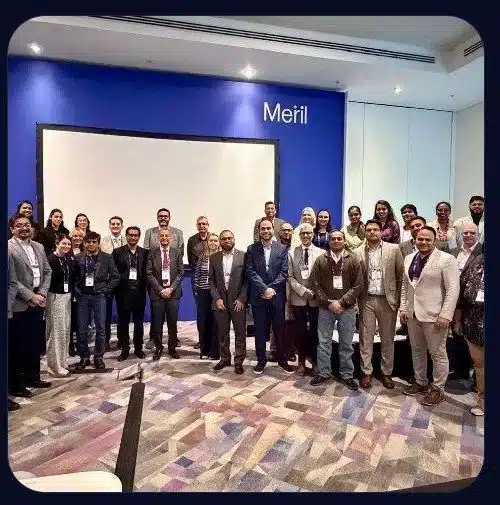
Meril Life Sciences and ECLEVAR colleagues together at a cardiovascular clinical program meeting
Meril Life Sciences and ECLEVAR colleagues at a cardiovascular clinical program meeting.

Structural heart United Kingdom

Meril Life Sciences

For a prospective randomized comparison of three transcatheter aortic valve platforms, ECLEVAR coordinated a shared assessment schedule, imaging review and adjudicated events. The 30-day assessment covered quality of life, clinical and safety outcomes, echocardiography and health economics. For a coronary sponsor comparing devices, the relevant experience is keeping assessments comparable across study arms.

Read the Meril case study

Vascular implants France

Perouse Medical, Vygon Group

Six registered retrospective studies covered vascular patches, surgical grafts and implantable venous ports. ECLEVAR helped establish common definitions and follow-up across the portfolio. The POLYPATCH registry entry names Perouse Medical as sponsor and ECLEVAR as a collaborator. A coronary manufacturer planning PMCF faces a similar question about which outcomes can be compared across device variants.

View POLYPATCH on ClinicalTrials.gov Read the portfolio case

Running a coronary device trial in the U.S., EU and UK

For a transatlantic study, we can use a common protocol and imaging charter while budgeting site contracts, submissions, training and monitoring by country.

United States

Our U.S. clinical consultants help prepare questions for FDA and assess prospective investigators. For a significant-risk investigation, we plan for an investigational device exemption (IDE) and institutional review board approval before the study starts. Your proposal covers selected centers, local start-up and the site monitoring plan.

FDA guidance on IDE applications

European Union

For an EU MDR clinical investigation, we compare candidate sites in France, Germany, Italy and Spain. We review eligible lesion volumes, follow-up access, national submission requirements, language needs and monitoring coverage. Your proposal shows which assumptions each investigator still needs to confirm.

European Commission clinical investigations

United Kingdom

Our UK cardiovascular experience includes the Meril valve study. For sites in Great Britain, we review whether the Medicines and Healthcare products Regulatory Agency (MHRA) requires notification for the proposed device and intended use, then map ethics review, contracts and site activation. You receive a UK start-up estimate that you can compare with the EU and U.S. options.

MHRA guidance for Great Britain

Your U.S. and European clinical study team

A U.S. clinical development question and an Italian site start-up question need different experience. Your proposal names the accountable project manager, the regional leads and the specialists available for your study.

Dawn Heimer

Dawn Heimer, PhD

U.S. Clinical Consultant

Clinical research leader specializing in clinical development strategy, program planning, and FDA interactions. Guides programs through critical milestones, complex situations, and regulatory challenges from early development to market authorization. Conveniently located in the Northeast corridor.

Michael McGuffey

Michael McGuffey

U.S. Clinical Consultant

Michael’s experience at Medtronic spans vascular devices and surgical robotics. The Endurant stent graft study identifies him as Clinical Research Manager. For a coronary program, his proposed contribution is to review operator training, first-case oversight and the criteria for opening additional sites.

Endurant study document (PDF)

Teresa Cosentino

Teresa Cosentino

Lead Clinical Research Associate, Italy

Teresa works with Italian investigators from site qualification through close-out. In a feasibility review, she can test whether a cath lab’s screening estimate holds up against its competing studies, coordinator time and ability to follow patients after discharge.

Meet the ECLEVAR clinical team

Request a coronary device study proposal

Send your device description, indication, intended markets and next decision date. An early synopsis is enough to open the discussion. If you already have a protocol or selected sites, we will build the estimate around the work your team has done.

How to compare the budget

When comparing MedTech CRO proposals, check what each site visit and independent review includes. We itemize CRO fees, site payments, imaging reads, event review and travel. A timetable and staffing plan show how image volume, follow-up duration and outside hospital records affect the route to first enrollment and final reporting.

Two ways to scope imaging

If your scientific question permits it, we can cost imaging in every participant alongside a defined imaging substudy. You can see which endpoints each design supports, what participating sites must do and how the options affect the budget before you choose.