First Clinical Use / Europe
Take the device from preclinical readiness to controlled first clinical use, with the investigator, procedure, safety controls and next decision defined beforehand.
Eclevar is a specialist medical device CRO. We assess whether a first-in-human study is justified, judge whether Europe is the right location, select the country, investigator and site, design and submit the investigation, oversee the first cases, and turn what they show into a next-stage decision.
The decision
First clinical use should not begin because the prototype exists, an investor milestone was announced, or a country looks like a fast submission route. The question is whether the residual uncertainty can be addressed in a human being, at a justified risk level, with controls that make the result interpretable. Five domains decide it.
Figure 1 · Five conditions before the first case
Authorized and controlled first clinical use
The engagement
A structured working review of your device, your evidence and your intended first case, ending in a written position.
Terminology
A first-in-human medical-device study involves the first clinical use or exposure of the investigational device, or of the relevant new device configuration, in human participants. Because the term is used differently across programs, state precisely what is first: the device, configuration, indication, procedure or intended use. A new indication or minor design modification is not automatically first-in-human.
FIH describes a development stage rather than a standalone regulatory category. The label alone does not determine the applicable regulatory route, risk classification, sample size, oversight model or submission procedure.
FIH and FDA EFS are not synonyms. An EFS does not necessarily involve the first clinical use of the device, and a first-in-human study is not automatically an FDA EFS. A European clinical investigation should not be described as an FDA Early Feasibility Study conducted in Europe, and is not a European equivalent of the EFS Program.
Location
Europe is a clinical and operational choice. It is right when the investigators, population, pathway and infrastructure match the device, and when the observations will carry weight in the next global development decision.
Europe is not selected as a regulatory shortcut. A location that produces first cases nobody can interpret is not a fast route to the next stage. It is a route that has to be run twice.
Selection
These are not three procurement decisions in sequence. The country sets the legal and ethics route, the site sets what can be measured and rescued, and the investigator sits inside the result. Choose them together, or one undoes the others.
Figure 2 · European FIH country and site selection framework
Gate. A country is carried forward only when all three layers hold.
| Decision factor | Why it matters for FIH | Evidence required |
|---|---|---|
| Investigator expertise | First cases may be dominated by operator experience. | Procedure volume, training and relevant clinical experience. |
| Patient population | Early observations must address the intended clinical question. | Protocol eligibility and site-level availability. |
| Site infrastructure | Rescue, imaging and procedural support may be safety-critical. | Facilities, team, equipment and escalation pathways. |
| Submission pathway | Requirements vary by jurisdiction and investigation type. | Current regulatory and ethics assessment. |
| Device logistics | First-use devices require strict traceability and control. | Importation, storage, accountability and returns. |
| Follow-up and data quality | Early safety and functionality may require intensive follow-up. | Visit capacity, retention plan and source documentation. |
Figure 3 · Investigator expertise without investigator bias
Technique, case selection and complication management in comparable procedures.
The procedure performed in accordance with the approved protocol and applicable study instructions, with deviations recorded.
Interpretable first-case evidence
Participant rights, safety and well-being take priority over program timelines or commercial milestones.
Contemporaneous, specific and complete records.
Training, rescue, imaging and follow-up matched to the endpoints.
Reputation, enthusiasm and availability may be relevant, but they do not replace procedural relevance, protocol discipline, independent safety judgment, documentation quality and site capability. We also do not publish approval timelines by country, and no country is universally fastest: review practice differs by jurisdiction, device and investigation type, and timing is assessed per device.
Design and control
A first-in-human protocol earns its length by what it controls, not by what it collects. The design starts from the decision the sponsor must make next and works back to the smallest set of observations that can support it. Each early case then runs as a cycle: it opens with a readiness confirmation and closes with a written decision.
Figure 4 · Controlled first-case learning cycle
Device status, eligibility, informed-consent completion, study-team readiness, training, imaging, rescue capability and required documentation are confirmed before enrollment and before the investigational procedure begins.
The procedure performed in accordance with the approved protocol and applicable study instructions, with handling, sequence and difficulty captured as they occur.
Peri-procedural safety and device performance reviewed by the medical monitor within a defined window.
Clinical, engineering and data review of what the case showed, including deficiencies and deviations.
Continue, modify, pause or stop, recorded with the reasoning and the evidence behind it.
The sponsor and designated study-governance functions document whether the protocol-defined conditions for proceeding have been met. If a proposed device, protocol, procedure or risk-control change requires regulatory or ethics submission, notification, authorization or approval, that requirement is completed before the change is implemented and, where required, before enrollment continues.
On sample size. There is no standard number. Participant numbers, number of sites, staging and review intervals depend on the clinical objective, device maturity, risk profile, endpoints, participant population and the decision the study must support. ISO 14155:2026 informs the design, conduct, recording and reporting of medical-device clinical investigations, but it does not prescribe a standard first-in-human sample size or independently determine the applicable regulatory route.
Safety
Escalation designed after the first problem is not escalation. Three things are settled beforehand, in writing.
Not every first-in-human study requires a DSMB or CEC. Independent oversight should be determined from the risk profile, population, endpoints and study design, and justified in the protocol rather than assumed.
Delivery
One program governance across four phases, integrating clinical operations, regulatory submissions, data management, biostatistics, medical oversight and decision reporting.
We assess the evidence, clinical rationale and residual risk, then build the country and investigator model.
Addresses: whether first clinical use is justified, and where.
You receive: a readiness position, the named gaps, and a route recommendation.
We write the protocol, endpoints, statistical approach and escalation framework, then run regulatory and ethics submissions through each country's own national process. Requirements vary by country and device, and there is no single uniform European approval.
Addresses: whether the study can be authorized in each chosen country and executed as designed.
You receive: the authorizations obtained, and sites activated against contracts, documentation, training and local readiness.
We run training and proctoring, activation, pre-case readiness confirmation, monitoring and data review between cases.
Addresses: whether each case is controlled enough to be interpretable.
You receive: documented decisions between cases, with device accountability throughout.
We consolidate clinical, device and operational findings with their limitations and residual uncertainty stated.
Addresses: what the first cases actually support.
You receive: a recommendation for feasibility, pivotal or further development, with planning assumptions for the next stage.
The endpoint of the engagement is not database lock alone. It is a documented decision on what should happen next.
Experience
The disciplines that make first cases interpretable are the ones that hold a multicountry European investigation together.
Figure 5 · One protocol across three national environments
A randomized, open-label, crossover pre-market clinical investigation of an investigational compact female hydrophilic intermittent catheter against CE-marked comparators, run across Denmark, France and the United Kingdom with home-use periods and structured follow-up.
Public registration: NCT05814211.
This was a European pre-market clinical investigation, not a first-in-human study or an FDA Early Feasibility Study. It is presented as evidence of transferable multicountry delivery disciplines, not FDA acceptance or sponsor endorsement. No clinical outcomes are presented, and the contribution described is limited to Eclevar's contracted scope.
Accountability
Not every person shown is assigned to every program, and advisory input does not replace the sponsor's or investigator's regulatory and clinical responsibilities. The final engagement team and individual responsibilities are confirmed for each program according to the device, therapeutic area, countries, study design and contracted scope.

Chief Operating Officer and Head of Cardiovascular
Mark leads cardiovascular clinical strategy, combining 25 years of Consultant Cardiac Surgery experience with first-hand senior leadership Notified Body experience.

Chief Medical Officer, Orthopedics and Spine
Contributes orthopedic and spine expertise to operator learning, procedure definition and investigator qualification, with Notified Body experience.

Strategic Clinical Advisor, US Clinical Operations
Dawn provides strategic input on US clinical operations, helping test whether the proposed European operating model is practical for a US sponsor and remains connected to US site, sponsor and delivery expectations. She works with Eclevar's central clinical, medical, data and project leadership as an external strategic advisor.
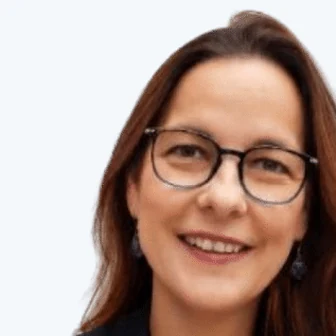
Head of Clinical Operations, DACH Region
May lead country, site and first-case delivery: site qualification against the procedure, activation sequence, monitoring around early cases, and readiness confirmation.

Chief Data Officer
Provides input on data management and biostatistics: capture designed so early observations are analyzable, a review cadence fast enough to inform the next case, and analysis suited to small datasets.
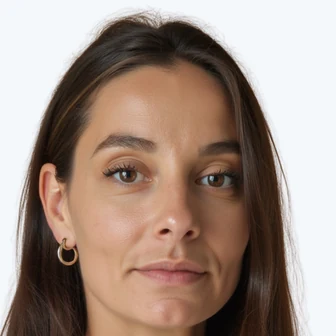
Project Delivery Lead, France and United Kingdom
Supports program delivery across the four phases: plan, dependencies, escalation between cases, and a single point of contact.
Next step
The engagement in full: what you send, and what you get back.
The review is advisory. It does not produce a regulatory authorization and does not commit any authority or ethics committee to a position.
Official content
Whitepapers, client voices and publications produced by our own teams and by our partners: BSI, TÜV SÜD and RegenLab.

Whitepaper · BSI x Eclevar
Written with the notified body BSI: a practical look at what clinical evidence has to show under EU MDR 2017/745, and at the quality bar the data have to clear. It is the same bar a European dataset meets before it is put in front of any reviewer.
PMCF studies · Regenerative medicine · 5 EU countries
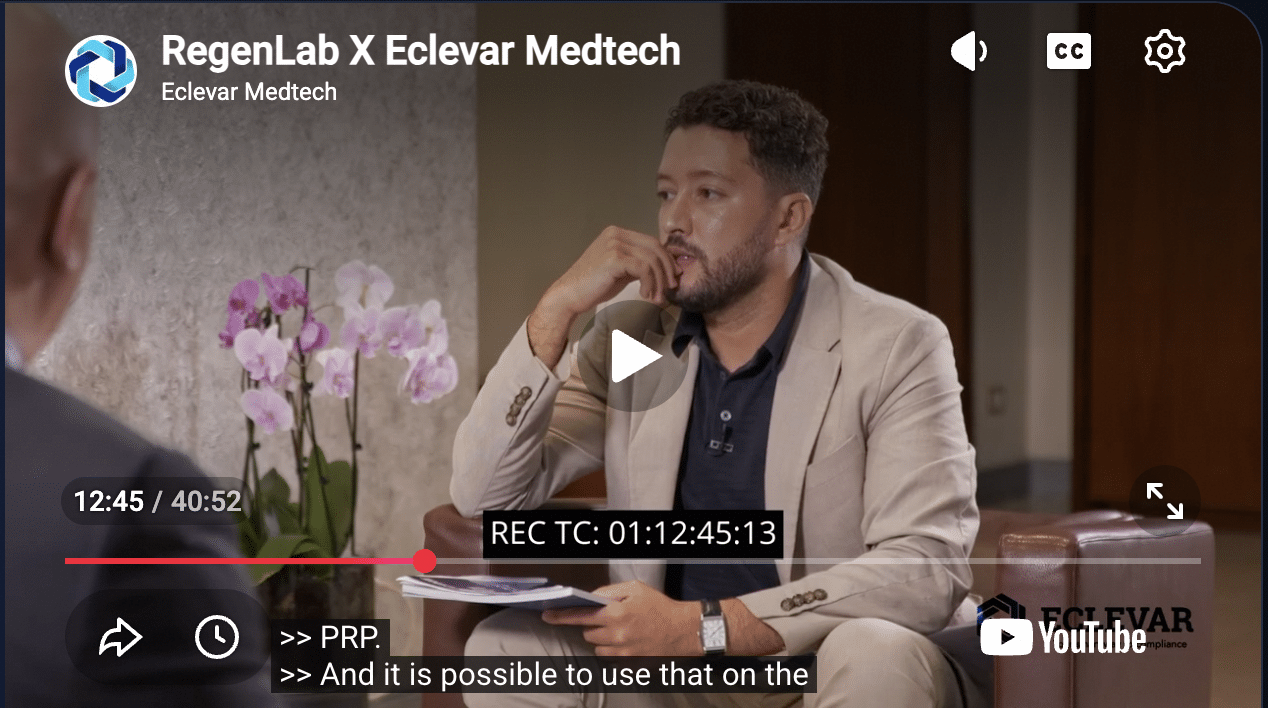
Eclevar runs RegenLab's PMCF program on chronic wound products. It is a randomized study of 160 subjects across 14 centers in 5 EU countries, covering both diabetic foot ulcer and venous leg ulcer. The partnership combines Eclevar's ISO 14155 expertise with the Milo Studio platform, from study design through to the final study report.
« Eclevar, with its tailored approach and the advanced Milo Studio platform, represents a significant strategic advantage. »Antoine Turzi, CEO, RegenLab
Coming soon. Breakthrough Device Technology under the EU MDR, a whitepaper written with TÜV SÜD, co-authored by Dr Nikhil Khadabadi.
FAQ
A first-in-human medical-device study involves the first clinical use or exposure of the investigational device, or of the relevant new device configuration, in human participants. Because the term may be used differently across development programs, the sponsor should state precisely what is first: the device, configuration, indication, procedure or intended use. A new indication or minor design modification is not automatically first-in-human. FIH describes a development stage rather than a standalone regulatory category.
Yes. A US medical device company may conduct first clinical use or another clinical investigation in Europe, subject to the applicable European and national requirements. The decision should depend on clinical, regulatory and operational fit, not an assumption that Europe is faster or less demanding.
No country is appropriate for all devices. The right country is one where the procedure is performed routinely by suitable investigators, the protocol-eligible population is accessible, the infrastructure supports the procedure and its rescue options, and the submission pathway can be met. We build a country model per program, not a ranking.
There is no standard number. Participant numbers, number of sites, staging and review intervals depend on the clinical objective, device maturity, risk profile, endpoints, participant population and the decision the study must support. ISO 14155 and the applicable regulatory requirements inform how the design is justified and controlled; they do not prescribe one standard first-in-human sample size.
No. First-in-human describes a development stage. An FDA Early Feasibility Study is a limited clinical investigation of a device early in development, typically involving a small number of subjects to evaluate the device design concept with respect to initial clinical safety and device functionality; its findings may guide device modifications. FDA's EFS guidance addresses IDE applications for early feasibility studies of significant-risk devices, including certain first-in-human studies. An EFS does not necessarily involve the first clinical use of the device, and an FIH study is not automatically an FDA EFS. A European clinical investigation should not be described as an FDA EFS conducted in Europe or as a European equivalent of FDA's EFS Program.
Clinical data generated outside the United States can be considered by FDA, subject to its requirements on the acceptance of such data, including conduct standards, participant protection and data quality. Whether a dataset proves useful depends on the design, population and endpoints, so that intention is addressed while the protocol is written.
Through a defined pathway rather than case by case. Every observation is documented contemporaneously, reviewed clinically and technically, and assessed against the risk file and for regulatory and ethics impact before anything changes. Some adjustments are operational refinements within the approved protocol. Others require a formal change and, depending on the jurisdiction, submission, notification or approval before the next case proceeds.