Insight · EU MDR · Japan-EU corridor
A device approved in Japan has already cleared a demanding regulatory system and proven itself in practice. None of that transfers automatically to Europe. The task is not to start from zero, but to know precisely what carries across the corridor and what has to be rebuilt for the EU.

European Champion
Platinum Award 2026
Eclevar MedTech & Milo Health · xShare × EUCROF Open Call
Led by authority
The people accountable for your file have sat on both sides of the submission: bringing non-EU devices into Europe and assessing such dossiers from the Notified Body side.

Cardiac surgeon and former lead Notified Body reviewer at TÜV SÜD. 400+ devices CE-certified.
in LinkedIn
Former clinical reviewer at TÜV SÜD for Class III implants; PMCF and CER methodology.
in LinkedIn
CERs under MEDDEV 2.7/1 Rev 4 and EU MDR, and Notified Body deficiency response.
in LinkedInAwards, funding, accountability

Top tier at the xShare × EUCROF Open Call, awarded to Eclevar MedTech and its Milo Health platform, presented at EUCROF 2026 in Amsterdam.
The announcement →Selected through the xShare Open Call for clinical research innovation, Horizon Europe.
xShare results →Distinction confirmed by an independent third party, the CVBF, also an awardee of the xShare × EUCROF Open Call.
CVBF coverage →Trusted by global manufacturers





Proof in practice
Real programs built on endpoints and statistics that hold up with Notified Bodies and reimbursement reviewers, shown as illustration. See client success stories →
A multicentre transcatheter aortic valve implantation study across eight UK sites, feeding the clinical evidence a CER and reimbursement dossier rely on.
A within-patient crossover RCT versus marketed compact catheters. Data captured in a validated EDC to 21 CFR Part 11, under ISO 14155:2026.
Proof, not adjectives
What this guide covers
This guide sets out how to take a Japanese device into the EU under MDR efficiently: why Japanese approval does not transfer, the EU gates the manufacturer faces, how existing Japanese clinical data can be leveraged, and what has to be built specifically for Europe. The organising principle is that the corridor is an exercise in leverage, not duplication.
The corridor
The right strategy identifies the substantial evidence and learning that can support the EU dossier, and concentrates new effort only on the gaps that EU MDR genuinely requires, so the manufacturer neither restarts the evidence nor assumes it transfers untouched.
01 / 08
The starting point is to accept that the Japanese approval and the EU CE Mark are products of different systems that do not recognize each other automatically. The Japanese system has its own classification, its own evidence requirements and its own decision-making body, and EU MDR has its own, and the fact that a device satisfied one says nothing formal about whether it satisfies the other. A manufacturer who assumes the Japanese approval will smooth or shortcut the EU route is mistaken about the basic structure: Europe will assess the device on its own terms.
This does not mean the Japanese work is worthless for Europe, far from it, but it means the manufacturer has to translate rather than transfer. The clinical evidence, the technical documentation and the quality system built for Japan are valuable raw material, but they have to be reorganised, supplemented and re-argued to meet EU MDR’s specific requirements. Understanding that the EU assessment is independent, and that the Japanese material is an input to it rather than a substitute for it, is the foundation of an efficient corridor strategy.
The practical consequence is to approach the EU entry as a fresh conformity assessment that draws heavily on existing evidence, not as a recognition of an existing approval. The manufacturer maps the EU MDR requirements, identifies where the Japanese material already satisfies them, and identifies where it does not, and the gap between the two defines the actual work.
The mapping deliverable
02 / 08
EU MDR sets out a specific set of gates that a Japanese manufacturer has to clear, and they are the same in structure as for any manufacturer, but several are unfamiliar to a company whose experience is in the Japanese system. Classification deserves particular attention, because the EU rules can place a device in a different class than the Japanese system did, and the class drives the entire evidence route. Settling the EU classification early, and understanding the evidence route it implies, is the first substantive step. A clear EU MDR regulatory strategy is what keeps these gates sequenced rather than discovered one by one.
The Notified Body assessment is the gate that ultimately decides the CE Mark, and it is where the EU-specific evidence requirements are tested. A Japanese manufacturer has to present a dossier built to EU MDR’s logic, with a clinical evaluation that anticipates the questions an EU reviewer asks. A dossier that simply repackages the Japanese submission, without re-arguing it to EU requirements, meets the Notified Body unprepared; a structured MDR technical documentation review before submission is what catches the gaps a reviewer would.
The gates, in one view
03 / 08
One requirement is specific to non-EU manufacturers and easy to underestimate: a manufacturer established outside the EU has to appoint an EU authorised representative to place a device on the EU market. This is not optional and not a formality; the authorised representative has defined legal responsibilities, acts as the manufacturer’s point of contact with the authorities, and shares certain obligations, so the choice of representative and the contract that governs the relationship are substantive decisions. A Japanese manufacturer cannot enter the EU market without this arrangement in place.
Because the authorised representative carries real responsibilities, the relationship has to be set up properly rather than treated as a box to tick. The representative needs access to the technical documentation, a clear definition of the respective obligations, and the capacity to fulfill the role with the authorities, and a poorly constructed arrangement can expose the manufacturer or stall the market entry. Data protection and the handling of the manufacturer’s information in the EU sit alongside this, because operating in the European market brings the device’s data within the EU framework. These are the quiet, structural requirements that a manufacturer focused on the clinical evidence can overlook, and that an experienced corridor strategy builds in from the start.
Talk to a reviewer
Book a free scoping call with a team that has brought non-EU devices into Europe and assessed such dossiers from the Notified Body side. Get a read on what carries across.
Book a free scoping call04 / 08
The most valuable leverage in the corridor is the existing Japanese clinical data, and the question is not whether it can be used but how. EU MDR does not reject foreign clinical data, but it accepts it only where it meets the relevant standards and where its applicability to the EU context is justified. That means the Japanese data has to have been generated to a standard consistent with what EU MDR expects, broadly the good clinical practice principles embodied in ISO 14155, and its relevance to the European intended use and population has to be argued rather than assumed.
The applicability question is where Japanese data most often needs careful handling. Differences in population, in clinical practice, and in the way the device is used between Japan and Europe can affect whether the Japanese evidence supports the EU claims, and a clinical evaluation has to address these differences explicitly rather than presenting the Japanese data as if the context were identical. Where the differences are manageable and argued, the Japanese data can carry much of the EU evidence; where they are material and unaddressed, a reviewer will discount the data, and the gap reopens.
The honest strategy is therefore to appraise the Japanese data against EU requirements early, identifying what it can support and where it falls short. Some claims will be well supported by the existing data, suitably re-argued for the EU context; others will reveal gaps that the Japanese evidence cannot close, and those gaps define where new EU-relevant evidence, whether additional analysis, bridging data drawn from real-world evidence, or post-market follow-up, is needed.
05 / 08
The clinical evaluation is where the Japanese evidence is assembled into the EU case, conducted to Annex XIV Part A and reported in line with the relevant guidance. It has to demonstrate, from the available evidence, that the device achieves its intended performance and that its benefit-risk is acceptable against the European state of the art, with the clinical evaluation plan pre-dating the report and defining what sufficiency means for the EU intended use. A Japanese manufacturer’s evaluation has the particular task of integrating the existing data while justifying its applicability, which is exactly the part a reviewer scrutinises.
The state of the art in the evaluation has to be the European one, which may differ from the Japanese context the device was originally evaluated against. Current European clinical practice and the alternatives a European clinician would consider set the benchmark for the EU benefit-risk, and an evaluation that carries over a Japanese view of the state of the art will not anchor the European assessment correctly. Building the European state of the art, and measuring the device against it using the leveraged Japanese data, is what makes the evaluation an EU document rather than a translated Japanese one.
Anticipating the Notified Body’s questions is the discipline that makes the evaluation efficient. An EU reviewer will ask whether the foreign data meets the standards, whether its applicability to the EU population and practice is justified, whether the benefit-risk is anchored in the European state of the art, and whether the residual gaps are addressed. A clinical evaluation built to answer these specific questions, drawing on the Japanese evidence where it fits and filling the gaps where it does not, is what gets a Japanese device through EU review without restarting its evidence.
Close the evidence gap
Explore our PMCF service: how residual gaps map to European post-market activities that confirm performance in the EU population.
Talk to our experts06 / 08
A device new to the European market needs post-market clinical follow-up designed for Europe, because the EU evaluation will leave residual questions, and EUDAMED and the regulation expect those to be followed in the EU context. Annex XIV Part B post-market clinical follow-up maps each residual gap in the EU clinical evaluation to a specific activity, and for a device whose pre-market evidence is largely Japanese, the PMCF is often where the European-specific evidence is generated, confirming that the device performs in the European population and practice as the leveraged data suggested.
This makes PMCF an especially important part of the corridor strategy, because it is the mechanism that closes the applicability gap over time. Where the Japanese data supports the EU claims but the difference in population or practice leaves a residual uncertainty, a PMCF activity that gathers European data is exactly what resolves it, and a clinical evaluation that names that uncertainty and the PMCF that will close it presents a controlled evidence strategy rather than an unaddressed gap. The PMCF is the bridge from leveraged foreign evidence to confirmed European performance, and getting it into the right European sites depends on early feasibility and site selection.
Designing the PMCF as part of the entry strategy, rather than after certification, is what makes the corridor coherent. The residual gaps the clinical evaluation identifies, the applicability questions the Japanese data leaves open, and the European confirmation the device needs all point to specific PMCF activities, and planning them with the evaluation means the European evidence story is continuous from the leveraged Japanese data through to confirmed EU performance. A Japanese manufacturer who plans the PMCF this way completes the corridor; one who treats it as an afterthought leaves the applicability gap open under European scrutiny.
07 / 08
Several 2026 developments shape the corridor. ISO 14155:2026, the new edition of the clinical investigation standard, sets the conduct expectations for any new clinical data, including European bridging data or PMCF studies, with the dual-status nuance that presumption of conformity is preserved through the harmonized 2020 edition until the new one is cited in the Official Journal. EUDAMED is now mandatory, so a Japanese manufacturer’s device has to be registered and tracked in the EU database, an obligation with no Japanese equivalent that has to be built into the entry plan.
The well-established-technology changes of 2026, including the expansion of the categories exempt from pre-market clinical investigation and the Commission’s proposal to move toward a broad definition of well-established technology, may affect whether a given Japanese device needs new EU clinical investigation or can rely more heavily on leveraged data and clinical evaluation. A manufacturer has to assess where its device sits against these evolving provisions, because they can change the balance between leverage and new evidence generation. Tighter Notified Body scrutiny of post-market follow-up, meanwhile, raises the bar on the European PMCF that the corridor depends on.
The consistent message is that the corridor in 2026 rewards a manufacturer who understands both the leverage available and the EU-specific obligations that have no Japanese counterpart. The evidence that can be carried across, the gates that must be cleared regardless, and the European confirmation that PMCF provides all have to be planned against a current understanding of the 2026 framework. A Japanese manufacturer who plans the corridor this way enters Europe efficiently; one who assumes either that the approval transfers or that everything must be rebuilt misjudges the route in one direction or the other.
08 / 08
A Japan-to-EU corridor strategy that works shares a clear shape. It accepts that the Japanese approval does not transfer and approaches the EU as a fresh, leverage-led conformity assessment. It clears the EU gates, classification, clinical evaluation, Notified Body, technical documentation, database registration, and appoints an EU authorised representative early. It appraises the Japanese clinical data honestly, leveraging what meets EU standards and justifying its applicability while identifying the gaps. It builds the clinical evaluation against the European state of the art, and it plans European PMCF to close the applicability gap. A weaker strategy assumes the approval transfers, or needlessly restarts the evidence, and either way enters Europe inefficiently.
Illustration, from Eclevar’s practice: when a manufacturer entering the EU needed its Notified Body deficiencies resolved for a device coming from outside Europe, the work began by anticipating the deficiencies the assessor would raise and by leveraging the existing evidence where it met EU standards while building the European-specific clinical and post-market strategy. The point is that the corridor is navigated by people who understand both what carries across and what Europe requires regardless, which is exactly what lets a manufacturer enter the EU without restarting the evidence.
The encouraging reality is that a well-run corridor is far less work than starting over, provided the leverage is identified correctly. A device with a solid Japanese evidence base, appraised honestly and re-argued for the EU context, often needs only targeted new work, applicability justification, a European state-of-the-art benchmark, and a European PMCF, rather than a fresh clinical program. The skill is in distinguishing precisely what carries across from what does not, because that distinction is where both the unnecessary cost of duplication and the hidden risk of false transfer are avoided.
Red flags to avoid
Eclevar brings non-EU devices into Europe by leveraging the evidence that meets EU standards and building only what EU MDR genuinely requires, with former Notified Body reviewers on the file. See our medical device CRO services.
The corridor in one view
Carry across what meets EU standards, clear the gates that apply regardless, and confirm European performance through PMCF.
Official Eclevar resources
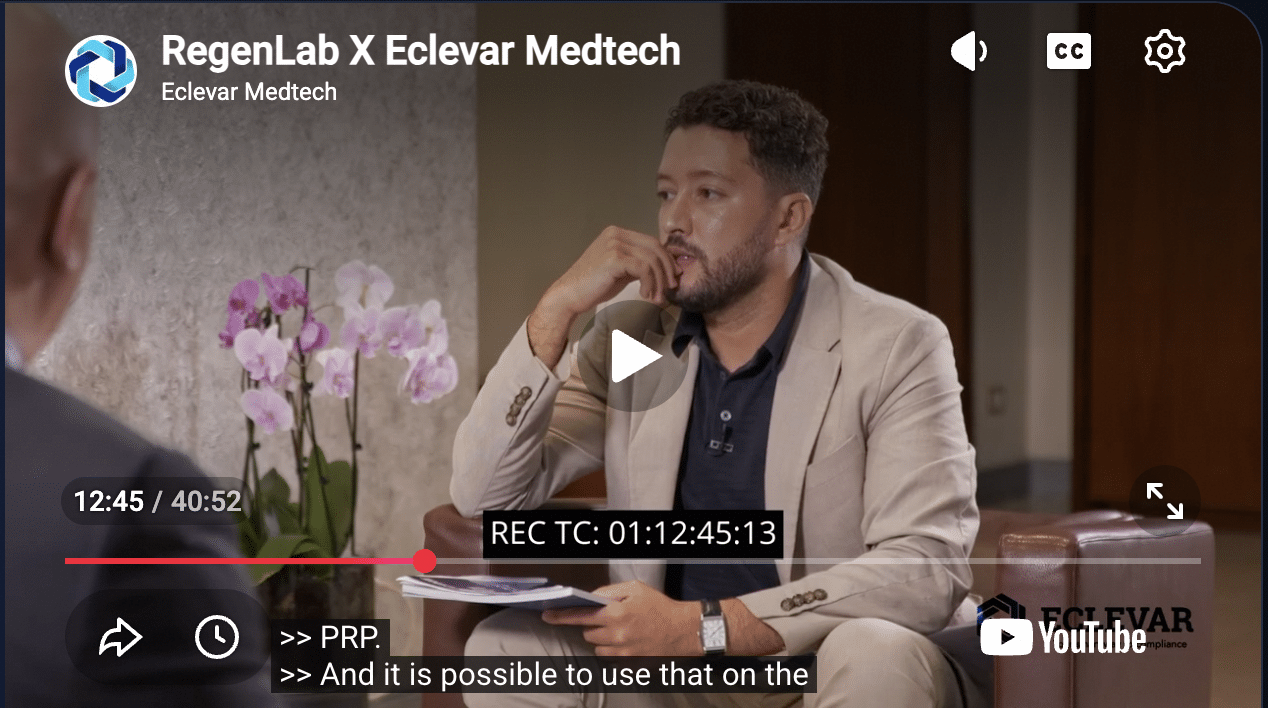
PMCF Studies · Regenerative Medicine · 5 EU Countries
Eclevar manages RegenLab’s PMCF program on chronic wound devices: a randomized study of 160 patients across 14 sites in 5 EU countries, covering diabetic foot ulcer (DFU) and venous leg ulcer (VLU) indications. The partnership combines Eclevar’s ISO 14155 clinical expertise with the Milo Studio platform.
“Eclevar, with its tailor-made approach and advanced Milo Studio platform, represents a major strategic asset.”Antoine Turzi, CEO, RegenLab
A whitepaper co-signed by BSI and Eclevar on the clinical requirements of EU MDR.
Read the whitepaper →Clinicians and a former Notified Body reviewer, named, not handed to a junior account team. Meet the full leadership team →


The corridor is an exercise in leverage: carrying across what meets EU standards, clearing the gates that apply regardless, and confirming European performance through PMCF. An expert read tells you what carries across and what Europe will require. Book a scoping call · clientcare@eclevar.com
Book a free scoping callQuestions we hear first