
Event · Paris · 19 to 22 May 2026
Meet us at EuroPCR 2026
Our consultants, including our former Notified Body expert, will map your Spanish route with you.
Book a meeting →Guide · Running a clinical trial in Spain · Real Decreto 192/2023
Spain runs under the EU MDR and Real Decreto 192/2023. The AEMPS authorises and an accredited CEIm gives the ethics opinion, in parallel, with a Spanish data law and patient-facing documents in Spanish. This guide sets out what a Spanish study requires, and what to demand of the CRO you choose.

European Champion
Platinum Award 2026
Eclevar MedTech & Milo Health · xShare × EUCROF Open Call
Written and clinically reviewed by
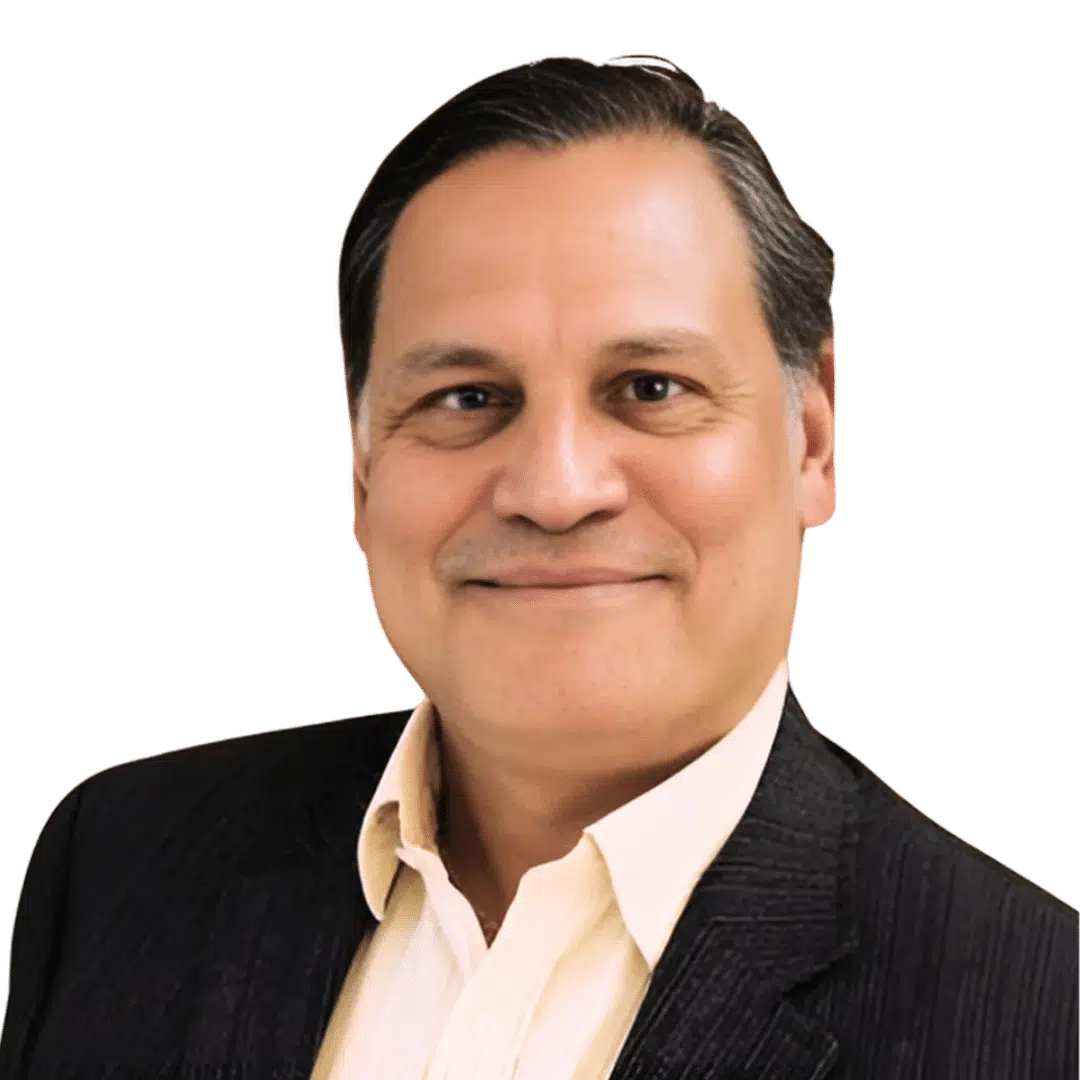
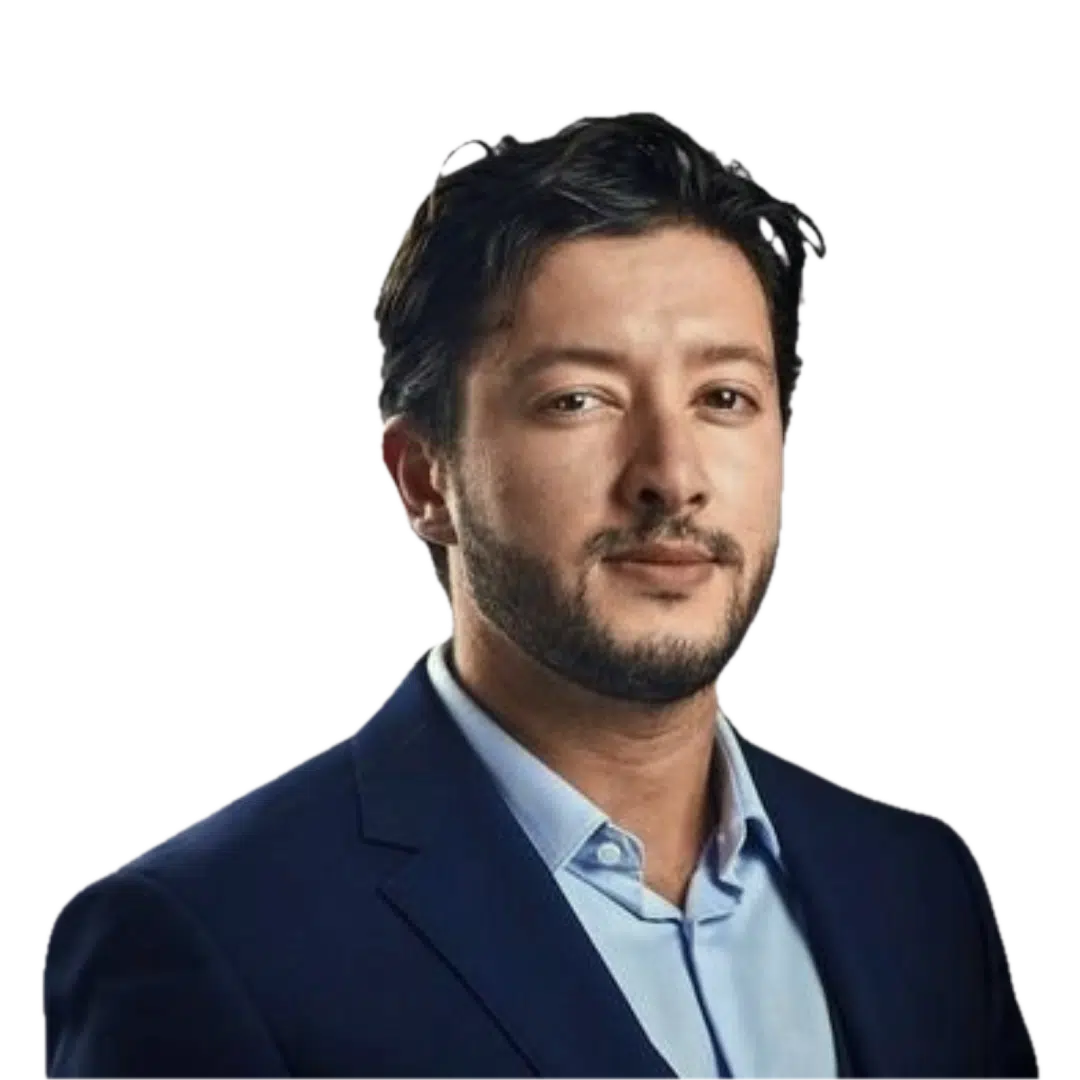
Former team leader of cardiovascular device clinical reviewers at the Notified Body TÜV SÜD, with more than 400 medical devices certified in Europe.
in LinkedIn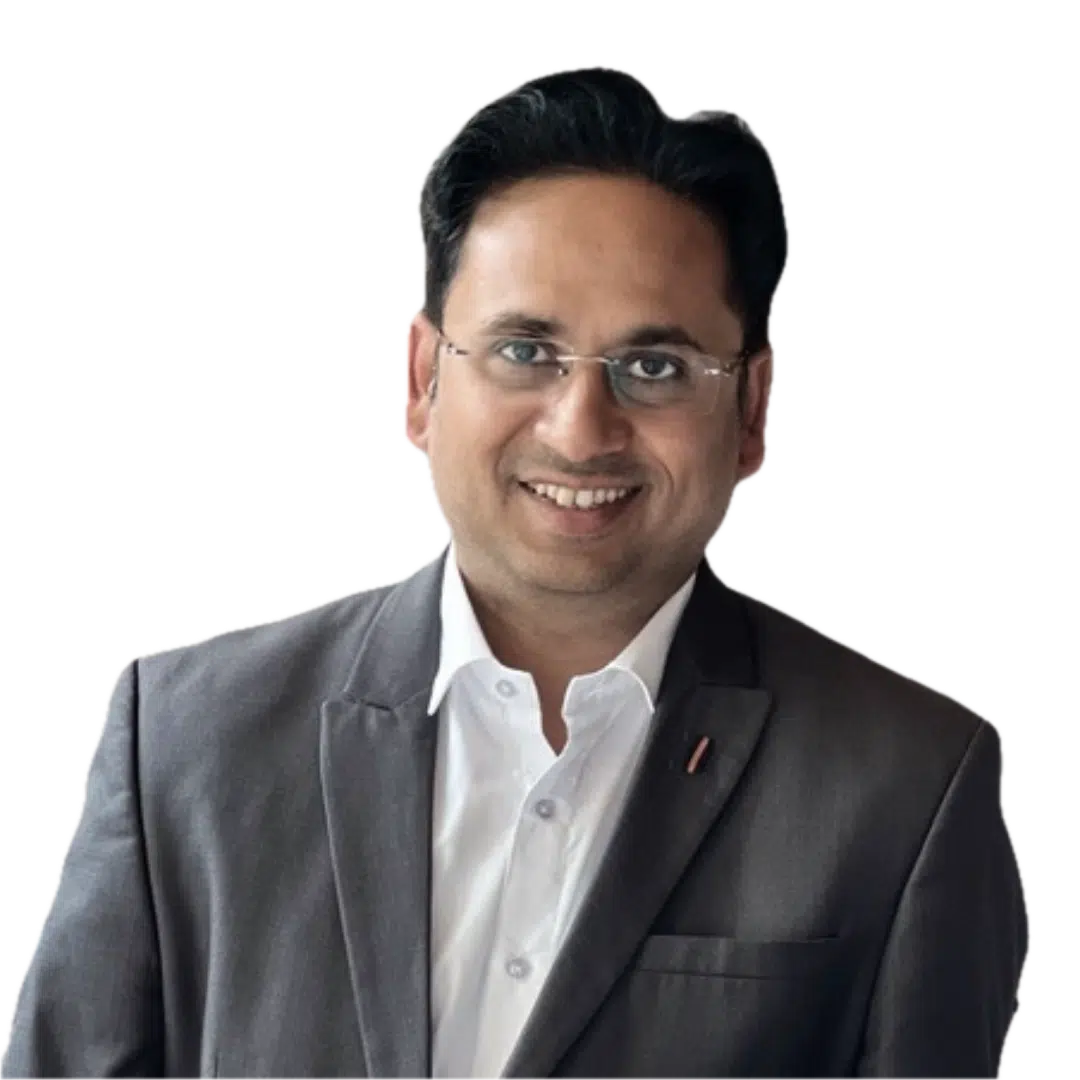
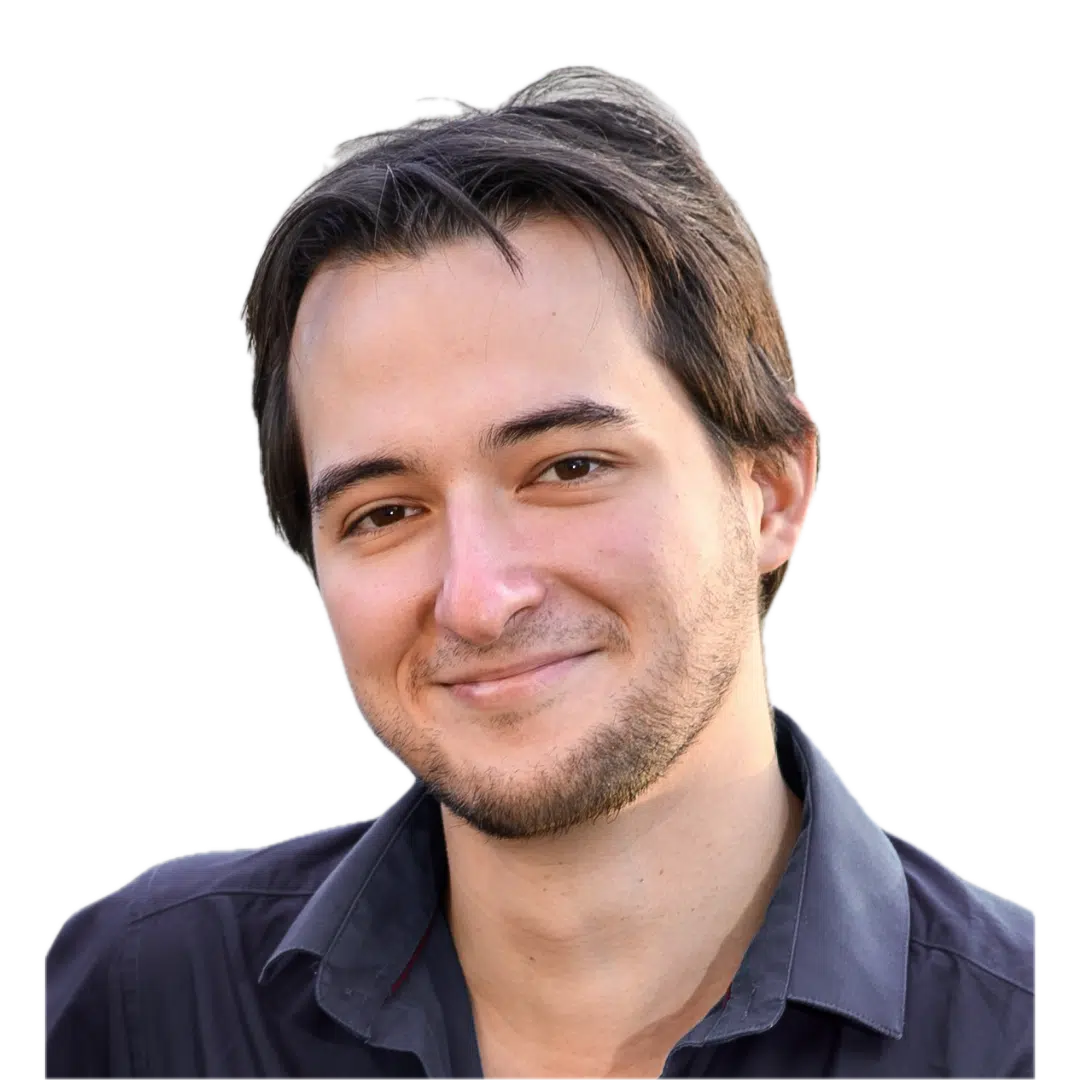
Orthopedic and spine surgeon for more than 15 years and former clinical reviewer at a Notified Body for Class III implants.
in LinkedIn Former Notified Body reviewersAEMPS & CEIm · RD 192/2023EN ISO 14155:2026ISO 13485 · 21 CFR Part 11
Awards, funding, accountability
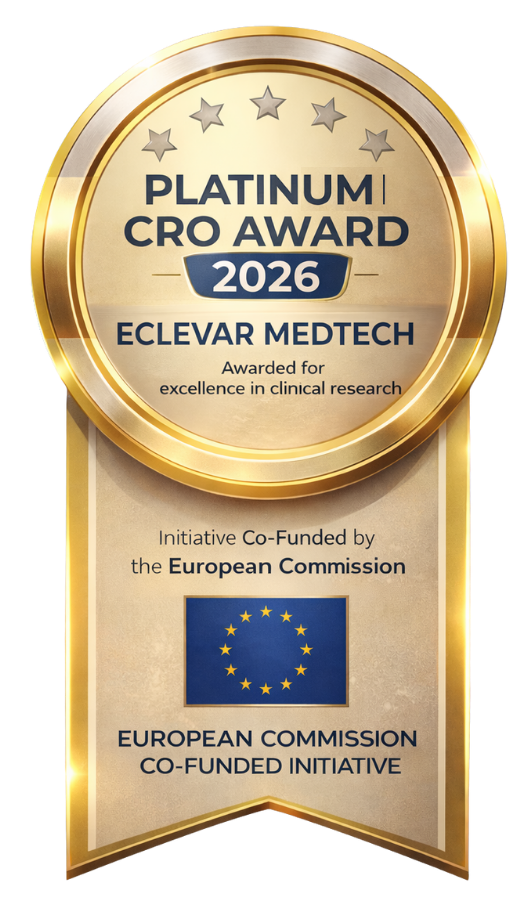
Top tier at the xShare × EUCROF Open Call, awarded to Eclevar MedTech and its Milo Health platform, presented at EUCROF 2026.
The announcement →Selected through the xShare Open Call for clinical research innovation, Horizon Europe.
xShare results →The award was reported independently by partner CVBF; the awarding bodies carry the weight.
CVBF announcement → Our investors →The Spanish market in numbers
Spanish device clinical studies over a rolling three year window. Unusually deep in cardiovascular and neurology, lighter in orthopedics, with a competitive cost base.
What this guide covers
The fourteen points
Each point separates a CRO that knows the Spanish route from one that will learn it on your study. Where a point is illustrated with a real case, it is drawn from Eclevar’s own practice.
01 / 14
Spain runs a device clinical investigation under the EU MDR, like France and Germany, but it adds a national layer a foreign sponsor cannot skip: Real Decreto 192/2023, in force since March 2023, which sets how an investigation is authorised, conducted and reported in Spain. The two gatekeepers are the AEMPS, the Agencia Española de Medicamentos y Productos Sanitarios, as competent authority, and an accredited ethics committee, the CEIm.
Spain is the fourth largest device trial market in Europe, with 267 studies over a three year window, and it is unusually strong in cardiovascular and neurology. Reaching that base means clearing the AEMPS and the CEIm, contracting with Spanish sites and producing Spanish documentation. The ones who move fast build the Spanish requirements, the language and the EU legal representation in from the start.
Regulatory basis
02 / 14
The AEMPS is the competent authority that authorises a device clinical investigation in Spain under Real Decreto 192/2023. The sponsor requests the authorisation with the dossier described in Chapter II of Annex XV of the MDR, and a fee is payable. The agency reviews the investigation plan, the risk analysis, the preclinical and technical evidence and the benefit-risk justification.
The clock is defined in the national instructions: the AEMPS has 10 days to validate and 45 days to evaluate, so a clean submission moves to a decision in roughly two months, reported as a single integrated position. A CRO whose regulatory people have reviewed devices for a Notified Body builds the file the way an assessor reads it, which keeps a study inside that window rather than stuck in questions.
Regulatory basis
03 / 14
Ethics review in Spain is run by a CEIm, a Comité de Ética de la Investigación con medicamentos, an accredited research ethics committee. A single CEIm evaluates the study and issues the favourable opinion, and the study also needs the agreement of the management of each participating center. The CEIm reports on part II, the AEMPS on part I, and the AEMPS issues one integrated position.
The submissions to the AEMPS and the CEIm are made in parallel, which keeps Spain closer to the French model than to the sequential German one. A team that builds both submissions to clear on the first pass, and that knows how a Spanish committee reads a dossier, is what stops a query on one side from stalling the other.
Regulatory basis
04 / 14
Spain runs the two reviews in parallel and reaches a decision in roughly two months: a ten-day validation and a forty-five-day evaluation. It charges an AEMPS fee, but its real advantage is downstream, where Spanish site costs are competitive, lower than the United Kingdom or Germany, and the single CEIm budget keeps per-site costs predictable.
For a cardiovascular or neurology program that needs volume, Spain often gives the most patients per euro of the major markets. Filing to the AEMPS and the CEIm together and answering inside the window is the execution that turns a defined timeline into a kept one.
| Country | Route, competent authority and cost |
|---|---|
| Spain (AEMPS) | Parallel, AEMPS and CEIm with an integrated position. AEMPS authorisation fee applies; site costs competitive. |
| France (ANSM) | Parallel, ANSM and CPP together. No competent authority fee. |
| Germany (BfArM) | Sequential, ethics first then BfArM. Fee roughly 2,000 to 9,900 EUR. |
| United Kingdom (MHRA) | Notification, 60-day assessment. Fee around 5,100 pounds per notification. |
Route and cost positions reflect public regulator guidance current at the time of writing; the exact AEMPS fee and durations depend on the device class, so confirm current figures for your study.
Regulatory basis
05 / 14
The budget of a Spanish study turns on the device risk, which sets the insurance cover required under Real Decreto 192/2023, and on the sites. Spain has a useful mechanism: a single financial budget is submitted to the CEIm per trial, covering the contracts of all participating sites, so the per-site cost is defined up front rather than negotiated piecemeal.
That value is concentrated in cardiovascular and neurology, where two of Eclevar franchises sit. A CRO that knows the Spanish centers and their investigators turns that value into site access and a realistic budget. Eclevar names the specific sites and investigators it would propose under confidentiality, matched to the device and therapeutic area.
Regulatory basis
06 / 14
Clinical data in Spain is personal health data under the GDPR and the Spanish data protection act, the LOPDGDD, the Ley Orgánica 3/2018. Spain runs its own implementation of the GDPR, so the basis, the patient information, the consent and the data flows have to be defined for Spain before enrollment, with the patient-facing documents in Spanish.
The CRO has to run its electronic data capture and data management, on the MILO platform, built to satisfy the GDPR, the LOPDGDD and 21 CFR Part 11 together, with a named data protection officer in the chain.
Regulatory basis
07 / 14
Whether your study supports a CE mark for Spain or for the wider EU, you remain accountable for outsourced clinical work, which makes your CRO a critical supplier inside your own quality system. The CRO should hold an ISO 13485:2016 certified quality management system, run investigations to EN ISO 14155:2026, and validate its data systems to 21 CFR Part 11.
EN ISO 14155:2026 sets clinical quality management in section 9.1 and risk-based monitoring in section 6.7, and the AEMPS expects investigations conducted to it. A CRO that holds the ISO 13485 certification in its own name, rather than working under a sponsor, is the one that can stand behind the chain when the auditor pulls it, as set out in quality and professional services.
Regulatory basis
08 / 14
Spanish clinical research runs through the public health system, the Sistema Nacional de Salud, organised across seventeen autonomous communities, with the leading investigators in the university and reference hospitals. Spain is unusually deep in cardiovascular and neurology, and lighter in orthopedics, which a realistic site strategy has to account for.
Securing a leading Spanish site is a relationship with a department head whose name carries weight with the AEMPS, the CEIm and the field. A team that has contracted with Spanish hospitals before, and that speaks to them in Spanish, moves through site activation far faster than one meeting the system, the regional variation and the language for the first time.
Regulatory basis
09 / 14
In an investigator initiated study the sponsor is an investigator or an academic institution, a hospital or a university, not the device manufacturer. Spain has a strong academic research base, and the investigator initiated route can access public and hospital funding that a manufacturer sponsored study cannot.
The trade-off is that the manufacturer gives up control of the protocol, the timeline and the data ownership. That is wrong for a pivotal pre-market study a manufacturer needs to own, and right when independence, cost and credibility matter more than control. Eclevar both advises manufacturers on the choice and runs the operations behind an investigator initiated study so it still meets EN ISO 14155.
Regulatory basis
10 / 14
Spain requires the sponsor to act through a legal representative in the EU, and it requires Spanish for the patient-facing and key regulatory documents: the instructions for use, the summary of the investigation plan, the patient information and consent, and the authorisation request. The investigation plan and investigator brochure may be accepted in English if the CEIm does not object.
Eclevar does not hold a Spanish legal entity, and it does not pretend to. It covers Spain through in-house Spanish-speaking CRAs, a Spanish site network and Spanish-language documentation, run from its European operation, which provides the EU legal footing the regulation requires. That is the honest model, and the one that works: people who speak to the sites in Spanish and documents the AEMPS and the CEIm accept, not a registered address that adds cost without capability.
Regulatory basis
11 / 14
A first in human or early feasibility study, or any study with additional invasive or burdensome procedures, is an Article 62 investigation that requires AEMPS authorisation and the full CEIm opinion, with the highest scrutiny on the risk analysis and preclinical justification.
A study on a CE marked device used within its intended purpose does not require AEMPS authorisation; it needs a favourable CEIm opinion and the center agreement, and if it involves invasive procedures the sponsor notifies at least 30 days before, recorded in the NEOPS database until EUDAMED is operational. Reading which route and PMCF governs before the protocol is written is a judgment a senior clinical team makes.
Regulatory basis
12 / 14
A CRO that can run a Spanish study has to be equipped on every axis: an EU legal footing that satisfies the legal representation Spain requires, Spanish-speaking regulatory and clinical people who file to the AEMPS and the CEIm and produce Spanish documentation, a monitoring team that visits Spanish sites, an EDC validated to 21 CFR Part 11 and compliant with the LOPDGDD, in-house biostatistics and medical writing, and a quality system that holds it together.
Eclevar runs this stack in house: regulatory affairs, clinical operations and monitoring with Spanish-speaking CRAs, biostatistics, data management on the MILO platform, medical writing and an ISO 13485 quality system, with PMCF and Notified Body engagement on the same team. No link is outsourced to a vendor you cannot see.
Regulatory basis
13 / 14
When you choose a CRO for Spain, the criteria are checkable. Does it have Spanish-speaking CRAs and the EU legal footing Spain requires, or does it coordinate Spain blind from another country? Has it taken devices through the AEMPS and a CEIm, and can it name the studies? Does it hold an ISO 13485 quality system and run to EN ISO 14155? Can it produce the Spanish documentation the AEMPS requires?
Eclevar answers each with evidence: in-house Spanish-speaking CRAs and a Spanish site network, a 160 patient RegenLab study that included Spain, an ISO 13485 quality system, and a former Notified Body reviewer leading cardiovascular regulatory work. The same logic, in full, sits in the guide to selecting a medical device CRO in Europe.
Regulatory basis
14 / 14
The last criterion is the one most sponsors underweight: a CRO for Spain has to be specific by therapeutic area, not generalist. An ablation catheter, a structural heart implant, a neuromodulation device and a software as a medical device do not share endpoints, investigators, centers, standards or assessor expectations. This matters more in Spain than almost anywhere, because Spain is deep in cardiovascular and neurology and thin in orthopedics.
Take structural heart, Spain deepest device field. TAVI has now treated more than 1.5 million patients worldwide, and the 2021 ESC and EACTS guidelines place it as a Class I, Level A option for patients aged 75 and over. That sets the comparator and endpoints a structural heart study has to reflect, and it differs entirely from an ablation or a neuromodulation study. Eclevar is built as therapeutic franchises, each led by a clinician of that field.
Regulatory basis

Talk to a reviewer
Bring your device class and therapeutic area. We will map the AEMPS, CEIm and site plan with you, with a clinical trial veteran and a former Notified Body reviewer in the room.
Book a scoping callThe Spanish authorisation route
The AEMPS and the CEIm assess the study in parallel, and the AEMPS issues a single integrated position that reflects both.
Generalist CRO, against the Eclevar model
Generalist CRO
Eclevar model

Proof, not logos
That study included Spanish sites, run by the team you would work with.
 RegenLab, Antoine Turzi, Chief Executive Officer
For RegenLab, Eclevar ran a complex trial across Europe that included Spain, and for Meril Life Sciences a 666 patient TAVI study. Real device investigations, not logos on a page.
What clients say
“It is my pleasure to recommend Eclevar MedTech as a scientific and clinical operations partner to any medical device company seeking evidence-led support under the EU MDR framework. Eclevar has consistently demonstrated the rare combination of regulatory rigour, clinical literacy and commercial pragmatism that our organization requires.”

“EU Notified Bodies do not automatically trust Japanese data. Eclevar translated our PMDA dossier into the language the NB needed to hear. One Q&A round. No major NCRs.”
“Eclevar MedTech helped us with the CER and PMCF plan and defined the strategy to tackle the Notified Body questions and non-conformities.”

Two senior experts in every file
A CRO built by people who have assessed device dossiers from the inside and run trials across Europe, including in Spain, not learned the work on yours.
The Eclevar approach
We do not coordinate Spain blind from another country. Regulatory affairs, clinical operations and monitoring run with Spanish-speaking CRAs, on the EU legal footing the regulation requires, producing the Spanish documentation the AEMPS and the CEIm accept.
Biostatistics, data management on the MILO platform, medical writing and an ISO 13485 quality system sit on the same team, with PMCF and Notified Body engagement alongside. No link is outsourced to a vendor you cannot see. See how the model is set out for the medical device CRO.
Eclevar covers Spain through in-house Spanish-speaking CRAs and a Spanish site network, naming the sites and investigators it would propose under confidentiality, not on a public page.

Senior people, named and accountable

Where to meet us in 2026
Event · Paris · 19 to 22 May 2026
Our consultants, including our former Notified Body expert, will map your Spanish route with you.
Book a meeting →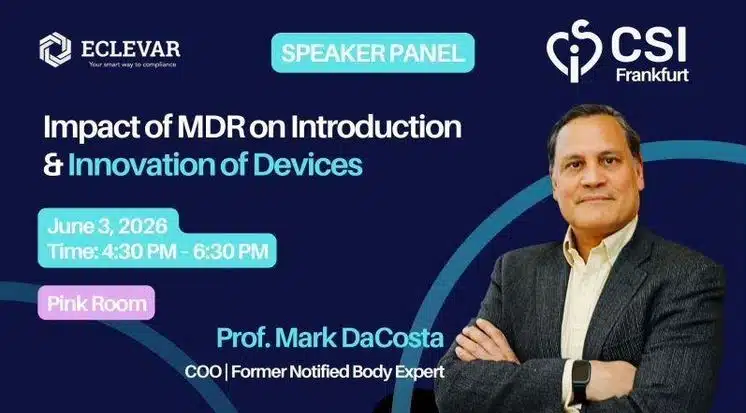
Speaker panel · Frankfurt · 3 June 2026
Dr Mark Da Costa on the panel, on what MDR changes for cardiovascular evidence.
Book a meeting →Spain · on request
Bring your device and therapeutic area; we map the route, the sites and the budget with you.
Talk to us →Bring your device and your therapeutic area. Get an AEMPS, CEIm and site plan from senior people, including a former Notified Body reviewer.
Book a free scoping callQuestions sponsors ask us first