FDA Pre-Submission Strategy | EFS and IDE Studies

FDA Pre-Submission Strategy for Medical Device EFS and IDE Studies

Focus FDA feedback on the clinical, nonclinical, statistical, and operational decisions that must be resolved before your EFS or IDE study moves forward.

  • EFS and IDE focused
  • Specific-question strategy
  • Clinical and statistical input
  • Meeting and action planning
From broad development uncertainty to focused FDA questions Four bands of unresolved uncertainty covering device, evidence, protocol, and risk pass through a prioritization funnel. The funnel produces three or four focused topics, which become specific FDA questions. FDA feedback then returns into the EFS or IDE plan. UNRESOLVED Device configuration and remaining design choices Nonclinical evidence and remaining testing Protocol, endpoints, population, and follow-up Clinical risk controls and operational feasibility Prioritization: impact, reversibility, dependency Topic 1 Topic 2 Topic 3 or 4 Specific FDA questions Feedback into the EFS or IDE plan

Unresolved

Device configuration and remaining design choices
Nonclinical evidence and remaining testing
Protocol, endpoints, population, and follow-up
Clinical risk controls and operational feasibility

Prioritization: impact, reversibility, dependency

Topic 1Topic 2Topic 3 or 4

Specific FDA questions

Feedback into the EFS or IDE plan

Figure 1. A Pre-Submission is a prioritization exercise before it is a document. Illustrative only; the number of topics and questions depends on the device and the planned follow-on submission.

Terminology

Q-Submission, Pre-Submission, and IDE are not interchangeable

Q-Submission

The term FDA uses for the system that tracks several types of interaction with the Agency, including Pre-Submissions, Submission Issue Requests, Study Risk Determinations, and Informational Meetings.

Pre-Submission

One specific Q-Submission type: a formal written request for FDA feedback ahead of a planned IDE or other future submission. Participation is voluntary.

A Pre-Submission is not an IDE application, and it is not authorization to begin a study. A future significant risk (SR) device study requires FDA approval of the IDE and Institutional Review Board approval before it starts.

When it pays

Use the Pre-Submission to resolve decisions, not to present a finished plan

Five situations account for most of the value sponsors get from FDA feedback. Each starts from a decision the sponsor has not yet made.

1. Feedback is needed before an EFS IDE

Open decision
Whether early clinical evaluation is the right next step, and on what terms.
Risk if skipped
An IDE built on assumptions FDA does not share.
Question shape
Present the development rationale, then ask whether the proposed study concept is acceptable for the stated IDE objective.

2. The protocol still carries high-impact assumptions

Open decision
Which design assumptions the sponsor is willing to defend without FDA input.
Risk if skipped
Enrolling under a design that cannot support the intended future submission.
Question shape
State the design and rationale, then ask whether the approach suits the planned submission.

3. Nonclinical evidence must connect to clinical risk controls

Open decision
Which residual risks are controlled by testing, and which in the clinic.
Risk if skipped
Late testing requests that could have been planned once.
Question shape
Map each test to the identified risk, state the acceptance criteria, and ask about the remaining gap.

4. Endpoints, population, sample size, or follow-up need input

Open decision
What the study measures, in whom, for how long, against which analysis.
Risk if skipped
A dataset that is clean but does not answer the regulatory question.
Question shape
Define the claim, endpoint, assessment method, timing, and justification first.

5. The planned study may not support the intended submission

Open decision
Whether the study can carry the evidentiary weight expected of it.
Risk if skipped
A completed study that has to be repeated or supplemented.
Question shape
Describe the intended submission, then ask whether the evidence plan is aligned with it.

Timing rule

A Pre-Submission is most useful before the sponsor commits to testing, protocol, or study decisions that would be expensive to reverse. FDA has stated that feedback is most effective when requested before planned testing is executed.

It is not required in every situation. Some questions are better handled informally, and some belong to a different Q-Submission type.

What an EFS Pre-Submission usually touches

A map of what may be relevant, not a list of what one Pre-Submission should contain.

  • Device concept and intended clinical use
  • Rationale for conducting an EFS
  • Existing nonclinical evidence
  • Remaining nonclinical testing
  • Benefit-risk rationale
  • Clinical risk-mitigation measures
  • Anticipated device changes
  • Patient population and selection
  • Study objectives and endpoints
  • Stopping and escalation rules
  • Operator training and learning
  • Monitoring intensity
  • Progression to the IDE application

Keep it focused. Under the current guidance FDA generally points to no more than three or four substantial topics, and around seven to ten questions including sub-questions, each supported by the sponsor's own position and rationale. These are recommendations reflecting what produces useful feedback, not absolute regulatory limits; lower-priority topics can be carried into a later Pre-Submission or supplement.

Question architecture

FDA can respond more effectively when the sponsor takes a position

Open questions invite general answers. A question carrying a proposal, a rationale, and a named uncertainty invites a specific one.

Weak question

Does FDA agree with our protocol?

Decision-ready structure

Present the proposed design, the rationale, and the remaining uncertainty, then ask whether the defined approach is acceptable for the stated future IDE objective.

Weak question

Are our endpoints acceptable?

Decision-ready structure

Define the intended claim, the endpoint, the assessment method, the timing, and the justification before requesting feedback.

Weak question

Is our testing sufficient?

Decision-ready structure

Map each test to the identified risk, describe the proposed acceptance criteria, and ask about the remaining evidence gap.

Weak question

Can we start an EFS?

Decision-ready structure

Explain why further nonclinical testing cannot practically answer the development question, and present the proposed clinical risk controls.

These structures are illustrative, not templates ready to submit. The final questions must be tailored to the device, development stage, identified risks, and planned follow-on submission. FDA does not design the study for the sponsor: the Agency has stated that resource constraints do not permit it to prepare or design study plans.

How a question is built, from evidence to action A six-stage chain: evidence, sponsor position, rationale, specific question, FDA feedback, action. The first four stages are built by the sponsor and its CRO; the fifth belongs to FDA; the sixth returns to the sponsor as a plan update. BUILT BY THE SPONSOR AND ECLEVAR FDA SPONSOR Evidence Sponsorposition Rationale Specificquestion FDA feedback Action The sponsor proposes an argued approach. FDA responds to that proposal rather than to an open question.
1

Sponsor and ECLEVAR

Evidence

What is already known, and what is not

2

Sponsor and ECLEVAR

Sponsor position

The approach the sponsor proposes

3

Sponsor and ECLEVAR

Rationale

Why that approach, and what stays uncertain

4

Sponsor and ECLEVAR

Specific question

The decision actually requested from FDA

5

FDA

FDA feedback

Advisory, and it does not authorize the study

6

Sponsor

Action

A change in the plan, owned by the sponsor

Figure 2. Question architecture. The sponsor's position and rationale are what make a specific answer possible; FDA feedback is advisory and does not authorize the study.

Entry engagement

FDA Pre-Submission Readiness Review

A short, scoped review: whether a Pre-Submission is the right instrument now, and if so, what it should ask.

What we ask you for

  • Device description and intended use
  • Development stage
  • Previous FDA correspondence
  • Clinical and nonclinical evidence
  • Proposed EFS or IDE concept
  • Current protocol synopsis
  • Target questions and planned follow-on submission

What you get back

  • Pre-Submission suitability assessment
  • Prioritized decision topics
  • Evidence and rationale gaps
  • Preliminary question architecture
  • Recommended team and workstreams
  • Preparation timeline
  • Proposed scope and budget

The ECLEVAR method

Seven steps, and what you hold at the end of each

Every step closes on a named deliverable. The scope we run depends on where your program already is and on the role ECLEVAR is contracted to hold.

1

Pre-Submission readiness review

Device description and development stage, intended use, regulatory history, previous FDA correspondence, existing clinical and nonclinical evidence, the planned follow-on submission, and the open decisions.

You hold Evidence inventory and decision-gap map

2

Topic prioritization

Topics are ranked on impact on patient safety, study authorization, and protocol validity, on reversibility of the decision, on the cost of getting the answer late, and on dependency between questions.

You hold Prioritized FDA topic map

3

Sponsor-position development

For each topic: summarize the evidence, define the proposed approach, explain the rationale, state the uncertainty, and name the specific decision requested from FDA.

You hold Sponsor position and rationale matrix

4

Question architecture

Priority topics become questions that are clear, specific, answerable, tied to a planned follow-on submission, supported by background, and free of unnecessary or interdependent sub-questions.

You hold Draft Pre-Submission questions

5

Background package development

Device description, regulatory history, clinical context, literature, risk analysis, nonclinical evidence, protocol synopsis, statistical considerations, supporting figures and tables, and references to prior submissions.

You hold Background package and protocol synopsis

6

Written-feedback and meeting preparation

Internal review, anticipated FDA questions, meeting roles, prioritized discussion topics, a rehearsal, slides where appropriate, and agreed decision boundaries and fallback positions.

You hold Meeting agenda, briefing book and role allocation

A meeting is not always necessary. FDA may provide written feedback only, and the sponsor may decide it answers the questions.

7

Minutes, feedback interpretation and action plan

Where a meeting is held, the submitter drafts and submits the meeting minutes to FDA within 15 calendar days as an amendment to the Pre-Submission. Every FDA response is then mapped back to the question that prompted it, agreement is separated from conditions, concerns and open issues, and the clinical and nonclinical plan is updated.

You hold Minutes support, feedback-to-action tracker, updated EFS or IDE plan

Process, timing and limits

Plan around the FDA process, and know what the feedback is worth

The sequence is predictable. The dates are not, and they depend on the completeness of what is submitted.

Pre-Submission process map and who holds each step Eight steps in two lanes. Package preparation, submission, the optional meeting, the sponsor-drafted minutes and action plan, and the follow-on IDE or next submission are sponsor-led activities that ECLEVAR supports when included in the contracted scope. FDA receipt and the acceptance review or technical screening, the FDA review, and the written feedback are controlled by FDA. Step eight is a sponsor submission supported by the contracted team. The sponsor remains the submitter of record throughout, and ECLEVAR does not act as the sponsor’s FDA regulatory lead. SPONSOR-LED, SUPPORTED BY THE CONTRACTED TEAM FDA 1. Packagepreparation 2. SubmissionSponsor 6. Optionalmeeting 7. Sponsor-drafted minutes andaction plan 3. FDA receipt and acceptance review ortechnical screening 4. FDAreview 5. Writtenfeedback 8. IDE or next submission SPONSOR SUBMISSION, SUPPORTED BY THE CONTRACTED TEAM
1

Sponsor-led

Package preparation

Prepared with ECLEVAR when contracted

2

Sponsor

Submission

The sponsor is the submitter of record

3

FDA

FDA receipt and acceptance review or technical screening

Generally within 15 calendar days of the review-clock start

4

FDA

FDA review

Timing controlled by FDA

5

FDA

Written feedback

Within 70 calendar days of the review-clock start

6

Sponsor-led

Optional meeting

Requested by the sponsor, and not always needed

7

Sponsor-led

Sponsor-drafted minutes and action plan

Minutes submitted to FDA within 15 calendar days

8

Sponsor submission

IDE or next submission

Supported by the contracted team

Figure 3. Process map. Gold outlines identify sponsor-led activities to which ECLEVAR contributes when included in the contracted scope. Solid blue identifies FDA-controlled review activities and timing.

What the current guidance sets out

  • An acceptance review or technical screening generally within 15 calendar days of the review-clock start.
  • Written feedback within 70 calendar days from the review-clock start.
  • Where a meeting is requested, written feedback normally at least five days before the scheduled meeting and no later than 70 days.
  • Meetings normally limited to one hour, with the submitter drafting and submitting the minutes within 15 calendar days afterward.

These are FDA program goals under the current guidance, not timelines controlled or guaranteed by ECLEVAR. We do not commit to a submission or meeting date until the package is complete enough to justify it, because an incomplete request can be placed on hold and restart the clock.

What the feedback does not do

Knowing the limits is part of using the mechanism well, and it keeps a program from over-reading a favorable response.

Feedback is based on the information available at that time, and review of a Pre-Submission does not guarantee a favorable decision on a future submission.

New information, or significant changes to the device, intended use, labeling, science, or standard of care, may affect prior feedback.

Questions outside the scope of the Pre-Submission may still be raised later, when the full submission is reviewed as a whole.

If more than one year has passed since feedback on significant study-design topics and the study has not started, confirm with the review division that the advice still applies.

From feedback to execution

Turn FDA feedback into an executable clinical study

Pre-Submission feedback, evidence-gap closure, the IDE package, IRB and site readiness, study execution, then EFS-to-pivotal planning. The chain holds only if the study you proposed can be run.

What operational teams can test before the Pre-Submission is written

  • Whether the proposed endpoints can be collected as defined.
  • Whether the visit schedule is realistic for the population.
  • Whether qualified investigators and eligible patients exist in the intended geography.
  • Whether training and learning-curve controls are deliverable.
  • Whether imaging, adjudication, or central review is feasible.
  • Whether safety and device-deficiency workflows are operational.
  • Whether the planned dataset can support the intended analysis.

Testing these before the questions are written is what keeps a Pre-Submission from committing the program to a design that cannot be delivered. Our early feasibility work is described on the early feasibility study page.

The team

The people shaping the questions and the study behind them

A Pre-Submission is only as good as the disciplines that argue the position behind each question. The team assigned depends on the device, therapeutic area, development stage, and contracted scope.

Dawn Heimer

Strategic Clinical Advisor, United States

Advises on FDA Pre-Submission and Q-Submission strategy for Early Feasibility Studies and IDE clinical programs, including topic prioritization, sponsor-position development, meeting preparation, and the translation of FDA feedback into an operational study plan. Her experience includes planning and executing approximately 15 FDA Pre-Submission and Q-Submission interactions and managing an Early Feasibility Study for the past three years.

Contributes to the relevant Pre-Submission strategy, meeting-preparation, and feedback-interpretation stages when included in the contracted advisory scope.

Dr Mark Da Costa

Chief Operating Officer and Head of Cardiovascular

Former Notified Body team leader and senior clinical reviewer · Cardiac surgeon

400+ cardiovascular devices assessed during his former Notified Body reviewing career

Mark leads cardiovascular and structural heart clinical strategy, combining 25 years of consultant cardiac surgery experience with first-hand senior leadership experience in Notified Body clinical review.

  • Cardiovascular clinical evidence strategy
  • Structural heart and Class III programs
  • Intended use, patient population, endpoints, and benefit-risk challenge

Involved at steps 2, 3 and 6, on cardiovascular programs.

US clinical-strategy input is assigned according to the device, pathway, and contracted scope. Dawn Heimer participates as a Strategic Clinical Advisor on selected programs. The sponsor remains the submitter of record and retains regulatory accountability through its designated FDA regulatory lead. ECLEVAR supports strategy, question development, meeting preparation, feedback interpretation, and translation into an executable clinical plan.

Questions we are asked

FDA Pre-Submission: common questions

What is an FDA Pre-Submission for a medical device?
A Pre-Submission is a formal written request for FDA feedback ahead of a planned future submission, such as an IDE or a marketing submission. The sponsor poses specific questions, supported by background information and its own proposed approach. FDA responds in writing, and the sponsor may also request a meeting. Participation is voluntary.
Is a Pre-Submission the same as a Q-Submission?
No. Q-Submission is the term FDA uses for the system that tracks several distinct types of interaction, among them Submission Issue Requests, Study Risk Determinations, and Informational Meetings. A Pre-Submission is one specific type within that system. Every Pre-Submission is tracked as a Q-Submission, but not every Q-Submission is a Pre-Submission.
Is an FDA Pre-Submission required before an EFS IDE?
It is not a statutory prerequisite: the Q-Submission Program is voluntary, and no regulation requires a Pre-Submission before filing an IDE. In practice, FDA's Early Feasibility Studies Program directs developers to submit a Pre-Submission before the IDE, so that the study concept, the nonclinical evidence, and the clinical risk controls can be discussed while they can still be changed.
How many topics and questions should a Pre-Submission include?
Under the current guidance FDA generally points to no more than three or four substantial topics, and around seven to ten questions including sub-questions. These are recommendations based on what produces useful feedback, not regulatory limits. Lower-priority topics can be carried into a subsequent Pre-Submission or a supplement rather than crowding the first one.
How long does FDA Pre-Submission feedback normally take?
Under the current guidance, FDA aims to complete an acceptance review or technical screening within 15 calendar days of the review-clock start, and to provide written feedback within 70 calendar days. Where a meeting is requested, feedback normally arrives at least five days before it and no later than day 70. These are program goals, not guarantees.
Can ECLEVAR prepare and attend the FDA meeting?
ECLEVAR can support the background package, sponsor positions, question architecture, briefing materials, meeting rehearsal, role allocation, and interpretation of the feedback received. Where included in the contracted scope, Dawn Heimer can contribute senior US Pre-Submission and EFS experience as part of the sponsor's meeting team. The sponsor remains the submitter of record and drafts the meeting minutes.
Can ECLEVAR continue into the IDE application and study execution?
United States execution is confirmed program by program, according to the resources placed under contract and in coordination with the sponsor's designated FDA regulatory lead. Where that scope is agreed, the same team carries the feedback into evidence-gap closure, the IDE package, IRB and site readiness, study conduct, and the transition toward a pivotal study where one is required.

Official content

Our content, signed by Eclevar

Whitepapers, client voices and publications produced by our own teams and by our partners: BSI, TÜV SÜD and RegenLab.
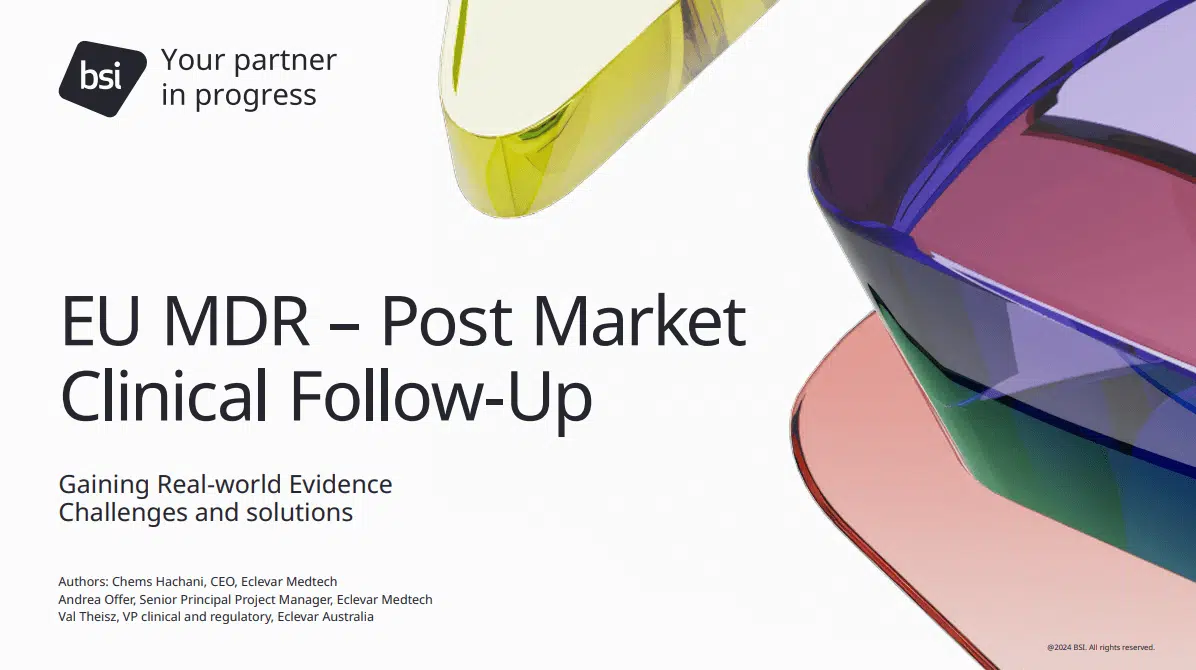
Cover of the whitepaper written by BSI and Eclevar on the EU MDR

Whitepaper · BSI x Eclevar

A whitepaper by BSI and Eclevar on the EU MDR

Written with the notified body BSI: a practical look at what clinical evidence has to show under EU MDR 2017/745, and at the quality bar the data have to clear. It is the same bar a European dataset meets before it is put in front of any reviewer.

Read the whitepaper

PMCF studies · Regenerative medicine · 5 EU countries

A client voice on Eclevar's ability to run complex studies

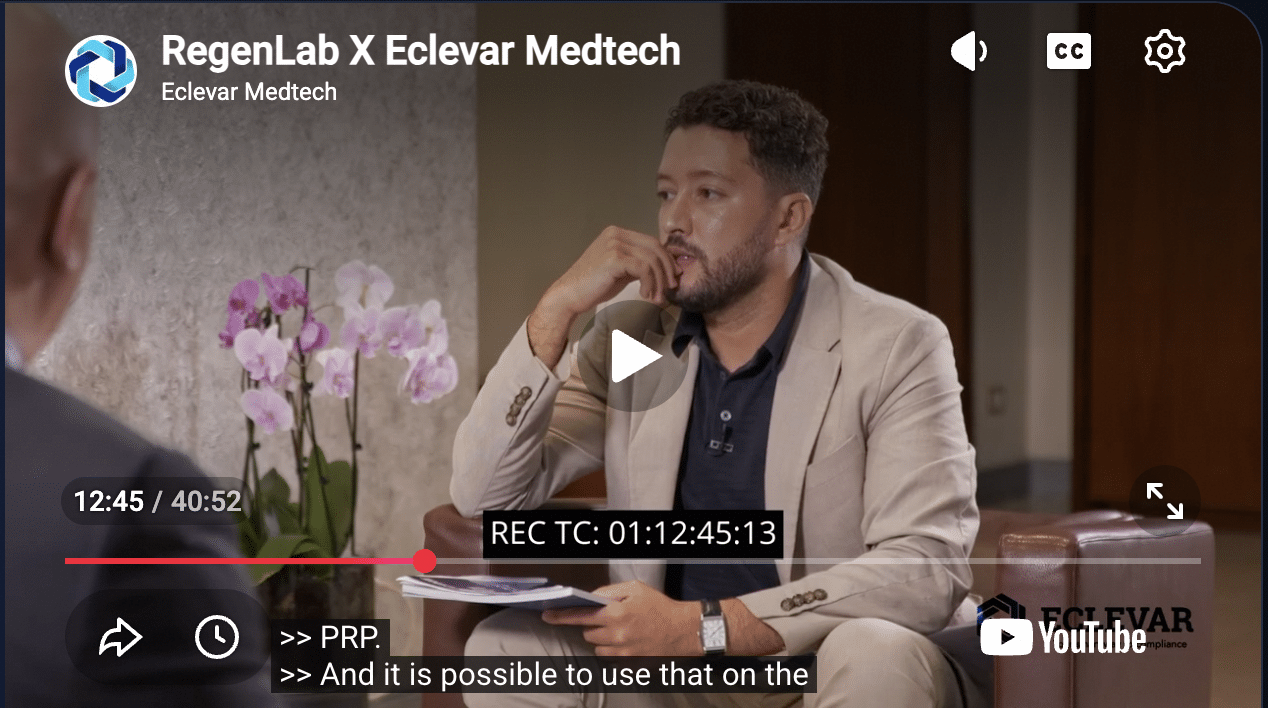
Eclevar runs RegenLab's PMCF program on chronic wound products. It is a randomized study of 160 subjects across 14 centers in 5 EU countries, covering both diabetic foot ulcer and venous leg ulcer. The partnership combines Eclevar's ISO 14155 expertise with the Milo Studio platform, from study design through to the final study report.

« Eclevar, with its tailored approach and the advanced Milo Studio platform, represents a significant strategic advantage. »Antoine Turzi, CEO, RegenLab
  • 160Subjects · 14 centers
  • 5EU countries

Watch the testimonial

RegenLab video testimonial on the PMCF program run by Eclevar

Coming soon. Breakthrough Device Technology under the EU MDR, a whitepaper written with TÜV SÜD, co-authored by Dr Nikhil Khadabadi.

Bring the decisions, not the paperwork

Tell us which decisions are still open and what submission has to follow. We will tell you whether a Pre-Submission is the right instrument, and what it should ask for.
Related reading

Official sources

Reforming Clinical Evaluation of Medical Devices in Europe