US sponsors · FDA submissions · European clinical data

Can European Clinical Data Support an FDA Medical Device Submission?

What has to be true for clinical evidence generated in Europe to do regulatory work in a US submission.

Yes. Clinical data from a medical device investigation conducted in Europe may support an FDA submission when the investigation meets the applicable FDA requirements and produces evidence relevant to the intended US use. Meeting the conditions for acceptance does not by itself establish that the evidence is sufficient for a particular IDE, 510(k), De Novo, PMA, HDE or PDP.

EU MDR compliance or ISO 14155 alignment does not by itself establish FDA acceptability or sufficiency. Two questions are answered separately: whether FDA accepts information from the investigation under the applicable conditions, and whether that information adequately supports the regulatory decision requested for the particular device, intended use and submission.

Short answer

Where European data may be used

Clinical data generated in Europe may support:

  • an Investigational Device Exemption (IDE) application
  • a 510(k) submission, where clinical evidence is required
  • a De Novo classification request
  • a Premarket Approval (PMA) application
  • a Humanitarian Device Exemption (HDE) or a product development protocol (PDP)

Whether the evidence is sufficient depends on the specific investigation, the intended use and the submission, and is determined in FDA review. Nothing on this page determines the outcome for a particular device.

Does FDA accept medical device clinical data generated outside the United States?

A US sponsor looks at Europe for concrete reasons: high-volume investigators, an available patient population, established infrastructure, a European market objective, or a program serving more than one regulator. Those reasons are legitimate, but none answers the regulatory question, and the study has to be designed for its intended regulatory use before the first participant is enrolled.

FDA can consider clinical data from investigations conducted outside the United States (OUS). The framework sits in 21 CFR 812.28, introduced by the final rule FDA issued in February 2018 and applicable to OUS investigations that began on or after February 21, 2019. Under that provision, FDA will accept information from an OUS investigation to support an IDE or a device marketing application when the investigation is well-designed and well-conducted and the stated conditions are met:

  • a statement that the investigation was conducted in accordance with good clinical practice (GCP) as the regulation defines it: independent ethics committee (IEC) review and approval or favorable opinion before the investigation begins, continuing IEC review while it runs, and freely given informed consent obtained and documented before enrollment, subject to the limited exceptions the regulation itself sets out for certain life-threatening situations;
  • the supporting information listed in 21 CFR 812.28(b), or a cross-reference to where it sits in the application;
  • FDA being able to validate the data, by on-site inspection or other appropriate means, if it considers that necessary.

The provision covers IDE, 510(k), De Novo, PMA, HDE and PDP submissions. FDA's objective is consistent data quality, integrity and protection of human subjects, but the applicable compliance and documentation framework depends on where the investigation was conducted and how the data are submitted: US and OUS investigations are governed through different provisions.

Acceptance of information is not sufficiencyFDA's acceptance of information under 21 CFR 812.28 does not establish that the evidence is sufficient to support the requested regulatory decision. Sufficiency is the separate question of whether that information adequately supports the decision requested for the particular device, intended use and submission. The rest of this article concerns that second question.

The core test

Seven questions sponsors should use to test FDA relevance

The conditions in the regulation are necessary but not the whole assessment. A European dataset is useful to a US submission to the extent that it survives seven questions, each a design decision rather than a documentation exercise.

These are practical planning questions derived from the applicable regulatory framework and submission considerations. They are not an official seven-part FDA test.

Question 01

Is the European population applicable to the intended US population?

Demographics, disease severity at presentation, comorbidity burden, anatomy, prior treatment and the point in the care pathway at which patients are recruited shape what a dataset can support. Criteria written for European recruitment can quietly produce a sample healthier, younger or earlier in the disease course than the US population the claim is meant to cover.

Sponsor action: write the intended US indication first, then test eligibility criteria against it.

Question 02

Is European clinical practice sufficiently comparable?

Standard of care, comparator therapy, diagnostic pathway, referral patterns, procedure setting, operator experience and follow-up intensity differ between and within countries. A well-conducted investigation can still be less useful to FDA if the clinical context differs materially from US practice, because the effect measured is the effect of the device inside that context.

Sponsor action: compare practice country by country during feasibility and site selection, and justify material differences in the protocol.

Question 03

Are the endpoints aligned with the FDA question?

FDA frames the question as safety and effectiveness. European conformity assessment is framed around safety and performance, and the vocabulary is not interchangeable: an endpoint that satisfies a clinical evaluation under EU MDR may not support a US claim. Endpoint definitions, assessment timing, adjudication, imaging and core laboratory requirements, the validation status of any patient-reported outcome instrument, and follow-up duration decide this.

Sponsor action: derive the endpoint set from the intended US claim, then check whether it also serves the European objective.

Question 04

Was the investigation designed for its intended FDA use?

Generating European data and later reusing it produces a retrospective argument; designing the investigation with the US submission in view produces a prespecified one. The protocol, the endpoints, the analysis plan, device version control, the monitoring model, data standards and safety definitions are settled against the submission the evidence is meant to serve.

Sponsor action: name the target submission in the protocol synopsis and keep design decisions traceable to it.

Question 05

Can the data be reconstructed and verified?

The regulation is explicit that FDA must be able to validate the data, by inspection or other appropriate means, if it deems that necessary. That means complete records and audit trails, source-data access, validated electronic data capture systems, traceability from source to analysis, translation where documents sit in another language, and retention of essential documents. It does not mean an inspection will necessarily occur.

Sponsor action: put source-data access, retention and translation obligations into the site contracts.

Question 06

Are the investigators and sites appropriate?

Investigator qualifications, competence in the relevant procedure, procedure volume, training on the device and protocol, the device learning curve, site infrastructure, data discipline and the ability to hold patients through long-term follow-up all bear on whether the evidence stands up.

Sponsor action: select sites against the evidence they must produce, not projected enrollment speed alone.

Question 07

Was FDA feedback considered at the appropriate time?

A Pre-Submission under the FDA Q-Submission Program is one mechanism through which a sponsor may request formal FDA feedback on a planned study or future submission. When used before protocol finalization, that feedback may identify material concerns involving the population, endpoints, comparator, follow-up, analysis, or intended regulatory use. It is not approval: the feedback is advisory, it does not bind the later FDA review, and it does not guarantee IDE approval or acceptance of the resulting evidence.

Sponsor action: carry the written feedback and minutes into the evidence plan, and revisit them when the protocol or device changes materially.

The regulation, in summary

21 CFR 812.28 acceptance conditions and the separate sufficiency question

The provision sets the conditions for acceptance and lists the supporting information the sponsor must provide or cross-reference. Where an investigation did not conform to GCP it provides a waiver route and an alternative statement route, and it sets record retention obligations. Part A summarizes that framework; Part B sets out the separate considerations that decide sufficiency. Full text in the sources below.

Part A. The acceptance framework under 21 CFR 812.28

Requirement areaSponsor questionEvidence to retain
GCP and ethics oversightConducted to GCP, approved before start, reviewed again while running?IEC identity and qualifying records, approval decision, continuing review
Informed consentFreely given, obtained before enrollment, documented?Approved forms by version and site, consent records, description of the process
Supporting informationProvided, or cross-referenced within the application?Protocol and results summary, device comparison, IEC decision, monitoring, incentives
Investigators, facilities and trainingWho conducted it, where, and how were they trained?Names and qualifications, facility descriptions, training records and commitments
Data validation and recordsCan FDA validate the data if it deems that necessary?Source traceability, EDC audit trail, data management records, essential documents

Part B. Separate submission-specific sufficiency considerations

The following considerations affect the relevance and sufficiency of the evidence for the intended submission. They should not be read as a verbatim list of requirements contained in 21 CFR 812.28.

ConsiderationQuestion the sponsor should be able to answer
Intended regulatory useWhich submission is this evidence meant to serve, and what claim must it support?
Population and clinical practiceAre the enrolled patients and the surrounding care pathway relevant to the intended US use?
Endpoints and follow-upDo the endpoint definitions and the follow-up duration answer the US question?
Device configurationIs the device studied the device in the submission, and is any change bridged?
Statistical analysisWere the analyses prespecified, and do the multiplicity and missing-data assumptions hold?
Answering the submissionDoes the evidence answer the question this submission raises for this device?

This is an executive summary, not a complete regulatory checklist.

Standards and submission type

ISO 14155 and the submission you are building toward

ISO 14155:2026 is the current international standard for good clinical practice in clinical investigations of medical devices in human subjects. Alignment with ISO 14155:2026 can support the design, conduct, recording and reporting of a medical device clinical investigation, but it does not by itself establish FDA acceptability or evidentiary sufficiency.

Applicable US requirements for the submission type, US population and practice applicability, protocol and endpoint alignment, and the evidence FDA expects for that device and claim are assessed separately. What changes between submission types is the evidentiary question the data have to answer.

SubmissionPotential role of European clinical dataPrincipal question
510(k)May support the submission where clinical data are needed. Many 510(k) submissions require none.Does the evidence resolve the specific clinical question raised by the differences from the predicate, within the substantial equivalence assessment?
De NovoMay support safety and effectiveness where clinical data are needed for a device with no adequate predicate.Does the evidence address the proposed intended use and support the controls proposed to mitigate the identified risks?
PMAMay support the clinical evidence. FDA regulations also contemplate PMA support based solely on foreign clinical data under specified conditions.Are the data valid scientific evidence, applicable to the US population and US medical practice, produced by clinically competent investigators, and capable of being validated?

21 CFR 814.15 addresses foreign data supporting a PMA, including approval based solely on foreign clinical data under the conditions it states, and encourages a presubmission meeting where that route is intended. IDE, HDE and PDP applications sit under the same acceptance framework in 21 CFR 812.28.

Framework

A framework for FDA applicability

Evidence generated in Europe passes through a series of gates before it can do regulatory work in the United States. Each is necessary, none sufficient alone, and the last is decided for the specific device and submission.

Figure 1

From European data generation to FDA regulatory use

Ethical and GCP foundation

IEC review and continuing oversight, documented informed consent, conduct in accordance with GCP.

Data integrity and traceability

Source data, audit trails, monitoring records and essential documents that allow the investigation to be reconstructed.

Population applicability

The enrolled European sample reflects the patients covered by the intended US use.

Clinical-practice and endpoint alignment

Standard of care, comparator and procedure setting are comparable enough, and endpoints answer the US question.

Submission-specific sufficiency

The evidence addresses what this submission requires for this device and this claim.

Final state Evidence considered within FDA review
Conceptual framework. FDA acceptability and evidentiary sufficiency are determined for the specific device, investigation and submission. The narrowing pathway represents loss of potential regulatory uses when a condition is not met. It is not a probability of acceptance.

Europe-only, hybrid, or sequential?

A separate question sits alongside this one: where the study should physically run. The appropriate model depends on whether US clinical representation adds evidence value, whether European practice is applicable to the intended US use, and whether one protocol can operate across both settings. No model is superior in the abstract, and the choice should follow the evidence question.

That decision is addressed separately in US, Europe, or Hybrid: Where Should You Run Your Medical Device Clinical Study?, and, where the first clinical use of the device is the immediate question, in first-in-human studies in Europe.

Failure modes

Five reasons European clinical data may not answer the FDA question

None is about the quality of European clinical research. Each is a decision taken, or not taken, before enrollment.

Reason 01

FDA input was considered too late

Feedback arrives when the design can no longer absorb it, so the sponsor argues for a dataset instead of shaping one.

Preventive action: assess the need for a Pre-Submission while the protocol is still open, and ask specific, answerable questions.

Reason 02

European standard of care differs materially from US practice

The device performed inside a care pathway US patients would not follow, so the measured effect is not the effect FDA is asked about.

Preventive action: compare standard of care, comparator, procedure setting and follow-up intensity before choosing countries, and record the comparison.

Reason 03

Endpoints do not support the intended US claim

Endpoints written for a clinical evaluation under EU MDR, or for publication, do not carry the US claim.

Preventive action: derive endpoints, assessment schedule, adjudication model and analysis plan from the intended US indication.

Reason 04

Device or procedure changes lack a comparability or bridging strategy

A design iteration, component change or procedural refinement during enrollment leaves a dataset describing more than one device.

Preventive action: apply device version control from first enrollment, record configuration per subject, and define in advance how any change will be bridged.

Reason 05

Documentation does not permit reconstruction or validation

Records are incomplete, untranslated, held at sites that no longer maintain them, or in systems whose audit trail cannot be produced.

Preventive action: keep the trial master file current throughout, rather than reconstructing it before submission.

Before enrollment

What should a US sponsor decide before opening European sites?

Ten grouped decisions for the internal conversation. Not legal advice, and not exhaustive.

  • The intended FDA submission and the claim it has to support
  • The role of the European investigation in the evidence plan
  • What authority feedback already exists, in writing
  • Population and clinical-practice applicability to the intended US use
  • Endpoint definitions, assessment schedule and follow-up duration
  • Device configuration and the change and bridging strategy
  • Countries, investigators and site selection criteria
  • Safety definitions, reporting obligations and the monitoring model
  • Data standards, audit trail, source-data access and inspection readiness
  • The analysis plan, the missing-data strategy and any EU MDR objective

Working with Eclevar

How Eclevar supports the European component

Eclevar is a specialist medical device CRO operating in Europe. On transatlantic programs our scope is the European component of the evidence plan and its connection to the intended US pathway.

Evidence-use assessment

  • Intended FDA and European uses of the dataset
  • Population and clinical-practice applicability
  • Endpoint alignment across both objectives
  • Device comparability and change strategy
  • Authority dependencies and their timing

European feasibility and study design

  • Country and site model
  • Investigator requirements and competence
  • Recruitment assumptions and their basis
  • Protocol and assessment feasibility

Data and reporting

  • EDC and data management
  • Biostatistics
  • Analysis-ready datasets
  • Clinical investigation reporting

Eclevar can work alongside the sponsor's FDA regulatory lead or designated US regulatory specialist so that European clinical execution remains connected to the intended US evidence pathway. US regulatory strategy remains with the sponsor's FDA regulatory lead or designated US specialist unless a separate verified scope is established.

FAQ

Frequently asked questions

Can FDA accept clinical data from Europe?

Yes. FDA can accept information from an investigation conducted outside the United States to support an IDE or a device marketing application, provided the investigation is well-designed and well-conducted and the conditions in 21 CFR 812.28 are met. FDA's acceptance of information under 21 CFR 812.28 does not establish that the evidence is sufficient to support the requested regulatory decision.

Does FDA require medical device clinical studies to be conducted in the United States?

No. There is no general requirement that investigations supporting a device submission be conducted in the United States. What matters is whether the investigation meets the applicable requirements and whether the evidence is applicable to the intended US use and sufficient for the submission.

Is ISO 14155 compliance sufficient?

No. ISO 14155 is highly relevant to how an investigation is designed, conducted, recorded and reported, but stating compliance with it does not automatically establish FDA acceptability or evidentiary sufficiency. Population applicability, clinical-practice comparability, endpoint alignment and submission-specific evidence expectations are assessed separately.

Can European data support a 510(k), De Novo or PMA?

Where clinical data are needed, yes. The framework in 21 CFR 812.28 applies across these submissions. For a 510(k) the evidence has to resolve the clinical question raised by differences from the predicate; many 510(k) submissions require no clinical data at all. For a De Novo it has to address the proposed intended use and the risk controls. For a PMA, FDA regulations also contemplate support based solely on foreign clinical data under specified conditions, which is neither routine nor automatically sufficient.

Should a sponsor seek FDA feedback before a European pivotal study?

If European pivotal data are intended to support a material FDA decision, the sponsor should assess whether a Pre-Submission is appropriate before the protocol is finalized. A Pre-Submission under the Q-Submission Program is one mechanism for requesting formal FDA feedback, not the only one. The need and timing depend on the specific device, the pathway, the unresolved questions and previous FDA interactions. The feedback is advisory: it does not bind the later FDA review, and it does not guarantee IDE approval or acceptance of the resulting evidence.

What is the difference between acceptance and evidentiary sufficiency?

Acceptance concerns whether information from the investigation meets the applicable conditions for FDA to accept it as part of an IDE or device marketing application. Evidentiary sufficiency is a separate question: whether that evidence adequately answers the safety, effectiveness, substantial-equivalence, benefit-risk, or other submission-specific question for the particular device and intended use. Information may meet the applicable acceptance conditions without being sufficient to support the requested regulatory decision.

Conclusion

European clinical data may contribute meaningfully to an FDA pathway, but geography alone does not determine their acceptability or sufficiency. FDA evaluates the applicable acceptance conditions and the relevance of the evidence to the particular device, intended use, clinical question, and submission.

A European study designed for a European purpose and later repurposed is a weaker regulatory asset than one designed from the outset to serve a defined US submission. Misalignment is generally easier to address before protocol finalization than after sites are activated or data are collected.

Official content

Our content, signed by Eclevar

Whitepapers, client voices and publications produced by our own teams and by our partners: BSI, TÜV SÜD and RegenLab.

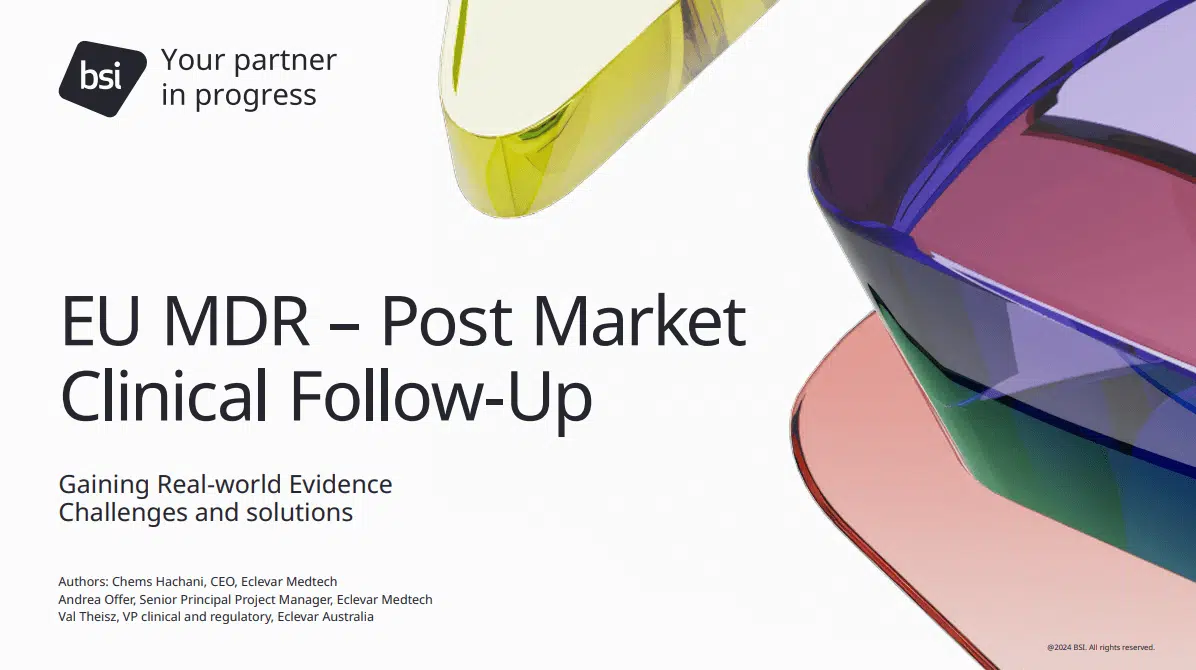
Cover of the whitepaper written by BSI and Eclevar on the EU MDR

Whitepaper · BSI x Eclevar

A whitepaper by BSI and Eclevar on the EU MDR

Written with the notified body BSI: a practical look at what clinical evidence has to show under EU MDR 2017/745, and at the quality bar the data have to clear. It is the same bar a European dataset meets before it is put in front of any reviewer.

Read the whitepaper

PMCF studies · Regenerative medicine · 5 EU countries

A client voice on Eclevar's ability to run complex studies

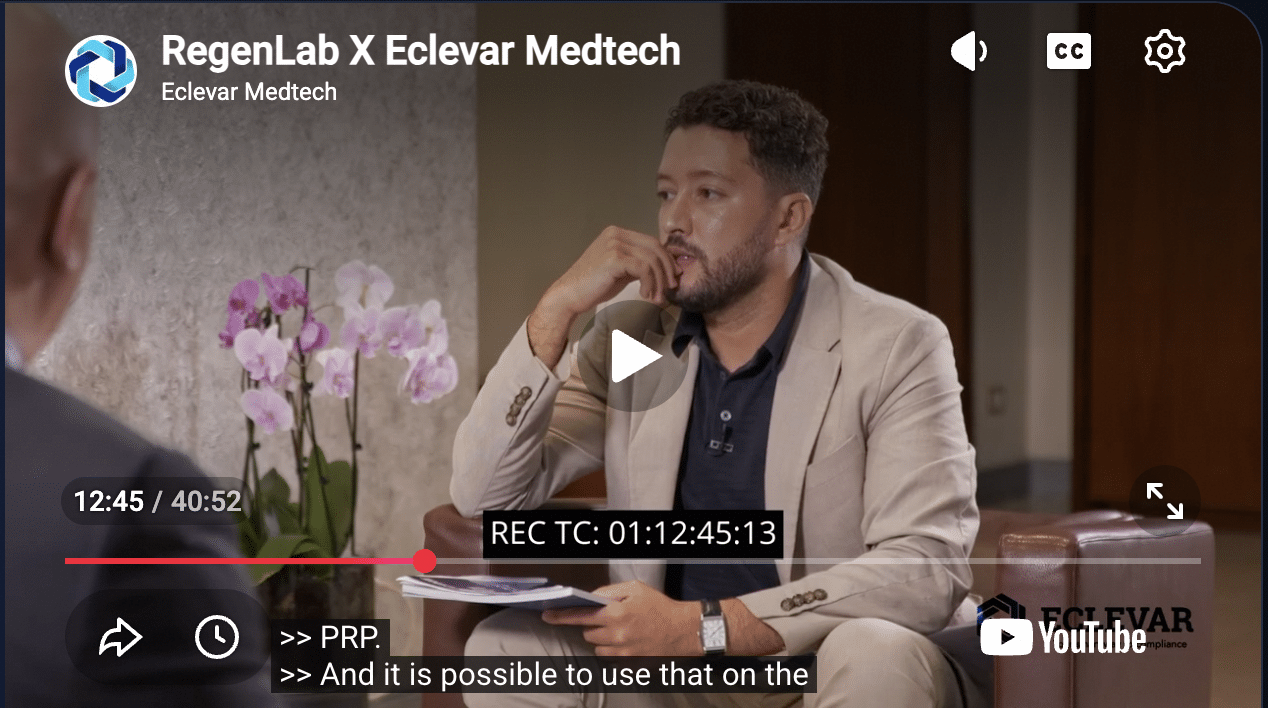
Eclevar runs RegenLab's PMCF program on chronic wound products. It is a randomized study of 160 subjects across 14 centers in 5 EU countries, covering both diabetic foot ulcer and venous leg ulcer. The partnership combines Eclevar's ISO 14155 expertise with the Milo Studio platform, from study design through to the final study report.

« Eclevar, with its tailored approach and the advanced Milo Studio platform, represents a significant strategic advantage. »Antoine Turzi, CEO, RegenLab
  • 160Subjects · 14 centers
  • 5EU countries

Watch the testimonial

RegenLab video testimonial on the PMCF program run by Eclevar

Coming soon. Breakthrough Device Technology under the EU MDR, a whitepaper written with TÜV SÜD, co-authored by Dr Nikhil Khadabadi.

References

Sources and further reading

Sources reviewed 8 August 2026. This article is general information for medical device sponsors. It is not legal or regulatory advice, and it does not determine the acceptability or sufficiency of evidence for any specific device or submission. Confirm current requirements against the sources above and with your US regulatory lead.

Reforming Clinical Evaluation of Medical Devices in Europe