Insight · Market Access · France
A CE Mark lets you sell a device in France; it does not get the device paid for. Reimbursement is a separate gate, decided by a separate body against a separate evidence standard, and manufacturers who plan only for the CE Mark discover the French market is largely closed to them until they clear it.

European Champion
Platinum Award 2026
Eclevar MedTech & Milo Health · xShare × EUCROF Open Call
Led by authority
This guide is written from the perspective of people who build reimbursement and clinical evidence for the French market. Where a point is illustrated with a real case, it is drawn from Eclevar's own practice and shown as illustration, and the criteria stand on their own.

Cardiac surgeon and former lead Notified Body reviewer at TÜV SÜD. 400+ devices CE-certified.
in LinkedIn
Former clinical reviewer at TÜV SÜD for Class III implants; PMCF and CER methodology.
in LinkedIn
CERs under MEDDEV 2.7/1 Rev 4 and EU MDR, and Notified Body deficiency response.
in LinkedInAwards, funding, accountability

Top tier at the xShare × EUCROF Open Call, awarded to Eclevar MedTech and its Milo Health platform, presented at EUCROF 2026 in Amsterdam.
The announcement →Selected through the xShare Open Call for clinical research innovation, Horizon Europe.
xShare results →Distinction confirmed by an independent third party, the CVBF, also an awardee of the xShare × EUCROF Open Call.
CVBF coverage →Trusted by global manufacturers





Proof in practice
Real programs built on endpoints and statistics that hold up with Notified Bodies and reimbursement reviewers. See client success stories →
A multicentre transcatheter aortic valve implantation study across eight UK sites, feeding the clinical evidence a CER and reimbursement dossier rely on.
A within-patient crossover RCT versus marketed compact catheters. Data captured in a validated EDC to 21 CFR Part 11, under ISO 14155:2026.
Proof, not adjectives
What this guide covers
The French reimbursement gate
This guide sets out how CNEDiMTS assesses a medical device and what evidence it requires: the two concepts that decide the outcome, the role of the comparator, the dossier the commission reads, and how the assessment feeds the price.
The principle to hold throughout is that French reimbursement is an evidence decision, not an administrative one. CNEDiMTS asks whether the clinical evidence shows the device is worth reimbursing, and worth reimbursing at a premium, and the answer is built into the evidence strategy long before the dossier is filed.
01 / 09
The first thing to internalise is that regulatory approval and reimbursement are separate decisions made by separate bodies. The CE Mark, granted through a Notified Body, establishes that the device is safe and performs as intended; it says nothing about whether the French statutory system will pay for it. Reimbursement is decided through a health technology assessment route, and a device can be perfectly CE-marked and entirely unreimbursed, which in practice means largely unsold in a system where most care is publicly funded.
This separation has a strategic consequence: the evidence that secures a CE Mark is not the same as the evidence that secures reimbursement. A Notified Body asks whether the device is safe and performs; a reimbursement body asks whether it delivers a clinical benefit worth paying for, compared to what patients already receive. A manufacturer who builds only the regulatory evidence arrives at the reimbursement gate under-equipped, because the comparative, benefit-focused evidence the assessment needs was never planned. Planning both evidence streams together, from the regulatory affairs strategy onward, is what avoids that gap.
The practical implication is to treat French reimbursement as a parallel objective from the start of the clinical program, not a task that begins after CE marking. The clinical evidence that CNEDiMTS will want, comparative data against the right alternative, outcomes that matter to patients and the system, has to be designed into the studies, because it cannot be generated retrospectively once the device is already on the market and the comparison is no longer feasible.
02 / 09
CNEDiMTS, the national commission for the evaluation of medical devices and health technologies, sits within the French health authority HAS and is the body that assesses devices for reimbursement. Its assessment determines whether and how a device is included on the LPPR, the list of products and services eligible for statutory reimbursement, which for most devices is the gateway to the French market. The commission's opinion is the pivotal document, because it shapes both whether the device is reimbursed and the terms on which it is.
CNEDiMTS evaluates the device on its clinical merits, and its opinion is then used downstream to decide listing and, separately, price. Understanding this division of labor matters, because the clinical assessment and the price negotiation are distinct steps with distinct logics: the commission judges the clinical value, and a separate economic body negotiates the price that value supports. A manufacturer who conflates them, or who prepares for one and not the other, is unprepared for half the process.
Because the LPPR listing is the practical key to the market, the CNEDiMTS opinion is worth treating as the single most important market-access deliverable for France. Everything about the French commercial case, the price, the volume, the adoption, follows from how the commission assesses the device, which is why the evidence that drives that assessment deserves to be planned with the same seriousness as the regulatory evidence that drives the CE Mark.
It is worth naming why France rewards this planning so strongly. The French system is built around demonstrated clinical value relative to existing care, and it is willing to pay a premium for genuine improvement but reluctant to pay for novelty alone. A device that is merely new, without evidence of doing better than what patients already receive, meets a system designed to ask precisely that question. Understanding that the French gate is fundamentally comparative, not just regulatory, reframes the whole reimbursement and HTA strategy around the comparison the commission will make.
03 / 09
The first concept CNEDiMTS applies is the Service Attendu, the expected benefit of the device, and it answers a binary question: is the clinical benefit sufficient to justify reimbursement at all? The commission weighs the device's therapeutic or diagnostic value and its role in the care strategy against the seriousness of the condition and the alternatives available, and concludes that the expected benefit is either sufficient or insufficient. An insufficient verdict effectively closes the reimbursement door, whatever the device's regulatory status.
This is the threshold question, and it is decided on clinical evidence. A device with a plausible mechanism but thin clinical data, or data that does not actually demonstrate a benefit in the intended use, risks an insufficient assessment not because it lacks promise but because the evidence does not yet support the claim. The lesson is that the Service Attendu has to be earned with evidence that shows a real clinical benefit in the relevant population, not asserted from the device's design or its performance characteristics.
Because the Service Attendu is the gate to reimbursement, the evidence strategy has to be built to clear it first. That means generating clinical data that demonstrates the device's benefit in its intended use, against the backdrop of current French care, in a form the commission recognises. A manufacturer who has planned the evidence to answer this specific question arrives with a dossier aimed at the threshold; one who has planned only regulatory evidence arrives hoping the commission will infer a benefit the data was never designed to show.
Planning a French launch?
Book a free scoping call with our reimbursement lead. Bring your device and your evidence, and get a read on your Service Attendu and Amelioration case before you file.
Book a free scoping call04 / 09
Clearing the threshold is not the end of the assessment, because the second concept, the Amelioration du Service Attendu, decides how much the device is worth. The Amelioration measures the improvement the device offers over the existing comparator, and it is graded on a scale from a major improvement to no improvement at all. This grade is decisive commercially, because it drives the price the device can command: a strong improvement supports a premium, while no demonstrated improvement supports only a price in line with what is already reimbursed.
The Amelioration is where comparative evidence becomes essential, because an improvement can only be demonstrated against a defined comparator. A device assessed without robust comparative data against the right alternative will struggle to earn a meaningful grade, not because it offers no improvement but because the improvement was not demonstrated. This is the most common way a device that is genuinely better ends up with a disappointing grade and a disappointing price: the evidence did not make the comparison the commission needed to see.
The strategic implication is that the grade, and therefore the price, is determined by evidence choices made years earlier, in the design of the comparative studies. A manufacturer who wants a premium price has to plan the comparative evidence that justifies a strong improvement grade, against the comparator the commission will consider relevant, from the start of the clinical program. The grade is not negotiated at the end; it is built into the evidence at the beginning.
The four questions that decide the outcome
05 / 09
The choice of comparator is one of the most consequential elements of a French reimbursement case, because both the Service Attendu and the Amelioration are judged relative to it. The commission expects the comparator to be the relevant current standard of care in France, the treatment a French patient would actually receive, and a dossier built against a weaker or outdated comparator invites the commission to substitute the right one and re-judge the device against a tougher benchmark. Choosing the comparator the commission will accept, and generating evidence against it, is therefore central to the strategy.
Getting the comparator wrong is a frequent and expensive error. A manufacturer who compares the device to an easy benchmark may produce a flattering result that the commission discounts, because the comparison is not the one that matters to French practice. The honest approach is to identify the comparator the commission will consider relevant early, ideally with the benefit of the commission's own guidance or an early dialogue, and to design the comparative evidence against it, through careful feasibility and site selection, so that the result the dossier presents is the result the commission will actually weigh.
Because the comparator shapes everything downstream, it is worth resolving before the comparative studies are designed, not after. A study designed against the wrong comparator generates evidence the commission will not credit, and the comparison cannot be redone retrospectively. Settling the comparator question early, against current French care, is what allows the clinical evidence to land where the assessment will look for it.
06 / 09
The CNEDiMTS dossier has to present the clinical evidence in a form the commission can assess, and the recurring weaknesses are predictable. Evidence that does not demonstrate a benefit in the precise intended use, comparative data against the wrong or no comparator, outcomes that do not capture what matters clinically, and a clinical case that asserts more than the data supports are the gaps that lead to an insufficient Service Attendu or a weak Amelioration. A dossier built to anticipate these is far more likely to secure a favourable opinion than one that presents the regulatory evidence and hopes it suffices.
The strongest dossiers are built backwards from the commission's questions, just as a clinical evaluation report is built backwards from a Notified Body's. Knowing that the commission will ask whether the benefit is sufficient and how much improvement is demonstrated against the relevant comparator, the dossier is assembled to answer exactly those questions with evidence designed for them. A dossier assembled forwards, from whatever evidence happens to exist, meets those questions unprepared, and the gaps become the reasons for an unfavourable opinion.
Early dialogue with the authority, where available, is a valuable way to surface these gaps before they become findings. Understanding the commission's view of the comparator, the relevant outcomes and the evidence expectations, before the studies are locked, lets a manufacturer design evidence that will actually answer the assessment. This is the reimbursement equivalent of designing a clinical investigation to anticipate a Notified Body's deficiencies, and it pays off the same way, by avoiding the expensive discovery of a gap after the evidence is fixed.
See how the evidence is built
Explore our reimbursement and HTA service: comparator choice, Service Attendu and the Amelioration grade that drives the price.
Explore the reimbursement service07 / 09
The CNEDiMTS opinion is not the price; it is the input to the price. Once the commission has assessed the clinical value, a separate economic body negotiates the price the device will be reimbursed at, and the Amelioration grade is the central lever in that negotiation. A strong improvement grade supports a premium price; a weak one supports little more than parity with the existing comparator. This is why the clinical assessment and the commercial outcome are so tightly linked: the evidence that earns the grade is the evidence that earns the price.
Understanding this sequence keeps a manufacturer from treating price as a separate, later problem. The price is largely determined by the time the CNEDiMTS opinion is issued, because the opinion sets the value the price negotiation works from. A manufacturer who arrives at the price stage hoping to argue for a premium the clinical assessment did not support has left it too late; the lever for price was the evidence that drove the grade, and that was fixed in the clinical program.
The practical message is that French market access is a single, connected problem from clinical evidence through assessment to price, and it has to be planned as one. The clinical evidence determines the Service Attendu and the Amelioration; the Amelioration drives the price; and the price drives the commercial case. A manufacturer who plans the whole chain backwards from the desired commercial outcome builds the evidence that supports it; one who plans the steps in isolation finds the chain breaks at the weakest, usually evidential, link.
08 / 09
The most significant 2026 development for French and European reimbursement is the arrival of EU-level health technology assessment through the Joint Clinical Assessment. For the technologies in its initial scope, clinical data is now assessed once at the European level and then fed into national decisions, which changes how and where the clinical evidence is examined. While the national reimbursement decision and the price remain French, the clinical assessment increasingly draws on a European evaluation, and a manufacturer has to plan evidence that satisfies both the European clinical assessment and the French national reimbursement logic.
This shift raises the premium on robust comparative clinical evidence, because the European clinical assessment, like CNEDiMTS, is fundamentally about demonstrated benefit against a relevant comparator. A manufacturer whose evidence was built only for a national, regulatory-led view of the world is less prepared for an environment in which the clinical assessment is increasingly harmonized and scrutinised at European level. Planning evidence that is comparative, outcome-focused and defensible at both levels, including strong real-world evidence and post-market clinical follow-up, is the way to stay ahead of this change.
The broader message of 2026 is continuity rather than reversal: the evidence French reimbursement has always rewarded, comparative, benefit-focused and aligned to the relevant comparator, is exactly the evidence the emerging European assessment rewards too. A manufacturer who builds that evidence is well placed for both the French process and its European overlay, while one who built only regulatory evidence faces the same gap, now at two levels instead of one.
09 / 09
A French reimbursement case that succeeds shares a clear shape. It treats reimbursement as a separate gate from the CE Mark, planned from the start. It builds the clinical evidence to clear the Service Attendu threshold and to earn a strong Amelioration grade. It generates comparative data against the comparator the commission will accept as current French care. It assembles the dossier backwards from the commission's questions, using early dialogue where possible. And it understands that the price follows the assessment, so the lever for price is the evidence. A weaker case plans only regulatory evidence, compares against a soft benchmark, and treats price as a later negotiation, and the French market stays closed.
Illustration, from Eclevar's practice: building French reimbursement evidence alongside the clinical program, against the comparator the commission will weigh and aimed at the Service Attendu and Amelioration questions, is what produces a dossier that secures listing rather than one that stalls. The point is that the reimbursement evidence has to be designed in, because the comparative, benefit-focused data the commission needs cannot be generated once the device is already on the market.
French reimbursement is an evidence decision made by CNEDiMTS, and the evidence that wins it is planned years before the dossier is filed. The fastest way to know whether your French case will hold would be to have someone who builds reimbursement evidence for the French market examine it against the criteria above, and tell you where the comparator or the comparative data will not earn the grade before the dossier makes it costly to discover.
The encouraging point is that the evidence which wins French reimbursement is largely the same evidence that strengthens every other part of the device's case: comparative, outcome-focused data against the relevant standard of care. Built once, designed into the clinical program, it serves the CNEDiMTS assessment, the price negotiation, and increasingly the European clinical assessment as well. A manufacturer who invests in that evidence early is not building a France-specific artefact; they are building the comparative clinical case that the whole European market is moving toward demanding.
Red flags in a French reimbursement case
Pressure-test your French reimbursement strategy → book a scoping call · clientcare@eclevar.com
The chain in one view
The clinical evidence determines the Service Attendu and the Amelioration; the Amelioration drives the price; and the price drives the commercial case.
Eclevar builds French reimbursement evidence alongside the clinical program, against the comparator CNEDiMTS will weigh and aimed at the Service Attendu and Amelioration questions. See our reimbursement and HTA strategy and our full medical device CRO service.
Planning French reimbursement?
If your device is heading toward the French market, the lever for price is the evidence that drives the CNEDiMTS grade, and it has to be designed in early. An expert read tells you where your case holds.
Book a free strategy callOfficial Eclevar resources
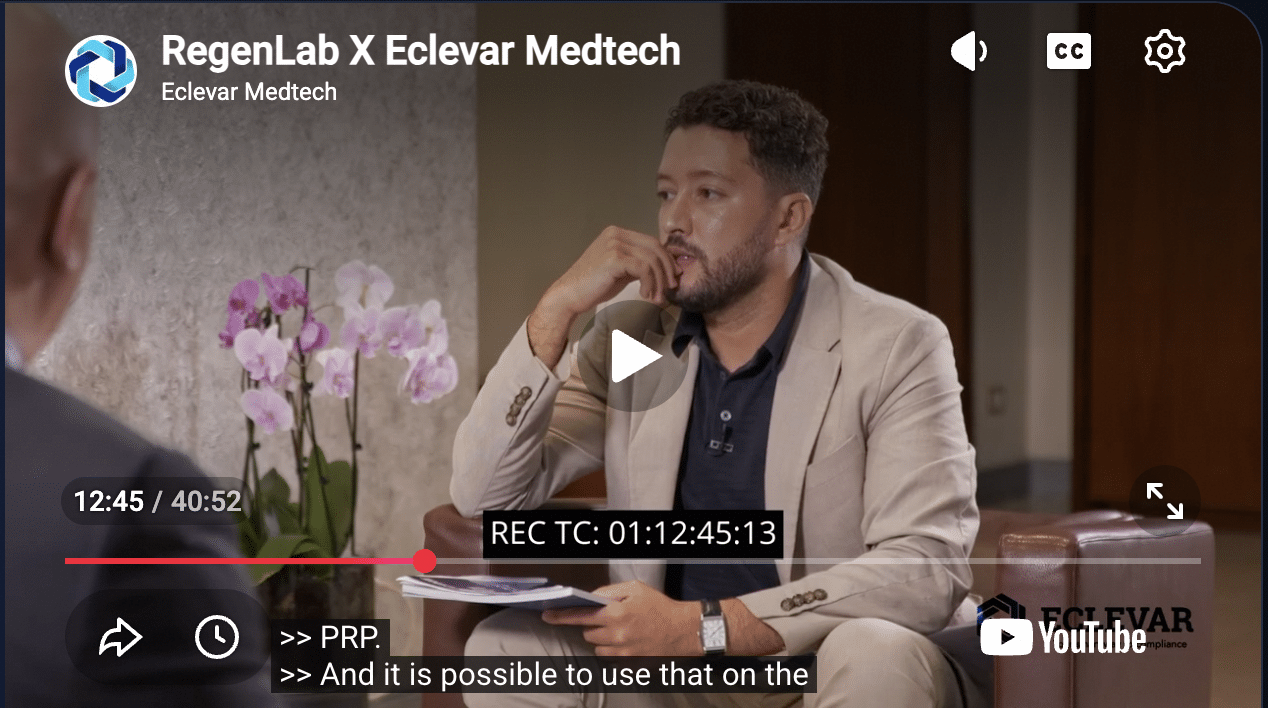
PMCF Studies · Regenerative Medicine · 5 EU Countries
Eclevar manages RegenLab's PMCF program on chronic wound devices: a randomized study of 160 patients across 14 sites in 5 EU countries, covering diabetic foot ulcer (DFU) and venous leg ulcer (VLU) indications. The partnership combines Eclevar's ISO 14155 clinical expertise with the Milo Studio platform.
"Eclevar, with its tailor-made approach and advanced Milo Studio platform, represents a major strategic asset."Antoine Turzi, CEO, RegenLab
A whitepaper co-signed by BSI and Eclevar on the clinical requirements of EU MDR.
Read the whitepaper →Clinicians and a former Notified Body reviewer, named, not handed to a junior account team. Meet the full leadership team →


An expert read tells you where the comparator or the comparative data will not earn the grade, before the dossier makes it costly to discover.
Book a free scoping callQuestions we hear first