Insight · Market access · Germany
Germany is the largest medical device market in Europe and one of the most structurally specific: a CE Mark gets a device into German hospitals, but the statutory system decides separately whether it is paid for. For a hospital device that does not simply fit an existing payment, that decision runs through the DRG system, the NUB innovation route, and for high-risk devices the G-BA benefit assessment under Paragraph 137h. This guide sets out which pathway applies, and what evidence each demands.

European Champion
Platinum Award 2026
Eclevar MedTech & Milo Health · xShare × EUCROF Open Call
Written and clinically reviewed by
The people accountable for your German file build reimbursement pathways and the comparative clinical evidence a benefit assessment expects. Meet the full leadership team →

Builds reimbursement and market-access strategy for medical device manufacturers across Europe, turning clinical evidence into payment pathways.
in Team bio
Leads clinical evaluation and comparative evidence, from CER methodology under MEDDEV 2.7/1 Rev 4 to the data a benefit assessment expects.
in LinkedInAwards, funding, accountability
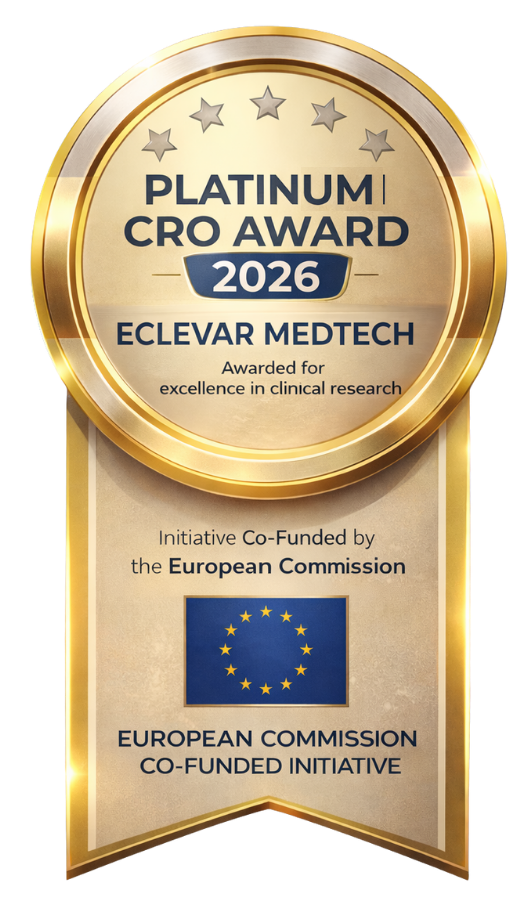
Top tier at the xShare × EUCROF Open Call, awarded to Eclevar MedTech and its Milo Health platform, presented at EUCROF 2026.
The announcement →Selected through the xShare Open Call for clinical research innovation, Horizon Europe.
xShare results →The award was reported independently by partner CVBF, also an awardee of the xShare × EUCROF Open Call; the awarding bodies carry the weight.
CVBF coverage →Trusted by global manufacturers





Proof in practice
Real programmes built on endpoints and statistics that hold up with Notified Bodies and reimbursement reviewers, including the German benefit assessment. See client success stories →
A multicentre transcatheter aortic valve implantation study across eight sites, feeding the comparative clinical evidence a CER and reimbursement dossier rely on.
A within-patient crossover RCT versus marketed compact catheters. Data captured in a validated EDC to 21 CFR Part 11, under ISO 14155:2021.
Proof, not adjectives
What this guide covers
The eight points
German reimbursement is a question of fitting the right device to the right pathway with the right evidence. Each point separates a strategy that travels the system from one that stays CE-marked and commercially stuck.
01 / 08
As in every European market, the CE Mark and reimbursement are separate decisions in Germany, and the separation is where many manufacturers underestimate the market. The CE Mark, granted by a Notified Body, lets the device be placed on the German market; whether the statutory health insurance system pays for it depends on a distinct set of mechanisms governed by the social code and overseen by bodies the manufacturer never met during conformity assessment. A device can be fully CE-marked and still have no route to payment, which in a system where statutory insurance covers most patients means little real market access.
The German system is also notably structural, in that reimbursement often attaches to the method or the procedure and the hospital case, rather than to the device as a product. A device used in hospital is frequently paid for indirectly, as part of a bundled case payment, which means the question is not only whether the device is reimbursed but how its cost is captured within the way German hospitals are paid.
The practical consequence is that German market access has to be planned early, ideally before CE marking, because the relevant pathway and the evidence it needs shape the clinical programme. A manufacturer who waits until the device is CE-marked to think about German reimbursement finds that the evidence the chosen pathway demands, often comparative and benefit-focused, was not generated, and that the annual cycles and submission deadlines of the German system have already slipped a year of access away.
02 / 08
Most devices used in German hospitals are paid for through the diagnosis-related group system, in which each hospital case is reimbursed as a bundled payment based on the diagnosis and procedure, with the device cost absorbed into that case payment. For a device that fits comfortably within an existing group, this can be straightforward. The difficulty arises when a device is more expensive or more innovative than the existing payment assumes, because then the case payment does not cover it and the hospital has a financial disincentive to use it.
This is the structural problem that the innovation pathways exist to solve. A genuinely new or premium device often costs more than the bundled payment reflects, which means that without an additional mechanism, adopting it costs the hospital money. Identifying whether a device needs one of the supplementary routes, rather than fitting an existing group, is the first strategic question.
It is worth dwelling on why the German structure rewards early planning more than almost any other European market. The system runs on annual cycles, hospital-led applications, and method-based assessment, which means access depends on calendar deadlines and partner readiness as much as on the device merits. A superb device that misses the application window, or that arrives without the comparative evidence the assessment needs, simply waits, often a full year, for the next cycle.
03 / 08
The NUB pathway, for new examination and treatment methods, is the route by which hospitals secure temporary supplementary funding for innovative methods that the DRG system does not yet adequately pay for. Hospitals apply annually to the institute that runs the hospital payment system, and a positive status allows the hospital to negotiate an additional payment, above the standard case rate, with the statutory insurers. The funding is temporary, hospital-specific, and has to be reapplied for each year.
Two features shape how the NUB route should be used. First, it is the hospitals, not the manufacturer, who apply, so a manufacturer strategy has to enable and support hospital applications with the clinical and economic justification a strong application needs. Second, a positive status does not guarantee payment, because the insurers can still question the evidence and decline to pay, so the strength of the justification matters even after a positive status is obtained.
Because the NUB cycle is annual and the application sits with hospitals, timing and partnership are central. A manufacturer who has built relationships with the hospitals that will apply, and who has the clinical and economic evidence ready for the application window, can move quickly; one who has not finds the annual deadline has passed and the funding deferred a year.
What the NUB route requires
04 / 08
For high-risk devices, the German system adds a further, decisive step. When a hospital NUB application involves a high-risk medical device, broadly Class IIb or III, that embodies a new theoretical-scientific concept, it automatically triggers a benefit assessment by the G-BA, the federal joint committee that is Germany’s highest healthcare decision-making body and national HTA authority, under Paragraph 137h of the social code. For exactly the high-risk, innovative devices that most need premium reimbursement, the path runs through a formal national benefit assessment.
This automatic trigger is something manufacturers of innovative high-risk devices have to anticipate rather than be surprised by. A novel Class III device entering through the NUB route is, in effect, also entering a national benefit assessment, and the clinical evidence that will be examined there has to be ready and designed for that scrutiny. A manufacturer who planned only for a hospital funding negotiation meets the Paragraph 137h trigger unprepared, at exactly the point where the stakes are highest.
The connection between the NUB application and the Paragraph 137h assessment also means the two have to be planned together. The hospital funding application and the national benefit assessment are linked steps, and a coherent strategy prepares for both at once, with the clinical and economic evidence serving the funding case and the comparative clinical evidence serving the benefit assessment. This is where evidence built for PMCF and clinical investigations under EU MDR doubles as the comparative base the assessment needs.
Talk to a reviewer
Book a free scoping call with our reimbursement lead. Get a read on whether your device fits an existing DRG, needs the NUB route, or triggers a G-BA benefit assessment under Paragraph 137h.
Book a free scoping call05 / 08
The G-BA benefit assessment asks a specific question: is the benefit of the method proven, does it at least show potential to be a necessary treatment alternative, or does it show no potential, judged against the relevant comparator. The committee commissions an independent assessment institute to evaluate the body of clinical evidence submitted, and the answer determines the device’s path. A proven benefit supports reimbursement; a demonstrated potential can lead to a structured evidence-generation route; and a failure to show potential can lead to the method being excluded from the reimbursed portfolio.
This three-way outcome is why the comparative design of the clinical evidence is decisive. The assessment turns on whether the method makes patients better, faster, or relieves suffering more than the existing comparator, which can only be shown with evidence designed for that comparison. A manufacturer whose evidence demonstrates the device works, but not that it works better than the comparator, risks landing in the potential category rather than the proven one, with the longer, costlier evidence-generation route that implies. Strong real-world evidence is often what moves a verdict from potential to proven.
The possibility of a potential verdict, leading to a trial requirement, is a particular feature manufacturers should plan around. If the existing evidence shows promise but not proof, the G-BA may require a study to generate the missing evidence, with reimbursement tied to participation. This is not a failure, but it is a longer and more expensive path, and a manufacturer who anticipates it, by building stronger comparative evidence up front, may reach a proven verdict directly.
What the G-BA benefit assessment turns on
06 / 08
Everything about the German pathways points to the same conclusion: the evidence strategy has to be planned early, ideally before CE marking, and built around the specific pathway the device will travel. The comparative clinical evidence that a benefit assessment requires, and the clinical and economic justification that a NUB application needs, take time to generate and cannot be assembled retrospectively. A coherent regulatory affairs strategy under EU MDR sets that evidence in motion before the pathway is locked.
Hospital partnership is the other pillar, because in the German system the hospitals are the applicants for innovation funding and the sites where the evidence is generated and the device is adopted. A manufacturer who has built relationships with the hospitals that will apply for NUB status, run the studies, and use the device has a working route into the system; one who has not is trying to access a hospital-centred system from the outside.
Early consultation with the relevant bodies, where available, is the German equivalent of the early dialogue that strengthens any reimbursement case. Understanding how the G-BA views the method, what comparator and outcomes the assessment will expect, and whether the pathway is viable, before the evidence is locked, lets a manufacturer design evidence that will actually answer the assessment.
07 / 08
Several 2026 developments shape the German pathways. The arrival of EU-level health technology assessment through the Joint Clinical Assessment means that, for the technologies in its scope, clinical data is assessed once at the European level and then fed into national decisions, so the German benefit assessment increasingly sits alongside a European clinical evaluation. The digital health application route, the DiGA fast track, continued to evolve, with eligibility expanding toward certain higher-risk software devices and a move toward performance-based pricing.
The annual machinery of the system also moved as usual but with consequence. The innovation funding list for 2026 was published early in the year, with a substantial number of submitted technologies receiving positive status, and the procedure coding and hybrid case-payment catalogues were updated across cardiovascular, vascular, orthopaedic and other fields, changing which procedures and devices fit existing payments and which need the innovation routes. Keeping the technical file and the clinical evaluation report aligned with those updates, and stress-testing them through an independent MDR technical review, is what keeps a device eligible across both layers.
The broader message of 2026 is that the German system is becoming more harmonised with European clinical assessment at the top while remaining intricately national in its payment machinery beneath. A manufacturer who builds comparative clinical evidence that satisfies both the European assessment and the German benefit assessment, and who tracks the annual national updates that govern the funding routes, is positioned for both layers.
08 / 08
A German reimbursement strategy that works shares a clear shape. It treats payment as separate from the CE Mark and plans it early. It identifies whether the device fits an existing DRG payment or needs an innovation route. It prepares the NUB application with the hospitals who will submit it, and anticipates that a high-risk, novel device will trigger a G-BA benefit assessment under Paragraph 137h. It builds comparative clinical evidence designed to show the method is better than the comparator, aiming for a proven rather than merely potential verdict.
The reassuring counterpart is that the comparative clinical evidence which unlocks the German pathways is the same evidence that strengthens the device case across Europe. Data that shows the method is genuinely better than the comparator serves the German benefit assessment, the French CNEDiMTS opinion, and the emerging European clinical assessment alike. The same logic runs through a cardiovascular reimbursement strategy, where a manufacturer who builds that evidence is not solving Germany in isolation but building the comparative case that the largest markets in Europe increasingly converge on demanding.
German reimbursement is a question of the right pathway, the right evidence and the right hospital partners, and it is decided long before a device reaches the market. The fastest way to know whether your German strategy will hold is to have someone who builds reimbursement evidence as part of a full medical device CRO examine it against the criteria above, and tell you which pathway the device must travel and where the comparative evidence falls short before an annual cycle slips a year of access.
Red flags in a German reimbursement strategy
The German payment pathways
A CE-marked hospital device either fits the DRG case payment, or needs the NUB route; for a high-risk, novel device the NUB application triggers the G-BA benefit assessment under Paragraph 137h.
Go deeper
Comparative evidence for the G-BA benefit assessment and the clinical and economic case a hospital NUB application needs, designed around the pathway your device must travel.
Talk to our experts
Official Eclevar resources
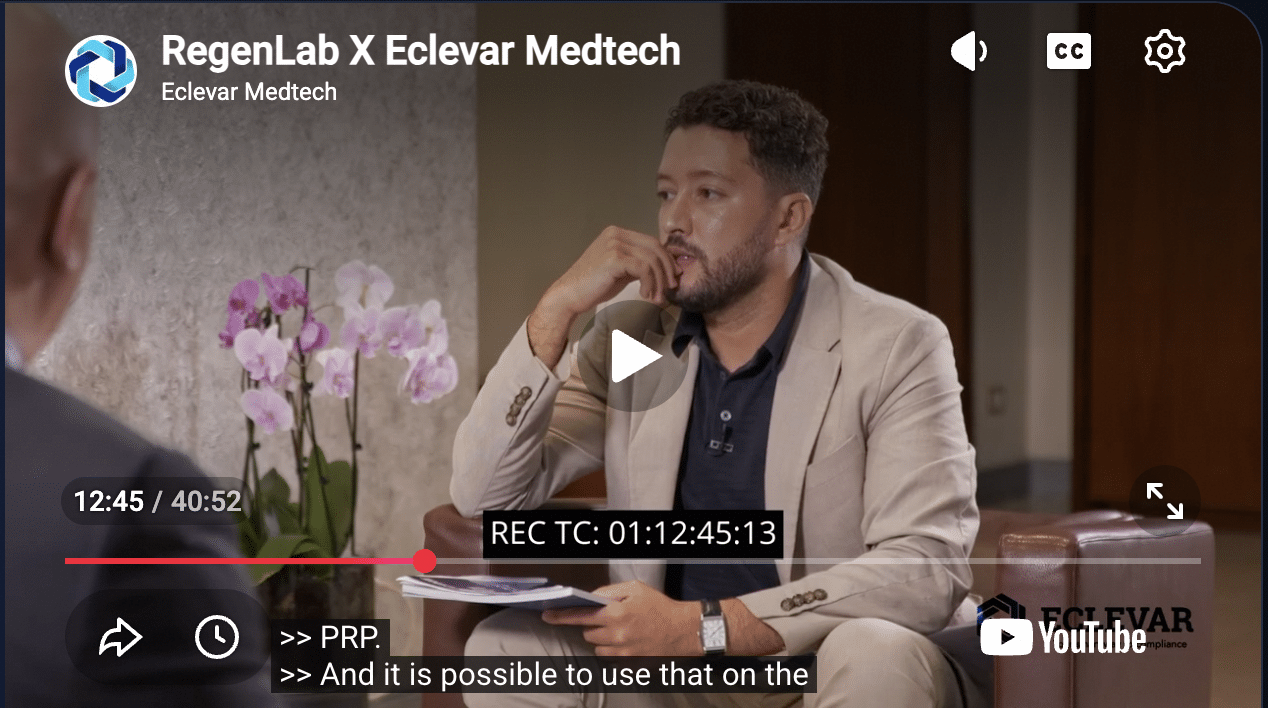
PMCF Studies · Regenerative Medicine · 5 EU Countries
Eclevar manages RegenLab’s PMCF programme on chronic wound devices: a randomised study of 160 patients across 14 sites in 5 EU countries, covering diabetic foot ulcer (DFU) and venous leg ulcer (VLU) indications. The partnership combines Eclevar’s ISO 14155 clinical expertise with the Milo Studio platform.
"Eclevar, with its tailor-made approach and advanced Milo Studio platform, represents a major strategic asset."Antoine Turzi, CEO, RegenLab
A whitepaper co-signed by BSI and Eclevar on the clinical requirements of EU MDR.
Read the whitepaper →A CRO built by people who have assessed device dossiers from the inside and build comparative evidence for the markets, including Germany, that increasingly demand it. Meet the full leadership team →




German pathways are evidence-hungry and hospital-centred. An expert read tells you which pathway your device must travel and where the comparative evidence falls short, before an annual cycle slips a year of access. Book a call, or email clientcare@eclevar.com.
Book a free scoping callQuestions sponsors ask us first