Insight · EU MDR · WET Device List
On 20 March 2026 the European Commission adopted two delegated regulations, C(2026) 1798 and C(2026) 1809, expanding the EU MDR list of well-established technologies. For the right device, it can remove the obligation to run a clinical investigation. For the wrong reading of it, it is a compliance trap.

European Champion
Platinum Award 2026
Eclevar MedTech & Milo Health · xShare × EUCROF Open Call
Led by authority
The people accountable for the WET call have sat on both sides of the submission: building devices and reviewing them. They make the similar-device call the way a Notified Body will.

Cardiac surgeon and former lead Notified Body reviewer at TÜV SÜD. 400+ devices CE-certified.
in LinkedIn
Former clinical reviewer at TÜV SÜD for Class III implants; PMCF and CER methodology.
in LinkedIn
CERs under MEDDEV 2.7/1 Rev 4 and EU MDR, and Notified Body deficiency response.
in LinkedInAwards, funding, accountability
The Platinum Award, the top tier of the xShare & EUCROF Open Call 2026, was won by the Milo Health platform: independent recognition, externally judged, scoped to what was awarded.
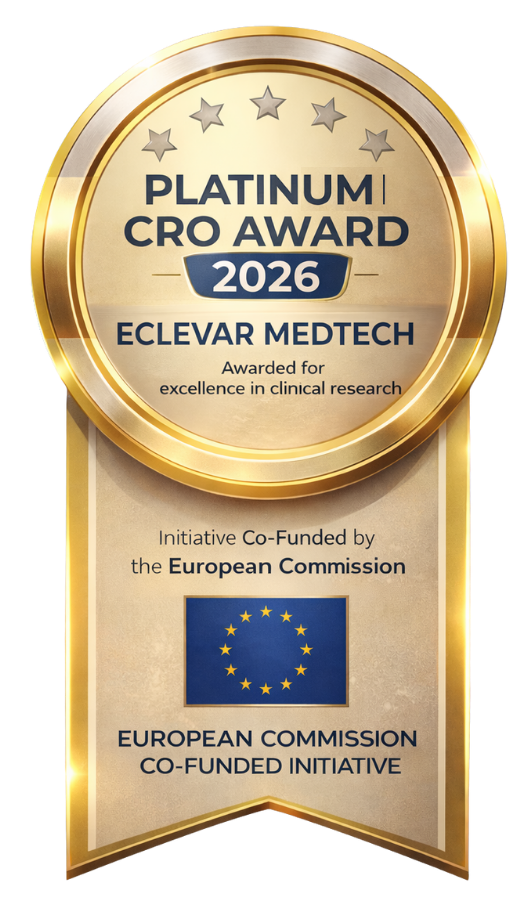
Top tier at the xShare × EUCROF Open Call, awarded to Eclevar MedTech and its Milo Health platform, presented at EUCROF 2026 in Amsterdam.
The announcement →Selected through the xShare Open Call for clinical research innovation, Horizon Europe.
xShare results →Distinction confirmed by an independent third party, the CVBF, also an awardee of the xShare × EUCROF Open Call.
CVBF coverage →Trusted by global manufacturers





Proof in practice
Real programs built on endpoints and evidence that hold up with Notified Bodies and reimbursement reviewers. See client success stories →
A multicentre transcatheter aortic valve implantation study across eight UK sites, feeding the clinical evidence a CER and reimbursement dossier rely on.
A within-patient crossover RCT versus marketed compact catheters. Data captured in a validated EDC to 21 CFR Part 11, under ISO 14155:2026.
Proof, not adjectives
What this article covers
The 2026 WET update
Here is what the delegated regulation on WET devices actually changes for your clinical evidence, and the obligation it pointedly does not remove.
01 / 03
In March 2026 the Commission adopted two delegated regulations that adjust how certain well-established device types are handled. One expands the list of device types that may be exempt from conducting a new pre-market clinical investigation, bringing in established categories such as certain cardiovascular catheters and cannulas; the other introduces a simplified assessment route for some implantable Class IIb devices. Together they lighten specific, defined burdens for devices the regulation regards as well established.
The relief is real but narrow. The exemptions apply to particular device types under particular conditions, not to a broad swathe of the portfolio, and reading them as a general relaxation is the mistake that turns a helpful change into a compliance gap. The first task is to confirm precisely whether a given device falls within the scope of these provisions, because the answer is specific, not assumed. A structured MDR technical review is the fastest way to make that call defensible.
Both regulations take effect twenty days after publication in the Official Journal, and they sit alongside the rest of the MDR framework rather than replacing any of it. A device that benefits from one of them still has to meet every other obligation the regulation imposes, which is the point that follows, because it is the one most easily lost.
The temptation these changes create is understandable: any relief from the cost of a clinical investigation is welcome, and a busy regulatory team may be inclined to read the exemptions generously. But a generous reading is exactly what a reviewer will test, and an exemption claimed for a device that does not strictly qualify is worse than no exemption, because it signals a misunderstanding of the obligations that remain. Building the reading into a documented regulatory affairs strategy keeps the saving defensible.
The safe posture is precision: treat each provision as applying only where its specific conditions are met, document why the device qualifies, and assume every other obligation continues unchanged. Read this way, the 2026 regulations become a genuine, defensible saving rather than a source of risk dressed as relief. The first practical step is the least glamorous and the most important: read the actual scope of each provision against each device, rather than the headline summary. A summary that says certain catheters may be exempt is a prompt to check, not a conclusion to act on.
The two acts, side by side
02 / 03
This is where teams get caught. An exemption from the clinical investigation is not an exemption from the clinical evaluation. Recital (5) is explicit: you must still plan, conduct and document a clinical evaluation, with a CER, under Annex XIV. The reality is that you still need sufficient clinical data; you are simply allowed to rely on existing evidence rather than generate new investigation data. Explore our clinical evaluation service: the CER you must still build even when the clinical investigation is waived.
The crucial point, stated plainly in the regulation’s own recitals, is that exemption from a pre-market clinical investigation is not exemption from clinical evaluation. A device that no longer has to run a new investigation still has to demonstrate, through a clinical evaluation, that it achieves its intended performance and that its benefit-risk is acceptable against the state of the art. The evaluation obligation survives the investigation exemption entirely.
This distinction is where portfolios get caught. A manufacturer who reads the well-established-technology exemption as meaning the device needs little clinical evidence carries an evaluation gap behind an apparently settled certificate, and that gap surfaces at the next review or surveillance audit, when the reviewer asks for the clinical evaluation the exemption never removed. The exemption changed the route, not the destination.
Post-market expectations often rise to compensate, too. Where a device leans on the lighter pre-market route, the post-market clinical follow-up that confirms its performance in real use carries more weight, not less, so a well-established device with a thin post-market plan is exposed precisely where it assumed it was relieved.
It also helps to think about who reads the file later. A reviewer or auditor encountering a device that claims the exemption will look first for the rationale that justifies it, and second for the clinical evaluation that the exemption never removed. A device that has the exemption but lacks a documented basis for it, or lacks the underlying evaluation, is in a weaker position than one that quietly did the full work, because the claim of exemption now has to be defended as well. A robust quality management system under ISO 13485 is what keeps that rationale traceable through renewal.
03 / 03
The practical response is a device-by-device review against the new provisions: confirm which devices actually fall within the exemption or the simplified route, and for each, verify that the clinical evaluation and the post-market plan still meet the standard the regulation requires. The exemptions are an opportunity to save effort where they genuinely apply, and a trap where they are assumed to apply more broadly than they do.
For devices that do qualify, the saving is real and worth capturing, but it has to be documented properly, with the rationale for the exemption recorded and the clinical evaluation kept current. An exemption claimed without a clear, defensible basis is itself a finding waiting to happen, so the paperwork that supports the lighter route has to be as rigorous as the route it replaces.
For devices that do not qualify, the task is unchanged: a full clinical evaluation, supported by sufficient evidence, maintained through renewal. The 2026 changes are a reason to check the portfolio carefully, not a reason to relax it, and the manufacturers who treat them that way capture the genuine relief without inheriting the hidden gap.
The strategic read is that 2026 rewards manufacturers who know their portfolio in detail and penalises those who manage it by broad assumption. The genuine savings are real and worth capturing, but they sit alongside obligations that are unchanged or even heightened, and only a device-by-device view separates the two. Treated as an invitation to audit the portfolio rather than relax it, the new regulations are an opportunity; treated as blanket relief, they are a liability in waiting.
Your four-step portfolio check
Eclevar assesses whether your devices qualify under the 2026 WET lists, and builds the clinical evaluation you still owe even when the investigation is waived. Former Notified Body reviewers make the similar-device call the way a Notified Body will. Meet them on the leadership page.
Talk to a reviewer
Book a free scoping call with a former Notified Body reviewer. We make the similar-device call against MDCG 2020-6 the way a Notified Body will, and tell you what evidence you still owe.
Book a free scoping callThe relief in one view
A WET device may skip the pre-market clinical investigation, but the clinical evaluation, the CER and the post-market plan all survive the exemption.
You still owe a clinical evaluation
A WET exemption removes the pre-market investigation, not the clinical evaluation under Annex XIV. We build the CER a reviewer can trace end to end.
Explore our clinical evaluation service
Official Eclevar resources
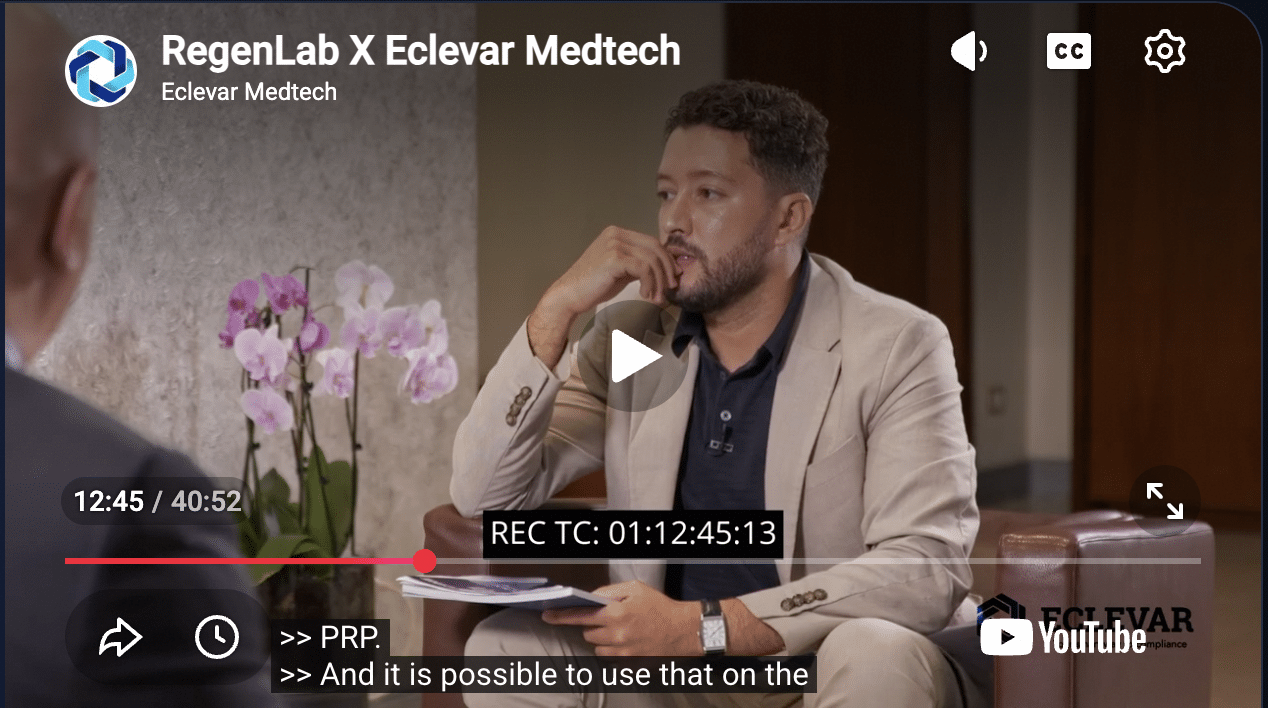
PMCF Studies · Regenerative Medicine · 5 EU Countries
Eclevar manages RegenLab’s PMCF program on chronic wound devices: a randomized study of 160 patients across 14 sites in 5 EU countries, covering diabetic foot ulcer (DFU) and venous leg ulcer (VLU) indications. The partnership combines Eclevar’s ISO 14155 clinical expertise with the Milo Studio platform.
“Eclevar, with its tailor-made approach and advanced Milo Studio platform, represents a major strategic asset.”Antoine Turzi, CEO, RegenLab
A whitepaper co-signed by BSI and Eclevar on the clinical requirements of EU MDR.
Read the whitepaper →Clinicians and a former Notified Body reviewer, named, not handed to a junior account team. Meet the full leadership team →

The 2026 WET update can save a clinical investigation, or create a false sense of relief. An expert assessment tells you which devices qualify, and what evidence you still owe.
Book a free scoping callQuestions we hear first