

TAVI · Structural heart · EU MDR

TAVI clinical trial CRO in Europe.

Transcatheter aortic valve implantation is a class III implant, and its evidence bar is the highest the MDR sets. We run structural heart investigations to VARC-3, with an independent clinical events committee, an imaging core lab and Heart Team eligibility built in from the protocol.

EU MDR Article 62 & 70VARC-3 endpointsISO 14155:2026Imaging core lab
TAVI and structural heart clinical trial imaging and biometry, Eclevar MedTech

Structural heart

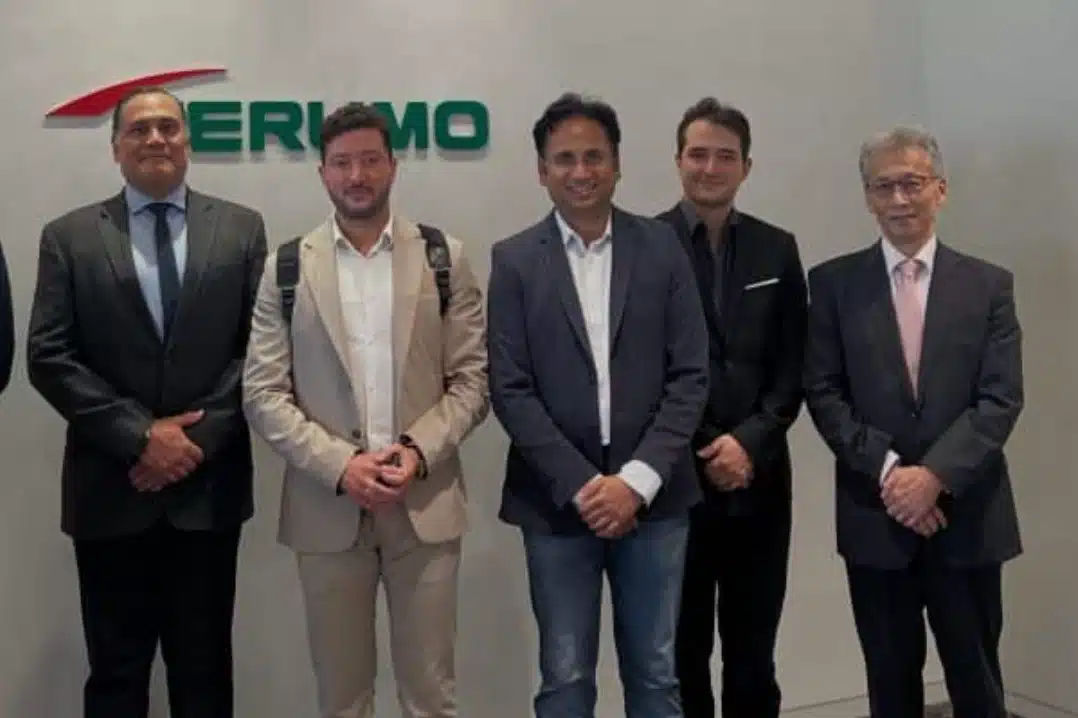
666-patient TAVI programme, UK

A multicentre transcatheter aortic valve investigation run for Meril across UK sites, under ISO 14155.

See the service →Our medical device CRO →

Cardiovascular leadership

A recognised European cardiovascular team

Prof. Mark DaCosta

Prof. Mark DaCosta

Chief Operating Officer & Head of Cardiovascular

TÜV SÜD
25+yrs

in cardiac surgery & cardiovascular device evaluation

  • Cardiac surgeon & former TÜV SÜD Lead Cardiovascular Reviewer
  • Reviewed clinical evidence for 400+ cardiovascular devices
  • Leads Eclevar's TAVI, structural heart & high-risk cardiovascular device programmes
LinkedIn
Susanne Höfer

Susanne Höfer

Head of Cardiovascular Clinical Operations · DACH

Previously
Edwards Lifesciences Stryker ReCor
19+yrs

in international clinical research (cardiovascular & interventional)

  • Led international programmes covering ~200 sites & ~3,000 patients
  • Investigator engagement, KOL collaboration & site training
  • Oversees cardiovascular study delivery across the DACH region
LinkedIn
S. Meier Piantanida

Sébastien Meier Piantanida

Chief Data Officer · Biometrics & Data Systems

30yrs

in clinical data management, EDC & biometrics systems

  • Leads EDC, clinical data management & biometrics across the study lifecycle
  • Expertise in CDISC, CDASH, SDTM & ADaM
  • Oversees validated data flows between sites, the Core Lab & statistical teams
LinkedIn
Mathilde Renier

Mathilde Renier

Senior Clinical Data Manager · Cardiovascular

10+yrs

in cardiovascular clinical data management

  • Manages eCRF & database build, validation, cleaning & lock
  • Coordinates imaging & endpoint data from the Core Lab to analysis
  • Supports VARC-3-aligned data collection, review & traceability
LinkedIn
Charline Petitdemange

Charline Petitdemange

Lead Clinical Project Manager · Cardiovascular programs (France & UK)

10+yrs

in clinical research & medical device studies

  • Leads cardiovascular investigations & PMCF studies from start-up to close-out
  • Manages site coordination, monitoring, timelines & cross-functional teams
  • Former CPM at the Centre de Recherche Cardio-Vasculaire des Alpes
LinkedIn

Awards, funding, accountability

A European champion, backed and co-funded.

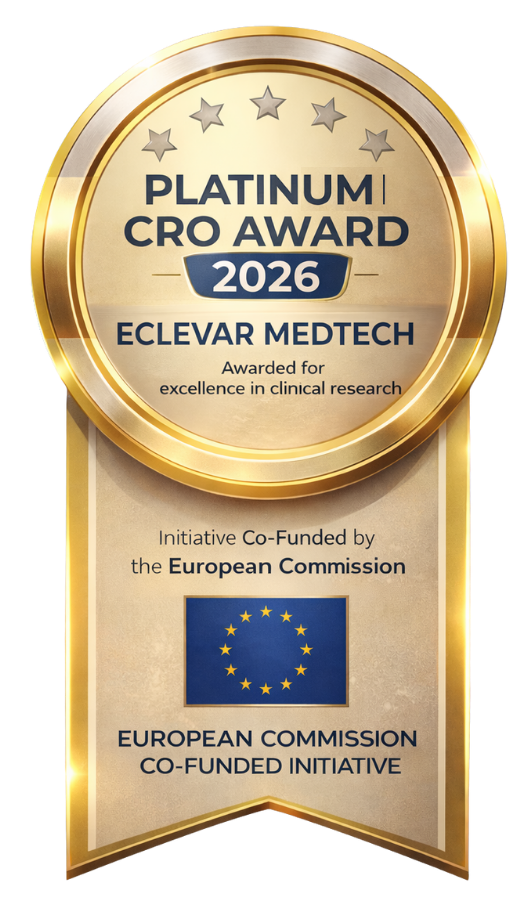
Platinum Award 2026

Platinum Award, xShare Open Call 2026

The MILO Health platform received the Platinum Award through the xShare Open Call, organised by EUCROF and co-funded by the European Union. Amsterdam, 2 February 2026.

The announcement →

Co-funded by the European Union

Horizon Europe Grant Agreement 101136734. Eclevar contributes to the European Health Data Space work on clinical research data quality.

xShare results →

Backed by private investors and VC

Eclevar MedTech and the MILO clinical platform are backed by private investors and venture capital, including Ballas Invest.

Funding & investors →

Trusted by global manufacturers

Manufacturers who put their evidence in our hands.

01 · The regulatory frame

TAVI under EU MDR, the highest evidence bar.

A transcatheter heart valve is a class III implantable device. It sits at the top of the MDR classification, so the depth of clinical evidence, and the rigour of the investigation that produces it, is not negotiable.

Article 62 / Article 70

A clinical investigation, designed for conformity.

A pre-market clinical investigation conducted to demonstrate conformity is governed by Article 62 of Regulation (EU) 2017/745, which sets the general requirements: ethical approval, informed consent, a justified design and a benefit-risk assessment against the state of the art. The application and authorisation route runs through the Member State under Article 70. For a structural heart device, both are read by reviewers who have seen every shortcut, so the protocol is written to ISO 14155:2026 good clinical practice from the first draft.

What a class III valve investigation must carry

  • A design justified against the state of the art in transcatheter aortic valve therapy, not against a convenient comparator
  • Endpoints defined to a recognised standard so the results are comparable to the published evidence base
  • Independent adjudication of safety and efficacy events, separated from the sponsor and the sites
  • A benefit-risk analysis that survives review by a Notified Body familiar with structural heart devices

ISO 14155:2026

Good clinical practice for medical device investigations.

ISO 14155 is the good clinical practice standard for clinical investigations of medical devices in human subjects. It governs the responsibilities of sponsor and investigator, risk management integration with ISO 14971, monitoring, and the handling of adverse device effects. Every Eclevar structural heart investigation is built to it, so the trial that supports your CE mark also stands up as an evidence source in the clinical evaluation report.

02 · The endpoint language

VARC-3 endpoint definitions.

The Valve Academic Research Consortium 3 definitions, published in 2021, are the accepted framework for aortic valve clinical research. Using them makes your results comparable to the trials a Notified Body and a payer already know.

01

Device success

Successful access, delivery and deployment, correct position, intended performance and freedom from surgery or re-intervention related to the device.

Defined at the procedure and at 30 days, not judged case by case at each site.
02

Early safety

A 30-day composite: all-cause mortality, stroke, VARC-3 bleeding, major vascular or cardiac structural complication, acute kidney injury and re-intervention.

One composite, one definition, adjudicated the same way across every site.
03

Clinical efficacy

A time-related composite beyond 30 days: mortality, stroke, hospitalisation for valve disease or heart failure, and prosthetic valve dysfunction.

The endpoint that carries durability and performance over follow-up.
04

Valve haemodynamics

Mean gradient, effective orifice area and paravalvular regurgitation, graded to a standard scale and read centrally.

Read by the imaging core lab, so a gradient means the same thing everywhere.
05

Bleeding, vascular and conduction endpoints

VARC-3 standardises bleeding severity, access-site and non-access-site vascular complications, and new conduction disturbance including permanent pacemaker implantation. These are the events where transcatheter valves most often differ, and where a consistent definition changes the interpretation of a whole trial.

Généreux P et al, JACC 2021Device successEarly safetyClinical efficacyHaemodynamics

03 · Independence and central reading

Independent clinical events committee and imaging core lab.

Endpoints only mean something if they are judged the same way for every patient, by people with no stake in the result. Two independent structures do that work.

Adjudication · Independent

Clinical events committee

VARC-3 event adjudication

An independent clinical events committee adjudicates every primary endpoint against the pre-specified VARC-3 definitions, blinded to device allocation where the design allows. A data safety monitoring board oversees patient safety through the study and can recommend changes or a stop. Neither the sponsor nor the sites decide whether an event counts.

Central reading · Independent

Imaging core lab

CT sizing and echocardiography

An independent imaging core lab performs standardised CT annulus sizing before the procedure, reads transthoracic (TTE) and transoesophageal (TEE) echocardiography at each follow-up, and grades paravalvular regurgitation and gradients to a single scale. Central reading removes site-to-site variability from the haemodynamic endpoints that carry a valve's performance argument.

Why independence is not optional for a class III valve

  • Blinded, independent adjudication is what lets a reviewer trust a 30-day early safety composite across dozens of sites
  • A core lab is the only way a mean gradient or a regurgitation grade is comparable between a site in the UK and a site in Italy
  • CT annulus sizing before implantation feeds device selection and is itself an evidence point the reviewer will examine
  • Separating these functions from the sponsor is what turns a set of site reports into evidence a Notified Body will accept

Proof, not adjectives

The evidence programme behind the argument.

50+
EU MDR device programmes delivered
0
major Notified Body non-conformities
8
countries with in-house CRAs
400+
devices CE-certified by our reviewers

04 · The right patient

Heart Team eligibility, documented against the protocol.

Who receives a transcatheter valve is not a single clinician's call. It is a multidisciplinary decision, and in a clinical investigation that decision has to be recorded, not assumed.

The multidisciplinary decision

Interventional cardiologist, cardiac surgeon, imaging specialist.

Eligibility for TAVI is decided by a Heart Team: in practice an interventional cardiologist, a cardiac surgeon and an imaging specialist, who together review the anatomy, surgical risk and comorbidity of each candidate. In a clinical investigation that decision is documented against the protocol inclusion and exclusion criteria, which protects the integrity of the enrolled population and the interpretability of the endpoints. A population that drifts from the protocol is the fastest way to weaken an otherwise strong study.

What the Heart Team assessment protects

  • The enrolled population matches the intended-use population the CE mark will claim
  • Surgical-risk stratification is consistent, so subgroup analyses hold together
  • CT and echo findings feed both eligibility and the imaging core lab dataset
  • The eligibility record is auditable, so a reviewer can trace who was enrolled and why

Talk to a reviewer

Is your TAVI protocol built to survive a Notified Body?

Book a structural heart readiness review with a cardiac surgeon and former Notified Body reviewer. We tell you whether your endpoints, adjudication and imaging plan will hold, and what is missing.

Book a readiness review
Eclevar MedTech structural heart clinical evidence in Europe
Read by the person who assesses itA structural heart investigation is written for the reviewer who will judge every adjudicated event.

05 · Service

TAVI and structural heart, inside one evidence programme.

Structural heart clinical evidence services for medical device manufacturers in France, Germany, the United Kingdom, Ireland, Switzerland, Italy, Spain and the Netherlands.

01 · DESIGN

Investigation design, ISO 14155

Protocol, endpoints and statistical plan for a class III valve, built to ISO 14155:2026 and MDR Article 62, with VARC-3 endpoints pre-specified.

02 · SUBMISSION

Article 70 application

The clinical investigation application and authorisation route through the Member State, with the essential documents a competent authority expects.

03 · ENDPOINTS

VARC-3 endpoint framework

Device success, early safety, clinical efficacy and haemodynamic endpoints defined to VARC-3, so results map to the published trial base.

04 · ADJUDICATION

Clinical events committee

An independent CEC and a data safety monitoring board, charters written, events adjudicated blinded to allocation where the design allows.

05 · IMAGING

Imaging core lab

Central CT annulus sizing and TTE/TEE echocardiography reading, with standardised grading of gradients and paravalvular regurgitation.

06 · ELIGIBILITY

Heart Team documentation

Eligibility captured against inclusion and exclusion criteria, so the enrolled population matches the intended-use claim.

07 · DATA

Biometry and eCRF

Endpoint capture in MILO Studio, 21 CFR Part 11 compliant, with in-house biometry, monitoring across our European network and a single database lock.

08 · PMCF

Post-market clinical follow-up

PMCF studies and registry follow-up for long-term valve durability, endpoints defined to VARC-3 so pre and post-market data reconcile.

09 · CER

Clinical evaluation report

The investigation outcomes assembled into the CER for cardiovascular devices, under MEDDEV 2.7/1 Rev 4 and EU MDR.

One platform, one dataset, one lock.

Endpoints, imaging data and resource use are captured in MILO Studio, so the structural heart investigation, its adjudication and its follow-up run on a single audit-trailed database. See our cardiovascular clinical strategy under EU MDR →

06 · Proof in practice

The Meril TAVI programme, at scale in the UK.

The clearest proof that we can run a structural heart investigation is that we have. A multicentre transcatheter aortic valve programme, run for a global valve manufacturer, across UK sites.

Case study · Cardiovascular

TAVI clinical investigation, UK

Meril Life Sciences
666
patients
8
UK sites
18
months

A multicentre transcatheter aortic valve implantation investigation across UK sites, run under ISO 14155, feeding the clinical evidence a CER and reimbursement dossier rely on. Exactly the structural heart setting where independent adjudication and central imaging decide whether the data is usable.

Deficiency response · PMCF

Nihon Kohden

Cardiac monitoring, class IIa

Resolution of Notified Body deficiencies, followed by the PMCF and clinical strategy. The same discipline that carries a cardiovascular device through review after the certificate is issued. See client success stories →

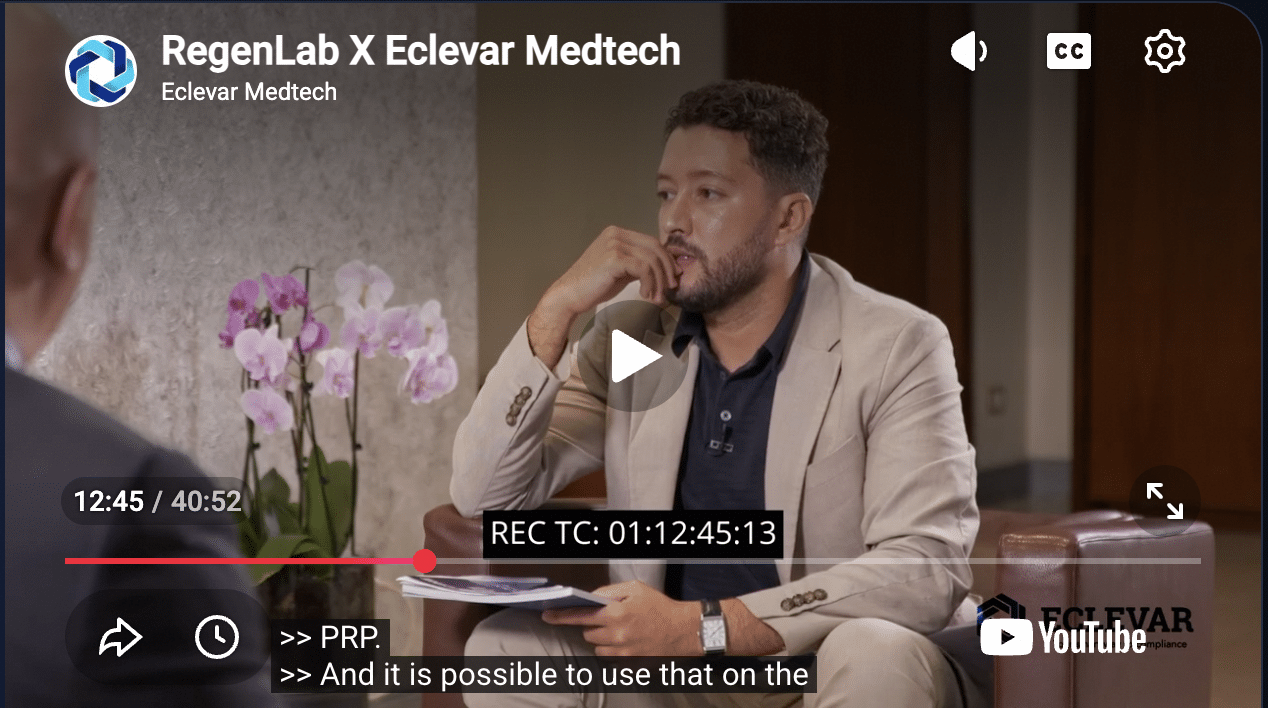
RegenLab CEO on Eclevar MedTech

PMCF · Multi-country · 5 EU countries

Antoine Turzi, CEO of RegenLab, on running complex trials in Europe.

A post-market clinical follow-up programme of 160 patients across 14 leading clinical sites in five countries, run to schedule on the MILO Studio platform. The same multi-country delivery capability a structural heart follow-up depends on.

"Eclevar, with its tailor-made approach and advanced MILO Studio platform, represents a major strategic asset."Antoine Turzi, CEO, RegenLab

160patients · 14 sites
5EU countries

07 · After the certificate

PMCF and registry follow-up, for the life of the valve.

A transcatheter valve is implanted for years. The evidence obligation does not end at the CE mark, it extends across the whole implant lifetime.

Annex XIV Part B

PMCF is mandatory for a class III valve.

Under EU MDR Annex XIV Part B, post-market clinical follow-up is mandatory for a class III implantable device, and for a heart valve the questions it answers are specific: long-term durability, structural valve deterioration, and freedom from re-intervention. We design prospective PMCF studies with follow-up endpoints defined to VARC-3, so the post-market data speaks the same language as the pre-market investigation. Why PMCF is crucial under EU MDR →

Registries & real-world evidence

National and European heart valve registries.

Where a suitable registry exists, real-world evidence is an efficient route to long-term safety and performance data. We use national and European heart valve registries with follow-up endpoints mapped to the investigation, so registry data supports the CER rather than sitting beside it unreconciled. Real-world evidence and registries →

08 · The evidence, assembled

Integration into the clinical evaluation report.

A clinical investigation that cannot be used in the CER is a wasted study. We design the trial so its outputs become CER inputs without translation.

01

Endpoints mapped to the GSPRs

VARC-3 outcomes are mapped to the general safety and performance requirements the CER has to demonstrate.

Every endpoint traces to a requirement, so the reviewer follows the argument end to end.
02

Investigation data as clinical data

The adjudicated VARC-3 dataset and central imaging reads become the clinical data inputs to the CER.

Written under MEDDEV 2.7/1 Rev 4, aligned to EU MDR, by the team that ran the study.
03

Benefit-risk, one thread

The benefit-risk analysis in the investigation carries straight into the CER conclusion.

No contradiction between the study report and the evaluation a Notified Body reads.
04

PMCF closes the loop

Follow-up endpoints feed the CER update cycle across the device lifetime.

The same VARC-3 definitions, from first patient in to the last durability report.

This is the point of running the whole programme with one CRO: the clinical evaluation report for cardiovascular devices is not a document assembled at the end from other people's work. It is the destination the investigation was designed to reach, which is why the endpoints, the adjudication and the imaging plan are fixed before the first patient is enrolled.

Who signs your dossier

Cardiovascular expertise, not outsourced.

A cardiac surgeon, former Notified Body reviewers and a biometry team, named, not handed to a junior account team. Meet the full leadership team →

Dr Mark DaCosta
Dr Mark DaCosta
COO & CMO · Cardiovascular
Cardiac surgeon and former Notified Body reviewer (TÜV SÜD). 400+ devices CE-certified. Leads structural heart strategy.
in LinkedIn
Dr Nikhil Khadabadi
Dr Nikhil Khadabadi
CMO · Ortho & Spine
NHS surgeon for 15+ years, former Notified Body clinical reviewer. Benefit-risk and residual clinical risk.
in LinkedIn
Pierre-Marie Boutanquoi
Head of Medical Writing
CER methodology, equivalence and the written argument that carries clinical evidence through review.
in LinkedIn
Sébastien Meier Piantanida
Chief Data Officer · Biometry
30 years in biometry; architect of the MILO Studio platform, 21 CFR Part 11. Endpoint data management lead.
in LinkedIn
Jimmy Andrew Hayek
Jimmy Andrew Hayek
Head of Quality & Compliance
Quality and compliance infrastructure, ISO 13485:2016 and 21 CFR Part 11 validation.
in LinkedIn

Official Eclevar resources

Our reference content.

WHITEPAPER · BSI × ECLEVAR

BSI and Eclevar whitepaper on EU MDR

A whitepaper co-signed by BSI and Eclevar on the clinical requirements of EU MDR.

Read the whitepaper →
UPCOMING · TÜV SÜD
Coming soon

Questions we hear first

TAVI clinical trials in Europe, answered.

What does a TAVI clinical trial CRO do?
A TAVI clinical trial CRO designs and runs the clinical investigation that supports a transcatheter aortic valve, from protocol and Heart Team eligibility to VARC-3 endpoint adjudication, imaging core lab analysis, monitoring, biometry and database lock. Under EU MDR it also connects that evidence to the clinical evaluation report and the post-market clinical follow-up plan, so a single dataset serves the Notified Body across the device lifetime.
Which EU MDR articles govern a TAVI clinical investigation?
A pre-market clinical investigation conducted to demonstrate conformity is governed by Article 62 of Regulation (EU) 2017/745, which sets the general requirements, and by Article 70, which sets the application and authorisation route through the Member State. Class III implantable heart valves sit at the top of the evidence requirement, so the investigation is designed to ISO 14155 good clinical practice from the first draft of the protocol.
What are VARC-3 endpoints and why do they matter?
The Valve Academic Research Consortium 3 definitions, published in 2021, are the accepted endpoint framework for aortic valve clinical research. They standardise device success, early safety, clinical efficacy and hospitalisation composites, and they define mortality, stroke, bleeding, vascular complications, conduction disturbance and valve haemodynamics consistently across trials. Using VARC-3 makes your results comparable to the published evidence base a Notified Body and a payer already know.
Do you provide an independent clinical events committee and imaging core lab?
Yes. An independent clinical events committee adjudicates every primary endpoint against the pre-specified VARC-3 definitions, blinded to device allocation where the design allows, and a data safety monitoring board oversees patient safety. An independent imaging core lab performs standardised CT annulus sizing before the procedure and reads TTE and TEE echocardiography at each follow-up, so haemodynamic endpoints are measured the same way at every site.
How does the Heart Team decide eligibility?
Eligibility for TAVI is decided by a multidisciplinary Heart Team, in practice an interventional cardiologist, a cardiac surgeon and an imaging specialist, who review anatomy, surgical risk and comorbidity. In a clinical investigation that decision is documented against the protocol inclusion and exclusion criteria, which protects the integrity of the population and the interpretability of the endpoints.
How does the TAVI clinical evidence feed the CER?
The clinical investigation is not an isolated study. Its VARC-3 outcomes, safety data and haemodynamic performance become the clinical data inputs to the clinical evaluation report under MEDDEV 2.7/1 Rev 4 and EU MDR, and the same evidence programme continues into post-market clinical follow-up. Designing the trial with the CER in mind avoids the gap where a strong study cannot be used because its endpoints were never mapped to the general safety and performance requirements.
What PMCF and registry follow-up is required for a TAVI valve?
For a class III implantable valve, post-market clinical follow-up under Annex XIV Part B is mandatory, and long-term valve durability and structural valve deterioration have to be followed for years after implantation. That is met through prospective PMCF studies and through structured use of national and European heart valve registries, with follow-up endpoints defined to VARC-3 so the post-market data reconciles with the pre-market investigation.

Sources

Every reference, at source.

  • Regulation (EU) 2017/745 on medical devices. Article 62 (general requirements for clinical investigations) and Article 70 (application for clinical investigations). Annex XIV Part B (post-market clinical follow-up).
  • ISO 14155:2026. Clinical investigation of medical devices for human subjects, good clinical practice.
  • Généreux P, Piazza N, Alu MC, et al. Valve Academic Research Consortium 3: updated endpoint definitions for aortic valve clinical research. J Am Coll Cardiol 2021;77:2717-2746.
  • ISO 14971. Medical devices, application of risk management to medical devices.
  • MEDDEV 2.7/1 Rev 4. Clinical evaluation, a guide for manufacturers and notified bodies under directives.
France

TAVI clinical operations in France

Structural heart trials in France rely on Heart Team coordination and high-volume cardiac centres. We support TAVI and structural heart sponsors with access to French investigator sites, proctoring logistics and imaging core-lab alignment, under ISO 14155:2026 and EU MDR 2017/745.

On the access side, we build the CNEDiMTS / HAS evidence in parallel with the MDR clinical file, so a TAVI programme addresses both CE marking and French reimbursement in one coordinated plan.

Heart Team coordinationFrench structural-heart centresCNEDiMTS / HASImaging core-lab

Send us the protocol before you send it to the ethics committee.

We will tell you whether your TAVI investigation can carry a class III valve through the MDR, what is missing, and how to fix it before the first patient is enrolled.

Book a structural heart readiness review

Reforming Clinical Evaluation of Medical Devices in Europe