Insight · EU MDR · Wound Care
Wound dressings were, for years, a low-friction category. Under EU MDR, the clinical evaluation report for a wound dressing has become the place where a small mismatch, between what the dressing claims, how it is classified, and what evidence exists, quietly stalls CE marking.

European Champion
Platinum Award 2026
Eclevar MedTech & Milo Health · xShare × EUCROF Open Call
Led by authority
The people accountable for your wound-dressing file have sat on both sides of the submission: building devices and reviewing them. Meet the medical device CRO behind the file.

Cardiac surgeon and former lead Notified Body reviewer at TÜV SÜD. 400+ devices CE-certified.
in LinkedIn
Former clinical reviewer at TÜV SÜD for Class III implants; PMCF and CER methodology.
in LinkedIn
CERs under MEDDEV 2.7/1 Rev 4 and EU MDR, and Notified Body deficiency response.
in LinkedInAwards, funding, accountability
Won by the Milo Health platform in the xShare Open Call for Clinical Research, the top Platinum tier: independent recognition, externally judged, scoped to what was awarded.

Top tier at the xShare × EUCROF Open Call, awarded to Eclevar MedTech and its Milo Health platform, presented at EUCROF 2026 in Amsterdam.
The announcement →Selected through the xShare Open Call for clinical research innovation, Horizon Europe.
xShare results →Distinction confirmed by an independent third party, the CVBF, also an awardee of the xShare × EUCROF Open Call.
CVBF coverage →Trusted by global manufacturers





What this article covers
The alignment problem
The root issue is alignment. A wound dressing CER under MDR fails not because the dressing is unsafe, but because the claim, the classification and the clinical evidence have drifted apart.
The rule
A simple barrier dressing and an antimicrobial or absorbable dressing are not the same regulatory animal. The moment a dressing makes an active or therapeutic claim, antimicrobial action (for example silver), fluid handling that does more than absorb, a healing claim, it can climb the classification ladder, and with it the wound dressing CE mark evidence burden. Antimicrobial, substance-based and absorbable dressings, in particular, attract higher classification and more demanding clinical evidence.
The link runs in one direction and it is unforgiving: the claim you make determines the classification, and the classification determines the evidence you owe. A dressing claimed only as a physical barrier sits in one class; the moment the claim reaches for an active effect, exudate management framed as therapy, an antimicrobial benefit, a role in healing, the device can climb the risk classes and inherit a far heavier evidence burden. The words on the label are a regulatory commitment, not marketing.
This is why claims cannot be written by marketing and inherited by regulatory. Every therapeutic or active claim has to be one the clinical evidence can actually support at the class it triggers, and a claim that outruns its evidence is the most common reason a wound-dressing file unravels under MDR. A disciplined regulatory affairs strategy decides, deliberately, which claims are worth the evidence they cost, before they are committed to the label.
The legacy trap
Under the previous directive many of these claims passed with modest evidence, which is exactly the trap. A dressing that carried an ambitious claim for years on a thin file now has to support that claim to the MDR standard at its true classification, and the gap between the old evidence and the new requirement is where the transition risk concentrates.
It helps to remember that classification under MDR is rule-based, not negotiable. The rules read the device's intended purpose and claims and assign the class accordingly, so a manufacturer cannot simply choose a comfortable class; the claims choose it for them. This is why claim discipline is the real lever, because it is the one input the manufacturer controls before the rules take over. An early MDR technical review is where that discipline is tested against the file.
The commercial temptation always runs toward stronger claims, and that is precisely the danger. Every step up in claim ambition is a step up in evidence obligation, and a marketing-led claim set, adopted without costing the evidence it triggers, is how a wound-dressing portfolio ends up over-promising and under-evidenced at exactly the moment a Notified Body reads it.
The cleanest way to avoid trouble is to treat the claim set as a design input, fixed early and costed deliberately, rather than a marketing decision finalised late. When the intended purpose and claims are agreed at the start, the classification follows predictably and the evidence can be planned to match, whereas a claim added near launch to strengthen the commercial story can quietly change the class and leave the evidence base a step behind, which is the gap a reviewer reads immediately.
Talk to a reviewer
Book a free scoping call with a former Notified Body reviewer. We map claim, classification and evidence onto one page, and tell you where the gap is.
Book a free scoping callFailure modes
The mismatch usually surfaces in one of three places. The classification rationale claims a lower class than the labeled claims justify; the clinical evidence supports a barrier function while the label promises an active one; or the state of the art has moved on and the comparators the file relies on no longer reflect current wound care. Any of these, read by a reviewer, signals a device whose claims, class and evidence do not line up.
It often surfaces late, which makes it expensive. A manufacturer who discovers at Notified Body review that the labeled claims imply a higher class than the file was built for faces a choice between generating new evidence under deadline or retreating the claims, and neither is cheap. Finding the mismatch first, in an honest internal review, is what keeps the choice from being forced.
The reviewer's question is simple and hard to dodge: does the evidence support every claim at the class the claims trigger? A file that cannot answer yes for each claim has a mismatch, and the only durable fixes are to strengthen the evidence or to align the claim to what the evidence supports.
Borderline and combination questions make this harder for dressings than for many device types. A dressing that incorporates a substance, releases an active agent, or relies on a particular mode of action can sit close to a classification boundary, and where it lands changes the evidence owed substantially. Resolving those borderline questions early, with a clear rationale, is far cheaper than discovering at review that the device sits one class higher than the file assumed.
The four classic mismatches
Wound care evidence
Explore our wound care CRO services: classification rationale, claim substantiation and the CER that keeps them aligned under MDR.
Explore wound care CROThe fix
The fix is to decide, deliberately, which claims the company will stand behind, then classify to those claims and build the clinical evaluation wound care EU MDR evidence to support exactly them. Drop claims you cannot evidence; evidence the claims you keep. Structured per Annex XIV Part A and MDCG 2020-13, the CER then tells one consistent story from claim to data.
Realignment starts by listing every claim and asking, for each, what class it triggers and what evidence the regulation expects at that class. The claims the evidence supports stay; the claims that outrun the evidence are either backed with new data or rewritten to match what can be shown. The result is a label, a classification and an evidence base that tell one consistent story.
Sometimes the right move is to narrow the claim. A dressing that cannot support an active therapeutic claim to the MDR standard may be stronger, commercially and regulatorily, as a well-evidenced barrier device than as an under-evidenced therapeutic one, because a claim that fails review protects nothing. Choosing the claim the evidence can defend is not a retreat; it is what keeps the device on the market.
Where a claim is worth keeping, the evidence has to be built to hold it through renewal, not just initial certification. That means a clinical evaluation anchored in a current state of the art, drawing on real-world evidence where it strengthens the file, and a post-market clinical follow-up plan that keeps the evidence fresh, so the realigned claim stays supported as the standard rises rather than slipping back into mismatch.
None of this means innovation has to be sacrificed to caution. A manufacturer can carry an ambitious therapeutic claim under MDR, but it has to fund the evidence that claim triggers, and the decision is simply whether the commercial value of the claim justifies that investment. Made deliberately, that is a sound business choice; made by default, it is how a wound-dressing portfolio ends up exposed, which is the difference between a claim that sells and one that survives review.
Eclevar realigns wound-care CERs claim by claim, with former Notified Body reviewers who know exactly where a dressing classification and evidence have to meet. We pressure-test the claims, fix the classification rationale, and build the evidence that matches. Meet the team on the leadership page.
Proof in practice
Real programs built on endpoints and statistics that hold up with Notified Bodies and reimbursement reviewers. See client success stories →
A randomized study covering diabetic foot ulcer (DFU) and venous leg ulcer (VLU) indications, run to ISO 14155 on the Milo Studio platform.
A within-patient crossover RCT versus marketed compact catheters. Data captured in a validated EDC to 21 CFR Part 11, under ISO 14155:2026.
Proof, not adjectives
Official Eclevar resources
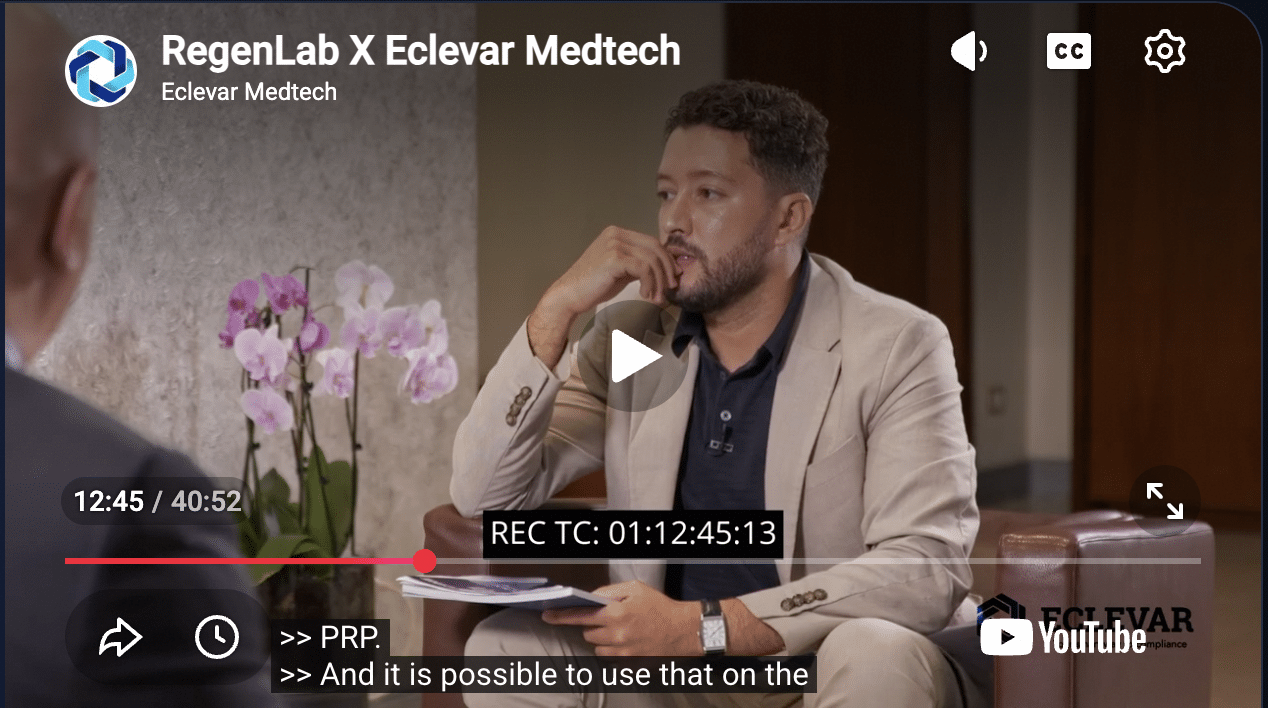
PMCF Studies · Regenerative Medicine · 5 EU Countries
Eclevar manages RegenLab's PMCF program on chronic wound devices: a randomized study of 160 patients across 14 sites in 5 EU countries, covering diabetic foot ulcer (DFU) and venous leg ulcer (VLU) indications. The partnership combines Eclevar's ISO 14155 clinical expertise with the Milo Studio platform.
"Eclevar, with its tailor-made approach and advanced Milo Studio platform, represents a major strategic asset."Antoine Turzi, CEO, RegenLab
A whitepaper co-signed by BSI and Eclevar on the clinical requirements of EU MDR.
Read the whitepaper →Clinicians and a former Notified Body reviewer, named, not handed to a junior account team. Meet the full leadership team →


If your wound-dressing claims and your CER have drifted apart, an expert read realigns them before the Notified Body finds the gap. We will map claim, classification and evidence onto one page.
Book a free scoping callQuestions we hear first