Facing a Notified Body deficiency letter or a list of major and minor non-conformities on your technical documentation, CER or clinical evidence? Eclevar responds with a structured, root-cause strategy led by a former TÜV SÜD clinical reviewer, built to resolve findings in a single round rather than patch them across many.
 Platinum Award 2026
Top prize in the xShare x European CRO Federation "EHDS & Clinical Research" Open Call, awarded to Eclevar MedTech and its Milo Health platform, presented at the EUCROF 2026 conference in Amsterdam.
Horizon Europe · Grant Agreement No. 101136734 · Amsterdam, 2 Feb 2026
Device leaders rely on Eclevar to get their files through Notified Body review. Read all client success stories.
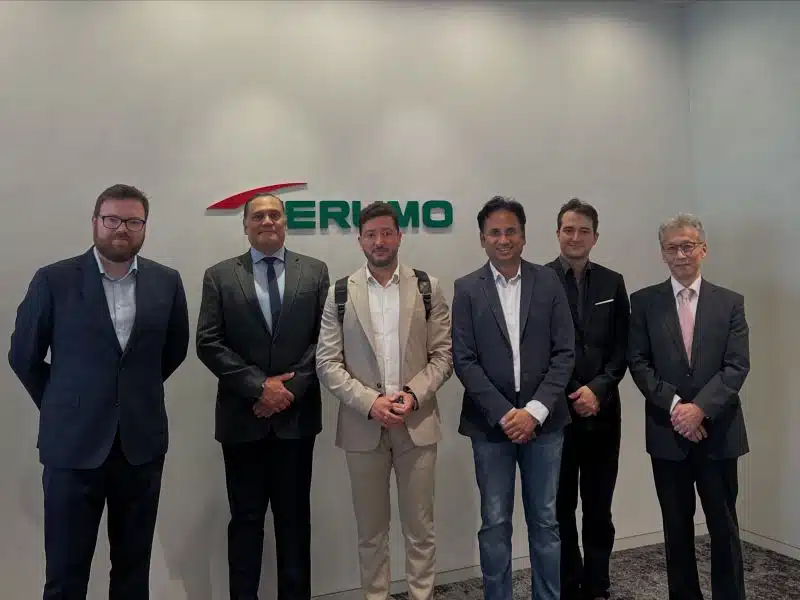








Dr Mark Da Costa, COO and former Head of Clinical Review at TÜV SÜD, leads a team of senior experts who previously assessed device files as Notified Body clinical reviewers. That background lets us respond to what a reviewer actually needs to see, so a deficiency response corrects the underlying strategy across the CER, CEP, IFU and Risk Management File rather than patching one document at a time. The result is a defensible, harmonized submission built to close findings in a single round.
From the first deficiency letter to a meeting with your reviewer, we bring former Notified Body experience to the response. It sits alongside your EU MDR regulatory strategy and your MDR technical documentation review.
Root-cause analysis of your deficiency letter, then a full response strategy designed to close major and minor non-conformities in one submission rather than across repeated rounds.
Targeted support for Clinical Evaluation Report findings under Article 61(10): state of the art, benefit-risk analysis and PMCF gaps, harmonized with the CEP and IFU.
A former Notified Body reviewer joins your clarification calls and formal meetings to translate the findings and defend the file in real time, next to your team.
Work with us at £250 per hour, with no retainer and no minimum project size. You set the scope and duration, whether that is a single deficiency letter, a full CER rebuild or an expert on a call. Underpinned by our ISO 13485 quality management system.
Incremental edits that address only the literal wording of a finding leave the underlying strategic flaw in place. Because the technical documentation is interrelated, one fix creates the next inconsistency. We break that cycle.
Read the open and at-risk findings to their intent, not just their wording.
Correct the conformity or clinical evidence route before any document is rewritten.
Align the CER, CEP, IFU, Risk Management File and GSPR mapping as one file.
Assemble a defensible submission designed to close findings in a single round.
Join the Notified Body call or meeting to explain and support the response.
Where closing a finding means generating fresh clinical data, our clinical monitoring team and operational infrastructure run the PMCF or study behind the response, so the evidence and the paperwork stay in step.
Notified Bodies permit a finite number of assessment rounds, commonly up to four depending on the Notified Body's procedures. Once the rounds are exhausted, unresolved deficiencies can lead to a negative decision, so each response needs to close findings rather than defer them.
Incremental edits that address only the literal wording of a finding leave the underlying strategic flaw in place. Because the technical documentation is interrelated, a change to the CER can create a new inconsistency in the Clinical Evaluation Plan, IFU or Risk Management File. Eclevar starts from root-cause analysis so the whole file is harmonized in one response.
After multiple unsuccessful rounds the root cause is usually strategic rather than editorial. That means repositioning the conformity or clinical evidence route, for example moving to Article 61(10), rather than making further incremental edits to the existing documents.
Yes. Former Notified Body reviewers can join clarification calls and formal Notified Body meetings to translate findings, explain the intent behind them and defend the file in real time alongside your team.
When an assessment round is pending, Eclevar can work to a 48-hour response capability so you meet Notified Body deadlines without rushing the underlying strategy.
CER deficiency resolution addresses Article 61(10) findings and issues around state of the art, benefit-risk analysis and PMCF gaps, then harmonises the Clinical Evaluation Report with the CEP, IFU, Risk Management File and GSPR mapping so the clinical evidence route holds together.
Talk to a former Notified Body reviewer about your findings, your remaining assessment rounds and how to close them in one structured submission.
Book a free consultation