There is no universally best European country for a medical-device clinical investigation. The appropriate country, or combination of countries, depends on the target population, investigator and site capability, standard of care, endpoint requirements, intended regulatory use of the data, start-up dependencies, recruitment potential, and the total cost of obtaining evaluable evidence.
Country selection is part of study design, not an administrative decision made after the protocol.
 By Dr Mark Da Costa
Do not select a country from headline review periods. First establish:
Selection factors · One country or several · Feasibility method · Comparison framework · Country considerations · Therapeutic areas · FDA relevance · Strategy Review · FAQ · Official sources
Sponsors often treat country choice as a start-up question that follows protocol approval. The country and the sites within it shape the clinical inputs of the study itself, and those inputs are visible in the dataset a reviewer eventually reads.
Two countries can both authorize the same investigation and still produce datasets that answer different questions, because the patients enrolled, the background treatment, and the way the procedure is performed are not the same. Country selection therefore affects observed outcomes, the comparator, operator learning, endpoint interpretation, follow-up completeness, recruitment, data quality, and total program cost.
Figure 1
Country selection begins with the evidence question
The first four decide whether a country can answer the question. The last four decide whether it can be executed there.
Prevalence describes a country. Recruitability describes a site, in a given quarter, under your eligibility criteria and your consent process. Diagnosis and referral patterns, disease severity, comorbidities, and treatment history all narrow the eligible group before enrollment starts.
Verify: how many patients meeting the full protocol did each site treat in the last twelve months, and how many would plausibly have consented?
Procedural volume is the starting point, not the answer. Experience with comparable technology, willingness to work inside a controlled protocol, first-case readiness, proctoring needs, research-team capacity, data discipline, and the ability to report device problems objectively all matter more than reputation.
Verify: what research staff, source documentation practice, and query turnaround does the site actually have available for this protocol?
The comparator, background treatment, procedure technique, referral and follow-up practice, and adjunctive care such as offloading, compression, rehabilitation, or medication vary between markets. An effect measured against one baseline practice does not transfer automatically to a market where the baseline is different.
Verify: does local practice match the practice that your claim, your comparator, and your intended market assume?
Endpoints impose infrastructure. Core-lab imaging, specific modalities or acquisition protocols, laboratory handling, adjudication inputs, and procedural standardization each need equipment and trained staff at every participating site, not only at the lead center.
Verify: can every candidate site produce the primary endpoint to the protocol's specification, at every visit?
Establish the pathway that applies to your device and study purpose, the competent authority, the ethics route, the submission sequence, local forms and translations, substantial modifications, and safety reporting. For countries outside the EU, establish the national framework separately. The aim is to know the sequence and the documents, not to rank authorities by ease.
Verify: which submission has to come first, and what must exist before it can be validated?
Site agreements, institutional overhead, insurance and indemnity evidence, import and customs, labeling, storage, accountability, and engineering support all sit on the activation path. A short published regulatory assessment period does not necessarily produce an earlier site activation if ethics, contracting, insurance, translation, logistics, or site-readiness activities remain on the critical path.
Verify: what has to be signed, insured, imported, and trained before the first patient can be screened?
A plan that depends on two sites has no margin. Competing studies drawing from the same clinic, referral overlap between sites, seasonal procedure patterns, and staff turnover all reduce the realized rate. Reserve sites and a rebalancing rule matter more than an optimistic central estimate.
Verify: what happens to the timeline if the two strongest sites deliver half of what they projected?
Decide what the dataset has to support: EU MDR conformity assessment, a possible future FDA submission, market-access evidence, post-market obligations, or first clinical learning. Then compare markets on the cost of a completed, evaluable participant, including screen failures, start-up fees, monitoring, logistics, and sites that activate without enrolling.
Verify: does this country's dataset serve the regulatory use you intend, at a cost per evaluable participant you can defend?
Neither model is the safe default. The question is whether additional countries add enough evidence or recruitment value to justify the coordination they require.
May deserve evaluation when patient availability is sufficient, the relevant investigator expertise is concentrated, and one market can meet the evidence objective. It reduces the number of submissions, contracting interfaces, languages, and training variants.
What it does not doMay deserve evaluation when enrollment requirements exceed one market, eligible populations are distributed, several specialist centers are needed, or broader practice representation strengthens the evidence.
What it adds to the workloadAdding countries does not automatically solve recruitment: it can add non-recruiting sites and fixed cost. The decision belongs to the evidence objective and the verified site list. For first clinical use, center capability usually decides before geography does: see first-in-human medical device studies in Europe.
Desktop research produces a longlist, not a country recommendation. A credible country-feasibility model tests protocol-eligible patient availability, competing studies, investigator interest, available procedure or treatment volume, imaging and diagnostic infrastructure, research-team capacity, contracting and budget feasibility, recruitment assumptions, screen-failure risk, activation dependencies, data-quality capability, and country-specific regulatory and ethics requirements.
A final recommendation requires protocol-specific country assessment and site-level feasibility.
Weak practice is recognizable: asking sites only whether they are interested, using annual procedure volume as an enrollment estimate, ignoring screen-failure drivers and competing studies, counting referred patients twice across sites, and leaving data capability untested. See feasibility and site selection.
Figure 2
From disease prevalence to recruitable participants
Compare the same dimensions in every candidate country, against verifiable sources, and record what remains unverified. Do not score countries without verified sponsor-specific weighting: a composite score hides the assumption that did the work.
| Dimension | What to verify | Evidence source |
|---|---|---|
| Patients | Protocol-eligible population per site | Site-level feasibility, records where permissible |
| Investigators | Relevant procedure and research experience | CVs, publications, study history, interviews |
| Practice | Comparator and treatment pathway | Guidelines and investigator input |
| Infrastructure | Imaging, procedure, rescue, follow-up | Site qualification |
| Regulatory | Current national pathway | Competent authority and ethics sources |
| Start-up | Contract, insurance, translations, logistics | Country start-up assessment |
| Recruitment | Enrollments per site per month | Protocol-specific site commitments |
| Quality | Data, deviations, retention | Site history and qualification |
| Cost | Cost per completed, evaluable participant | Integrated country and central budget |
| Evidence use | EU MDR, possible FDA, or wider applicability | Regulatory and clinical strategy |
Apply the framework to your protocol
Send the device description, the study stage, and the protocol or synopsis. We return the selection criteria, a country longlist with inclusion and exclusion rationale, and the feasibility scope needed to confirm it.
The following profiles illustrate considerations that may affect country selection. They are not country rankings or claims that one market is universally preferable. National requirements change, so every statement below is a starting point for verification against current official sources at the time of application.
Other European markets, including Belgium, the Netherlands, the Nordics, and Central and Eastern European countries, may be relevant depending on the device, population, sites, and evidence objective. They should be evaluated using the same framework.
The five markets above are not a definitive or preferred list.
The factors do not change by device area, but their weighting does.
Imaging capability and heart-team organization usually decide the site list before the country does, together with intensive care and rescue support, adjudication inputs, and the operator learning curve. Long follow-up windows make retention capacity as important as procedure volume. See cardiology and structural heart.
Surgeon experience with the specific technique, imaging consistency across sites, and rehabilitation pathways drive comparability. Where national implant registries exist they can inform background rates, but they do not replace protocol-specific feasibility. Robotic systems add installation, training, and version-control dependencies to activation. See orthopedics and spine.
Implantation and programming expertise are rarely interchangeable between centers, and patient selection practice varies more than procedure volume suggests. Studies combining subjective and objective endpoints need consistent assessment training, and device management between visits belongs in the country decision rather than after it.
Standard of care is the dominant variable. Offloading and compression practice, vascular assessment, wound imaging and measurement method, and clinic workflow differ enough between markets to change the observed effect. Recurrence and follow-up discipline matter more than the size of the treated population.
If European data may support a future FDA submission, country and site selection should consider the relevance of the population, comparability with US clinical practice, endpoint alignment, investigator competence, device comparability, data integrity, source accessibility, and the ability to explain regional differences.
Requirements differ by submission pathway, so the applicable conditions should be confirmed for the specific route rather than assumed identical across all of them. A country that is straightforward to run a study in is not automatically one whose dataset a US reviewer will find relevant.
Meeting the applicable acceptance conditions does not by itself establish that the data are sufficient for the requested FDA decision. The conditions under 21 CFR 812.28 govern whether FDA may accept information from an investigation conducted outside the United States. Population and medical-practice applicability, endpoint alignment, and device comparability are separate, submission-specific evidentiary considerations, and they are not conditions contained in that section.
The conditions themselves are treated in a dedicated article, Can European Clinical Data Support an FDA Medical Device Submission?
Where US regulatory leadership sits with the sponsor or a designated FDA specialist, Eclevar can connect that strategy to European study design and execution.
Eclevar applies the selection framework to the sponsor's device, protocol, evidence objectives, and operating constraints. The assessment develops a country longlist, tests it through site-level feasibility, documents the reasons for inclusion and exclusion, and connects the recommendation to submissions, activation, monitoring, data, and delivery.
To do that we need the device and intended use, the study stage, a protocol or synopsis, the population and endpoints, the intended regulatory uses, any countries and investigators already considered, the sample size, the timeline, and known budget constraints.
A final country recommendation is not issued without adequate device and protocol information. Where that information is not yet available, the review defines what has to be answered and how.
There is no universally best country. The right country is the one where protocol-eligible patients, qualified investigators, appropriate clinical practice, and capable sites exist together, and where the regulatory, ethics, contracting, and logistics route can be executed within your program. The answer changes with the device, the study stage, and the intended use of the data.
It depends on the enrollment requirement, the distribution of eligible patients, and how much practice diversity the evidence question needs. A single country reduces submissions, contracting interfaces, and training variants. Additional countries add recruitment capacity and resilience, and also add submissions, translations, insurance requirements, harmonized data handling, and fixed cost per country.
Neither question has a stable answer, and we do not publish country speed or cost rankings. Published review periods are one component of the critical path; ethics, contracting, insurance, translations, logistics, and site readiness usually decide activation. On cost, per-patient grants are not comparable in isolation: what matters is the cost of a completed, evaluable participant, screen failures included.
By applying the actual eligibility criteria to the patients each site treats, then adjusting for competing studies, referral overlap, screen-failure drivers, consent rate, and staff capacity. Annual procedure volume is a starting point for a conversation, not an enrollment estimate. A figure not tested at site level against this protocol is an assumption, and should be recorded as one.
Not automatically. FDA may accept information from a clinical investigation conducted outside the United States when the investigation is well designed and well conducted and the applicable conditions under 21 CFR 812.28 are met. Acceptance of that information does not by itself establish that the evidence is sufficient for a particular submission. Population and medical-practice applicability, endpoint alignment, device comparability, and other submission-specific considerations should therefore be assessed separately.
Under the EU MDR, clinical-investigation applications remain subject to the applicable Member State and ethics requirements. The MDR provides for a coordinated assessment procedure for investigations conducted in more than one Member State, but sponsors should verify the procedure and electronic submission arrangements available at the time of application.
No. The United Kingdom is outside the European Union and has a separate framework. UK participation requires separate regulatory and ethics planning and is not an extension of an EU submission. Evidence generated in the United Kingdom may still be relevant to a wider development program, subject to the intended regulatory use.
Early enough to influence the protocol. Eligibility criteria, comparator, endpoint measurement, visit schedule, and follow-up windows all interact with where the study runs, and each is expensive to change after submission. Treating country choice as a start-up task that follows protocol approval removes most of the options that mattered.
There is no standard number. Early clinical use is usually decided by center capability rather than by geography, and a small number of qualified centers may be the right answer even when more countries are available. The question to test is whether an additional country adds evidence or recruitment value that justifies its submissions, contracting, translations, and fixed cost.
The device and intended use, the study stage, a protocol or synopsis, the target population and endpoints, the intended regulatory uses, countries and investigators already considered, the sample size, the target timeline, and known budget constraints. With less, the selection criteria and feasibility scope can be defined, but a final country recommendation cannot.
All ten answers are present in the page whether or not the panels are opened.
The regulatory statements on this page are drawn from the primary sources below. National requirements and European electronic-submission arrangements change, so verify the position that applies to your device and study before submission.
Regulatory sources reviewed on August 8, 2026. This page is general information about country-selection method and is not regulatory or legal advice.
Mark is a physician and a former Notified Body clinical team leader. He leads cardiovascular clinical strategy at Eclevar, combining 25 years of Consultant Cardiac Surgery experience with first-hand senior leadership Notified Body experience.
His work covers evidence strategy, protocol and endpoint design, investigator and site selection, and the clinical judgment that decides whether a study can answer the question it was designed around. He wrote this article from both sides of the file: the surgeon who performs the procedure under study, and the reviewer who later reads the clinical evidence it produced.
Reviewed by

Medical review of the therapeutic-area and site-capability content.

Her background includes approximately 15 FDA Pre-Submission and Q-Submission interactions and more than 10 years of IRB coordination, with direct experience of IDE conditions of approval, IDE supplements, protocol and device changes, sponsor reporting under 21 CFR Part 812, and Bioresearch Monitoring inspections. She managed an early feasibility study over three years and supported several pilot-study submissions.
Review of the sections addressing US sponsors, from a US clinical operations perspective. US regulatory leadership remains with the sponsor's FDA regulatory lead or a separately retained qualified FDA specialist.
Editorial responsibility for this article rests with Eclevar MedTech. It describes a method for comparing countries and is general information, not regulatory or legal advice. National requirements change, and the regulatory sources behind this article were reviewed on August 8, 2026.
Official content
Whitepapers, client voices and publications produced by our own teams and by our partners: BSI, TÜV SÜD and RegenLab.

Whitepaper · BSI x Eclevar
Written with the notified body BSI: a practical look at what clinical evidence has to show under EU MDR 2017/745, and at the quality bar the data have to clear. It is the same bar a European dataset meets before it is put in front of any reviewer.
PMCF studies · Regenerative medicine · 5 EU countries
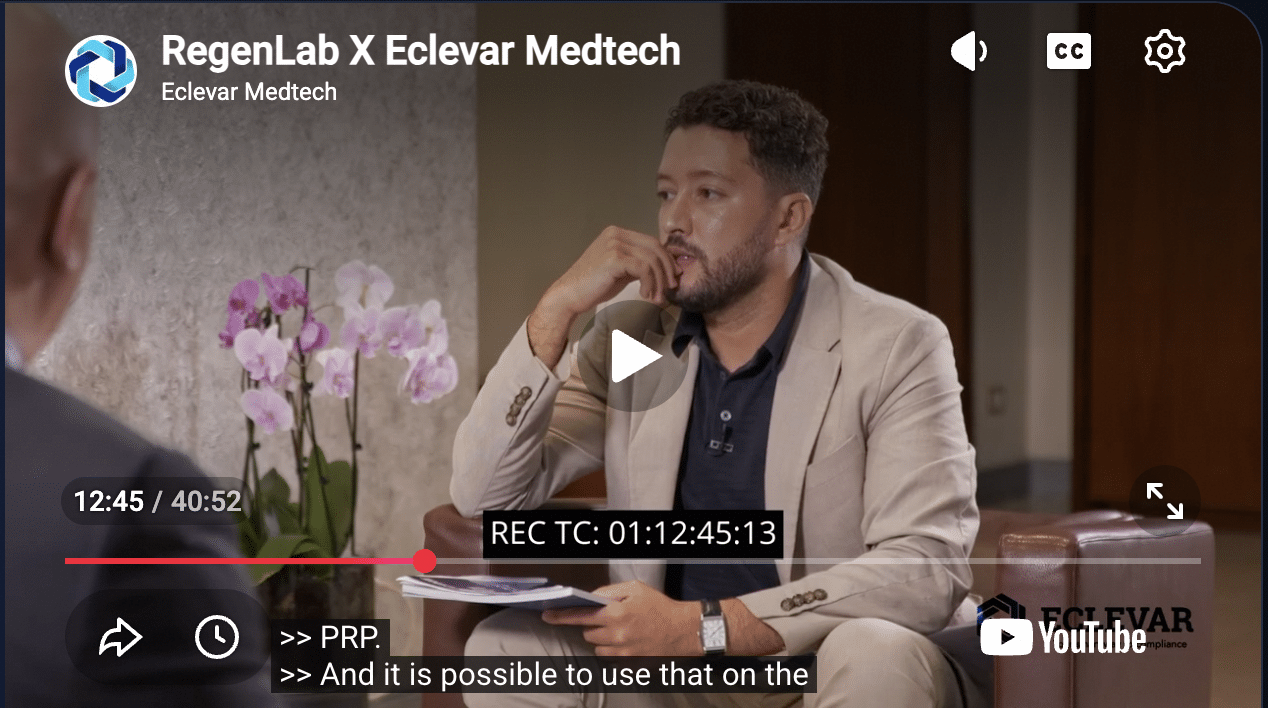
Eclevar runs RegenLab's PMCF program on chronic wound products. It is a randomized study of 160 subjects across 14 centers in 5 EU countries, covering both diabetic foot ulcer and venous leg ulcer. The partnership combines Eclevar's ISO 14155 expertise with the Milo Studio platform, from study design through to the final study report.
« Eclevar, with its tailored approach and the advanced Milo Studio platform, represents a significant strategic advantage. »Antoine Turzi, CEO, RegenLab
Coming soon. Breakthrough Device Technology under the EU MDR, a whitepaper written with TÜV SÜD, co-authored by Dr Nikhil Khadabadi.
The best country is not the one with the shortest advertised review period. It is the country, or combination of countries, where the evidence question can be answered by qualified investigators, protocol-eligible patients, appropriate clinical practice, and an executable regulatory and operational model.