Insight · Clinical Operations · France


Submitting a device investigation in France means clearing two authorities together: the ANSM for authorisation and a Comite de Protection des Personnes (CPP) for the ethics opinion, inside the French Jarde framework. The pieces are not complicated individually; the timeline risk is in getting the research category and the dual submission right.
This page walks through the France clinical trial submission route step by step: the two approvals, the Jarde/RIPH framework, the dossier and its French-language requirements, and the early ANSM dialogue that smooths implantable-device reviews.
A device trial in France runs on two parallel approvals, and Article 62 of the regulation frames the device-specific requirements that sit on top of the national framework. The regulator and the ethics committee each have to be satisfied, and while they assess different things, they draw on a shared dossier, so the smartest preparation treats them as two readers of one well-built submission rather than two separate exercises. Getting that framing right at the start avoids most of the friction that slows French studies.
French law classifies research involving humans (RIPH) into categories under the Jardé law. The category - driven by the level of intervention and risk - determines the exact route, including whether ANSM authorisation is required alongside the CPP opinion. Determining the correct category at the planning stage is essential, because it dictates the dossier and the bodies involved.
Interventional studies carrying risk to participants generally require both ANSM authorisation and a favourable CPP opinion.
France places its clinical research within the Jardé, or RIPH, framework, which structures how studies involving the human person are categorised and reviewed. Understanding where a device investigation sits within that framework matters, because it shapes the route, the documentation and the ethics pathway. A sponsor unfamiliar with Jardé can misjudge the category and prepare for the wrong process, which is an expensive way to learn the system, whereas getting it right at the outset keeps the submission on a clean path.
French law classifying research involving humans into categories; the RIPH category determines the exact submission route, including whether ANSM authorisation is required alongside the CPP opinion.
The submission centers on the investigation request form and the clinical investigation plan, with a summary in French and certain documents required in French. The investigator's brochure must contain the elements required under Annex XV of the MDR and address the general safety and performance requirements; where it belongs to a third party, written permission is required.
Practical details matter here: version and date control on documents, French summaries, and the correct templates are exactly where non-French sponsors lose time. A France-based CRO handles these as routine.
France takes its language requirements seriously, and a sponsor unprepared for them loses time. Key parts of the dossier, and the documents that reach patients and ethics committees, are expected in French, and assembling those translations late, after the rest of the dossier is ready, is a common and avoidable cause of delay in the French submission.
The dossier itself has to satisfy both the regulator and the ethics committee, whose expectations, while overlapping, are not identical, and a submission built to anticipate both reduces the back-and-forth that extends timelines. Knowing what each body looks for, and preparing the dossier accordingly, is part of what a France-experienced team brings.
Planning the translations and the dual-body documentation from the start, rather than treating them as a final administrative step, is the single most effective way to keep a French submission on schedule, because it removes the bottleneck that most often surprises sponsors new to the market.
The language requirement is the detail that most often catches non-French sponsors off guard. Key parts of the dossier, and the materials that reach participants and ethics committees, are expected in French, and arranging those translations late, once the rest of the submission is ready, is a frequent and entirely avoidable cause of delay. Planning the translation work into the timeline from the start, rather than treating it as a final administrative chore, removes a bottleneck that routinely surprises newcomers.
For implantable devices, the ANSM recommends seeking scientific advice via its innovation and orientation desk (guichet innovation et orientation) 6-12 months before submission. This surfaces pre-clinical and design expectations early and smooths the later review - a step non-French sponsors routinely underuse, and one that can save a review cycle.
The two-approval structure also rewards parallel preparation. Because the regulator and the ethics committee assess in tandem rather than strict sequence, a sponsor who prepares both submissions together, with the dependencies understood, reaches first patient faster than one who treats them as consecutive steps, which is where familiarity with the French process pays off directly.
Explore how our clinical teams are structured by vertical across EU MDR studies in France and Europe.

France is one of the few markets where the trial and the reimbursement strategy can be designed together. While planning the ANSM/CPP submission, it is worth designing the evidence so it also serves CNEDiMTS - the comparator, endpoints and population that reimbursement wants may differ from the CE-mark minimum. (See our France CRO and CNEDiMTS pages.)
As elsewhere in France, it pays to keep reimbursement in view even while focusing on the trial submission. The same clinical program that clears the regulatory and ethical hurdles can, if designed for it, also build toward the evidence that reimbursement will later require, and a sponsor who holds both horizons in mind avoids generating a second body of evidence after the fact. Thinking past the submission to market access is what makes a French study an investment rather than just a regulatory cost.
Eclevar is France-based: we run the ANSM/CPP submission inside the Jarde framework, handle the French-language dossier, and design the evidence so it also serves CNEDiMTS reimbursement, with former Notified Body reviewers on the file. See our medical device CRO services.
Two bodies: the ANSM (competent authority) authorises the investigation, and a Comite de Protection des Personnes (CPP) gives the ethics opinion. Both are submitted under the national procedure.
French law classifying research involving humans into categories; the RIPH category determines the exact submission route, including whether ANSM authorisation is required alongside the CPP opinion.
Yes. A summary of the clinical investigation plan and certain documents must be in French. A France-based CRO handles these requirements directly.
For implantable devices, the ANSM recommends scientific advice 6 to 12 months ahead via its innovation desk, a step that can save a review cycle.
Entering France? We will run the ANSM and CPP submission inside the Jarde framework, and design the evidence so it also serves CNEDiMTS reimbursement.
The people who build your evidence have sat on the other side of the table.
Tell us your study and device. We will run the ANSM and CPP submission inside the Jarde framework, and design the evidence so it also serves CNEDiMTS reimbursement.
Whitepapers and publications produced by our teams with our notified body partners.
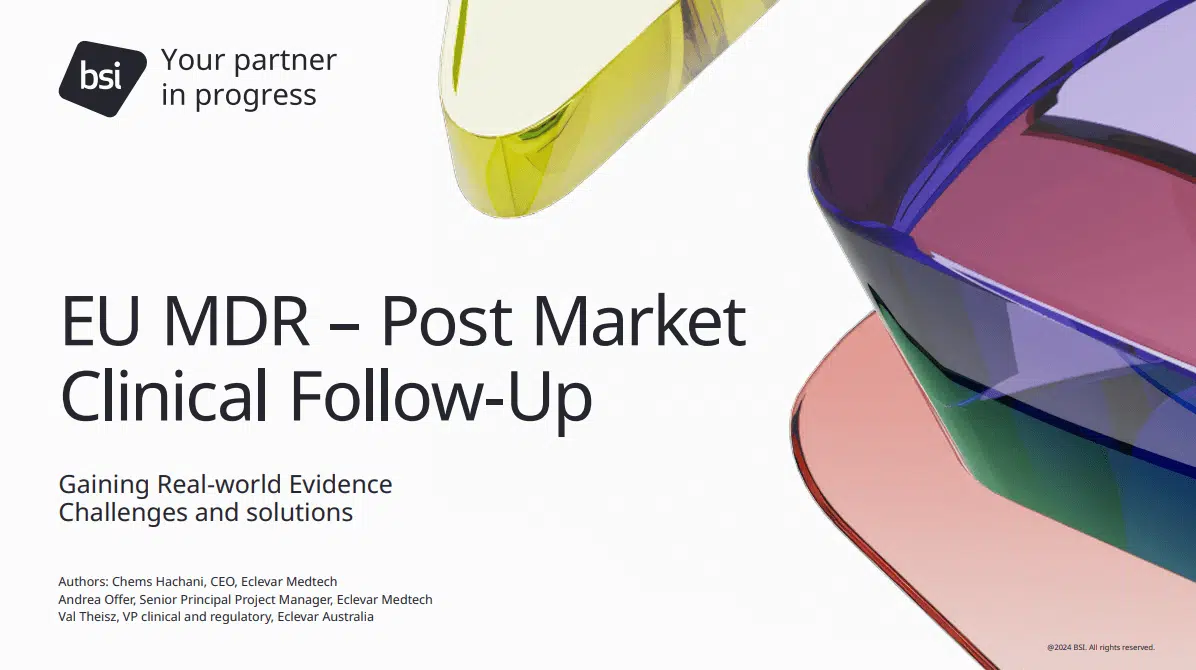
Written with Notified Body BSI: a practical reading of the clinical evidence expectations under EU MDR 2017/745, the same evidence your file has to support.
The services and topics connected to this page.
Send us the device, the claim and the deadline. You get a written answer within 24 hours.
Your documents are reviewed confidentially. An NDA can be signed before we receive any technical or clinical information.
 Dr Mark Da Costa
 Dr Nikhil Khadabadi
 Pierre-Marie Boutanquoi