Skin substitutes

Clinical trials for skin substitutes in diabetic foot and venous leg ulcers

Randomized trials for cellular, tissue-based and bioengineered wound products, designed for the evidence that FDA and payers ask for. Depending on how a product is regulated, the trial is either a market access requirement or the basis for coverage and adoption.

Three questions that set the trial

How is it regulated?

Premarket approval or 510(k) as a device, a biologics license, or a tissue product under Section 361.

Who needs convincing?

FDA for market access, payers for coverage, clinicians for adoption.

Against what?

Standard of care alone, or another advanced product.

The answers set the trial design before any protocol is written.

Work aligned withFDA wound guidance (2006)21 CFR 127121 CFR 812ISO 14155:2026ICH E6

Regulation

Regulation decides the evidence needed for market access

FDA does not regulate skin substitutes as one category. Each product follows the pathway that matches what it is.

ProductU.S. pathwayPremarket clinical evidence
Bioengineered living cell constructsPremarket approvalRandomized controlled trials against standard care.
Products regulated as biologics under Section 351Biologics License ApplicationAdequate and well-controlled clinical trials.
Acellular matrices of animal or synthetic originUsually 510(k)Depends on the predicate and the claims, and is often limited.
Human tissue products that meet the Section 361 criteriaSection 361 of the PHS Act, without premarket reviewNone required by FDA, although payers may still require it.

Whether a human tissue product meets the Section 361 criteria, including minimal manipulation and homologous use, is a regulatory question for you and FDA. The answer decides whether a trial is a market access requirement or a coverage and adoption strategy.

Trial design

What a credible skin substitute trial includes

Payers and guideline groups have become more critical of small, short or uncontrolled studies. These features make a trial hold up.

Randomization against standard of care

Standard of care alone against standard of care plus the product, with allocation concealed.

A run-in period

A period of standard care before randomization, so that wounds that heal quickly on standard care alone are not enrolled.

Standard care controlled in both arms

Offloading for diabetic foot ulcers and compression for venous leg ulcers, applied and documented the same way.

Blinded closure assessment

Closure judged by an assessor unaware of the allocation, supported by standardized photographs.

A defined application schedule

Number and timing of applications fixed in the protocol, as they will be in practice.

Follow-up after closure

Closure confirmed at a later visit, and recurrence followed after closure.

Common pitfalls

Why skin substitute evidence gets discounted

Evidence reviews and payers repeatedly point to the same weaknesses.

Too small

Trials with too few wounds to show a reliable difference between arms.

Standard care not controlled

Differences in offloading or compression that could explain the result.

No blinding

Closure judged by investigators who know the treatment.

Short follow-up

Closure not confirmed, and recurrence not followed.

Selective populations

Wounds that do not represent the patients the product will treat in practice.

Analysis not pre-specified

Endpoints or statistical methods changed after the data were seen.

Study types

Designs for each question

A program usually needs more than one study. Each answers a different audience.

Pivotal

Randomized controlled trial

Product plus standard of care against standard of care alone, for market access or coverage.

Comparative

Head-to-head trial

Against another advanced product, when payers ask which product to use.

Real-world

Retrospective and registry studies

Outcomes in routine practice from U.S. wound records and registries.

Comparator

External control arm

A comparator from real-world data when a randomized control is not feasible. How it works

Where trials run

Running the trial in the U.S., Europe or both

Enrollment in chronic wound trials is often the bottleneck. Spreading sites across regions helps, if the protocol keeps them consistent.

United States

Outpatient wound centers with experience in diabetic foot and venous leg ulcer trials, under IRB oversight and the IDE requirements that apply.

Europe

Multicountry delivery under ISO 14155, as in the RegenLab program on this page, with one protocol and one data model.

Both

A single protocol across regions, with standard of care and assessment aligned so that data can be pooled.

Track record

The numbers behind the method

Of the 56 studies ECLEVAR has delivered, 21 are PMCF studies and registries. The methods on this page come from that work.

56

Studies delivered

As of November 2026

By study phase

Studies by country

France18
Germany12
United Kingdom10
Italy8
Spain6
Nordic market3
Ireland2
Other5

A study running in several countries is counted once in each country.

400+

Devices assessed by former notified body reviewers now in ECLEVAR leadership

9

Clinical monitors (CRAs)

4

Project managers

3

Medical writers

3

Data management and biostatistics

2

Quality assurance

Clients

Medical device manufacturers we work with

Manufacturers of wound care products, implants, monitoring systems and dental devices use ECLEVAR for clinical investigations, PMCF and registries. More in our client success stories.

Client: RegenLab

Multicountry prospective PMCF in wound care

A two-cohort program in chronic wounds, diabetic foot ulcers and venous leg ulcers, run across European sites under one protocol and one data model.

160

participants

14

sites

5

European countries

Client: Perouse Medical, Vygon Group

Six registered observational studies across a vascular portfolio

ECLEVAR structured the program architecture and supports delivery. Intended evidence use: clinical evaluation and PMCF.

6

registered observational studies

3

device families

1,150+

subjects

5 years

follow-up

Team

The people behind your U.S. wound evidence

U.S. and European clinical experience, with data management and statistics in the same team. The regulatory strategy and the FDA submission stay with you or your regulatory consultant.

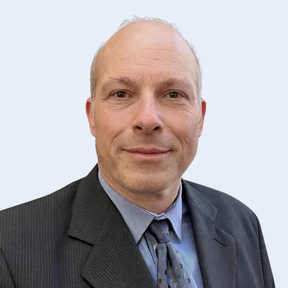
Portrait of Dawn Heimer

Dawn Heimer, PhD

U.S. Clinical and Regulatory Consultant

Her experience includes planning and executing approximately 15 FDA Pre-Submission and Q-Submission interactions and managing an Early Feasibility Study over the past three years. She contributes to ECLEVAR programs when included in the contracted advisory scope.

Portrait of Sébastien Meier Piantanida

Sébastien Meier Piantanida

Head of Data Management and Biostatistics

Data architecture, EDC and ePRO configuration, imaging and measurement data quality control, statistical analysis of healing trajectories.

Portrait of Chems Hachani

Chems Hachani

Founder and CEO

Sets the evidence strategy with the sponsor and stays accountable for delivery from first scoping call to final report.

Portrait of Karina Schönborn

Karina Schönborn

Business Development Lead

Your first point of contact for scoping, budget scenarios and proposals.

ECLEVAR leadership includes former notified body reviewers; the full team is on the leadership page. Platinum Award · CVBF & MILO Health, xShare / EUCROF EHDS & Clinical Research Open Call. The award recognizes the submitted data use case and is not an evaluation of CRO services.

Questions

What sponsors ask before they start

Does a 361 tissue product need a clinical trial?

Not for FDA, if it meets all the criteria for regulation under Section 361. A trial may still be needed for payer coverage and clinical adoption, and a product that does not meet the criteria needs a biologics license or device approval with clinical data.

What endpoint do skin substitute trials use?

Most use the proportion of wounds with complete closure by a fixed time point, with time to closure as a secondary endpoint. FDA's wound guidance describes complete closure and accelerated closure as the main efficacy endpoints.

How many patients does a trial need?

It depends on the expected difference in closure rates between arms and on dropout. Small trials are the most common reason this evidence is discounted, so the sample size is calculated before anything else.

Can real-world data replace a randomized trial?

For premarket approval, rarely. For payer questions and label expansions, real-world evidence can add to trial results when the data identify the product and the analysis controls for differences between patients.

Does ECLEVAR handle the regulatory submission?

ECLEVAR designs and runs the trials and analyses and prepares the study reports. The regulatory strategy and the submission are led by you or your regulatory consultant.


Next step

Tell us the claim you need to support in the U.S.

Send the product, the intended claim and the data you already have. We will tell you which evidence gap matters most and how we would close it.

We aim to respond within one business day. A confidentiality agreement can be signed before you share any document.

Share the claim and the data

Product, intended claim, the pathway under consideration and existing studies.

Evidence gap review

What the existing data support, and what the pathway still needs.

Study or analysis plan

Design, sites or data source, and a scope you can take to FDA in a Pre-Submission.