New clinical research destination

Lower-cost clinical data for FDA and EU MDR, collected in Mauritius and Réunion

Two neighboring islands in the Indian Ocean, two regulatory positions. Réunion is part of the European Union, so a study there runs under the EU MDR. Mauritius licenses medical device trials under its own Clinical Trials Act, in a lower-cost economy. ECLEVAR runs both under one protocol, one ISO 14155 quality system and one database.

Two islands, one evidence plan

Réunion: a site inside the EU

A French overseas department and EU outermost region. EU MDR and GDPR apply as they do in mainland France.

Mauritius: a licensed trial framework

Device trials are licensed by the Clinical Research Regulatory Council, with ethics committee review.

One protocol, one database

The same investigation plan, monitoring plan and EDC, so the data can be pooled and defended as one study.

You receive a written go or no-go and a line-by-line budget before any study cost is committed.

Work aligned withEU MDR 2017/745ISO 14155:202621 CFR 812.2821 CFR Part 11GDPRMauritius Clinical Trials Act

Why here

Why look at the Indian Ocean for device evidence?

Most sponsors choose between expensive sites they know and cheaper sites whose data they will have to defend. Mauritius and Réunion sit about 200 kilometers apart and offer a third option: one EU site and one lower-cost site, close enough to be monitored in a single trip.

Aerial view of the Le Morne peninsula and its lagoon on the southwest coast of Mauritius
Le Morne peninsula, Mauritius. Réunion lies about 200 kilometers to the southwest. Photo: dronepicr, CC BY 2.0, via Wikimedia Commons.

An EU site outside mainland Europe

Réunion is one of the nine outermost regions of the European Union. A clinical investigation there is authorized through the French competent authority and a French ethics committee, and the data are EU data.

A lower-cost site with a statute behind it

Mauritius has had a Clinical Trials Act since 2011 and dedicated regulations for medical device trials since 2021. Parliament updated the Act in 2026, adding an expedited review route and a public clinical trial unit.

English and French on both sides

Clinicians in Mauritius work in English and French. Réunion works in French. Protocols, consent forms and case report forms need two languages, not five.

Two islands compared

What each island contributes to the file

They are not interchangeable. Réunion gives you EU jurisdiction. Mauritius gives you the cost base. The table shows what that means for the study and for the submission.

TopicRéunionMauritius
Legal statusFrench overseas department and EU outermost region. EU law applies.Independent republic. Not an EU or EEA member.
Device study frameworkEU MDR 2017/745, Chapter VI and Annex XV, with French national provisions.Clinical Trials Act and the Clinical Trials (Medical Devices Trials) Regulations 2021, which classify devices as Class I, IIa, IIb and III.
AuthorizationANSM and a French ethics committee (CPP), depending on the type of investigation.Trial license from the Clinical Research Regulatory Council, after ethics committee review. Sponsor insurance is mandatory.
Hospital research baseA university hospital on two sites, Saint-Denis and Saint-Pierre, with an Inserm clinical investigation center (CIC 1410).Public hospitals and private clinics. Site capability is confirmed study by study at feasibility.
Data protectionGDPR. No international transfer for an EU sponsor.Data Protection Act 2017, modeled on the GDPR. No EU adequacy decision, so transfers from the EU need standard contractual clauses.
Cost levelFrench hospital cost levels. Chosen for jurisdiction, not for price.Lower site, staff and coordination costs than the United States or Western Europe.
Role in the evidence planEU-population data generated under the MDR. Anchors the European argument.Additional enrollment and follow-up at lower cost, under the same protocol and quality system.

Sources: Treaty on the Functioning of the European Union, Article 349; Regulation (EU) 2017/745; Mauritius Clinical Trials Act 2011 as amended in 2026; Clinical Trials (Medical Devices Trials) Regulations 2021; Mauritius Data Protection Act 2017. Requirements are confirmed for each study before submission.

FDA and EU MDR

Will the FDA and a notified body accept the data?

Neither reviewer asks where a study was run before asking how. Both look at the conduct of the investigation and at whether the results apply to their own population. We design for those two tests from the first draft of the protocol.

For an FDA submission

Under 21 CFR 812.28, the FDA accepts data from clinical investigations conducted outside the United States in support of an IDE or a marketing submission when the investigation is well designed, well conducted and run in accordance with good clinical practice.

Independent ethics review and informed consent

Documented for every site, with committee composition and approvals on file.

Supporting information the rule asks for

Investigator qualifications, site descriptions, protocol, monitoring and data records, kept for the retention period.

Applicability to U.S. patients and practice

A written rationale covering population, standard of care and device use. We recommend testing it in a Pre-Submission before enrollment.

For an EU MDR technical file

Data from Réunion are generated on EU territory under the MDR. Data from Mauritius are third-country data, which the clinical evaluation can use when the investigation meets equivalent ethical and scientific standards and the results are shown to apply to European patients.

ISO 14155 conduct at every site

One clinical investigation plan, one monitoring plan and one safety reporting process for both islands.

A transferability argument in the CER

Patient characteristics, clinical practice and device use compared with the intended European population. The north of Mauritius, around Grand Baie, is home to the island’s largest community of European residents, and recruitment can include it where the protocol calls for it.

An EU anchor in the same study

Réunion enrollment gives the reviewer EU data collected with the same methods as the Mauritian data.

Whether the evidence is sufficient remains the decision of the FDA or of the notified body. ECLEVAR's role is to make the study defensible on conduct and on applicability.

Study types

Four study designs the route can support

The islands suit studies where cost per patient and follow-up discipline matter more than very large enrollment. Each design below is checked against real patient numbers before we recommend it.

Post-market

PMCF studies and registries

Prospective follow-up of CE-marked devices in routine use, with Réunion as the EU site and Mauritius adding patients and follow-up visits.

Pre-market

Pilot and feasibility studies

Small first clinical datasets to refine the device, the endpoints and the sample size before a pivotal investigation.

Pivotal

Additional sites in a multinational study

Extra enrollment capacity under the protocol already running in Europe or the United States, to protect the timeline and the budget.

Real-world data

Retrospective and observational data

Chart reviews and observational cohorts where records allow it, used to close a gap in a clinical evaluation or to plan a prospective study.

Therapeutic areas we would test first at feasibility: wound care and diabetic foot, diabetes technology, cardiovascular and orthopedic devices, and software as a medical device. Diabetes and cardiometabolic disease are public health priorities on both islands.

Cost

Where the saving comes from, and where it does not

We do not publish a headline percentage, because the answer depends on the device, the visit schedule and the number of patients. We show the difference line by line in the quote, next to a European or U.S. reference scenario.

Site and investigator fees

Per-patient and per-visit fees in Mauritius reflect a lower-cost economy. This is usually the largest line in a device study budget.

Study coordination on site

Local coordinators and data entry staff cost less, which makes longer follow-up and more complete data affordable.

Two languages, one document set

English and French cover both islands, which limits translation and validation costs.

Monitoring in one trip

Both islands are covered in a single monitoring trip, combined with remote and centralized monitoring between visits.

What does not get cheaper

Réunion sites are priced at French hospital levels. Device shipping, import formalities and insurance add cost and lead time on both islands.

What limits the saving

Mauritius has about 1.3 million inhabitants and Réunion fewer than one million. Rare indications and very large studies need other countries as well.

Workflow

From feasibility to a report both regulators can read

Step 1

Feasibility

Patient numbers, sites, standard of care and device logistics on each island. Written go or no-go.

Step 2

Regulatory route

What the FDA and the notified body need from the study, and how each island contributes.

Step 3

Protocol and budget

One clinical investigation plan, a statistical plan and a unit-cost budget with a reference scenario.

Step 4

Submissions

Trial license and ethics review in Mauritius. ANSM and ethics committee in Réunion.

Step 5

Conduct

Site training, enrollment, on-site and remote monitoring, safety reporting, data in the Milo EDC.

Step 6

Reporting

Clinical investigation report and datasets structured for the FDA submission and the CER.

What we check

Six questions we answer before recommending the route

This is a new destination for device studies, and we treat it as one. If any of the answers is weak for your device, we say so and propose another country mix.

Are there enough eligible patients?

Counted from site records and clinician estimates, not from national prevalence figures.

Do the results apply to U.S. and European patients?

Population, comorbidities and standard of care compared with the target markets, shown with baseline data from the sites and not assumed.

Can the sites deliver ISO 14155 conduct?

Investigator experience, equipment, source documents and time available for research.

How long will authorization take?

Current review practice confirmed with the authorities for your device class and study type.

Can the device get there and be serviced?

Import, storage, accountability and technical support for the investigational device.

Is the data flow lawful end to end?

GDPR in Réunion, the Data Protection Act in Mauritius, and the contractual clauses needed between them.

Clients

Medical device manufacturers we work with

Manufacturers of wound care products, implants, monitoring systems and dental devices use ECLEVAR for clinical investigations, PMCF and registries. More in our client success stories.

Client: RegenLab

Multicountry prospective PMCF in wound care

A two-cohort program in chronic wounds, diabetic foot ulcers and venous leg ulcers, run across European sites under one protocol and one data model.

160

participants

14

sites

5

European countries

Client: Perouse Medical, Vygon Group

Six registered observational studies across a vascular portfolio

ECLEVAR structured the program architecture and supports delivery. Intended evidence use: clinical evaluation and PMCF.

6

registered observational studies

3

device families

1,150+

subjects

5 years

follow-up

These programs were run in Europe. They show how ECLEVAR runs multicountry device studies under one protocol; they are not studies conducted in Mauritius or Réunion.

Client interview

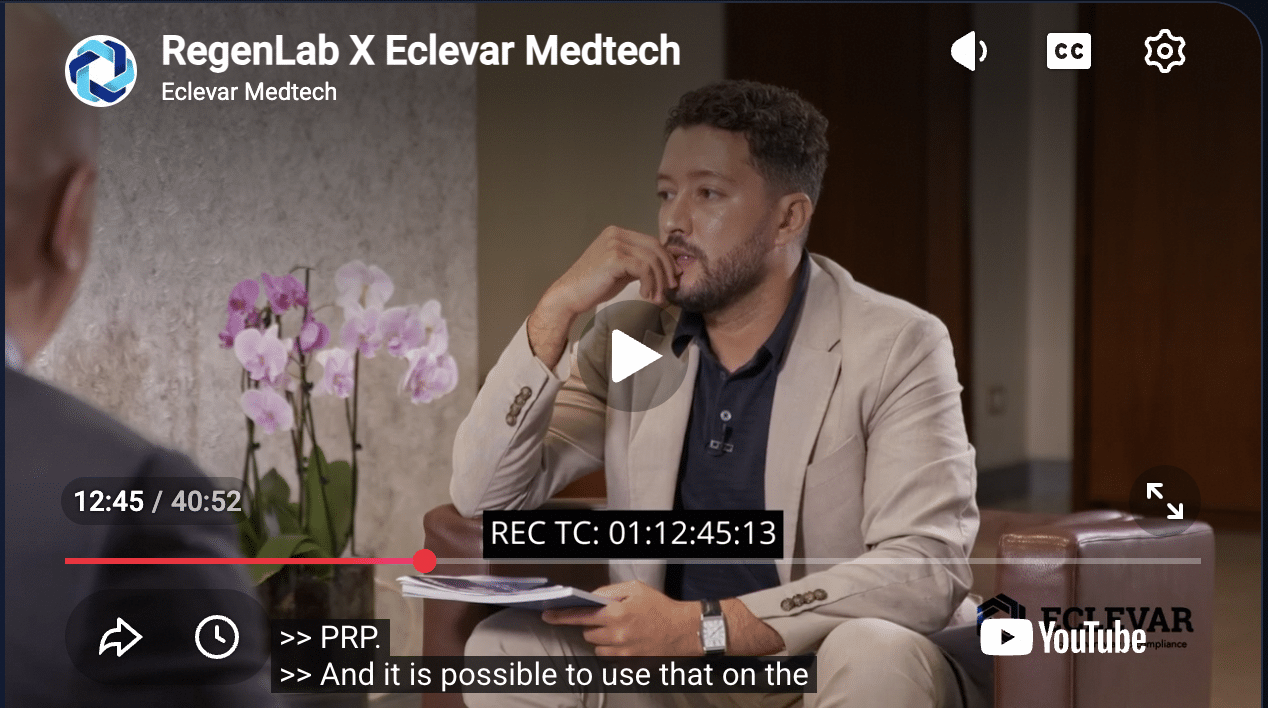
Watch RegenLab's CEO describe working with ECLEVAR

A manufacturer's view of the working relationship, in his own words. The video opens on YouTube in a new window.

Still from the interview with Antoine Turzi, CEO of RegenLab
“ECLEVAR provides a unique, tailor-made approach”

Antoine Turzi, Chief Executive Officer, RegenLab. European chronic wound PMCF program, 160 participants, 14 sites.

Credentials

Published with notified bodies, present in Mauritius

Clinical evidence is judged by a reviewer. ECLEVAR starts from how that reviewer reads, and has a company on the island to run the work locally.

Mauritius · Local company

Second Wind

Second Wind is the ECLEVAR group company in Mauritius. The group also has entities in the United Kingdom, Ireland, the United States and Japan.

BSI · White paper

EU MDR white paper written with BSI

“EU MDR post-market clinical follow-up: gaining real-world evidence.” Covers clinical evaluation, PMCF strategy and the transition of legacy devices.

TÜV SÜD · White paper

Contribution to a TÜV SÜD white paper

A TÜV SÜD publication on the breakthrough device pathway under the EU MDR and what early market access requires of the evidence.

Notified body experience

400+ devices reviewed

The number of devices reviewed by the former notified body reviewers who are now part of ECLEVAR leadership.

Award

Platinum Award · CVBF & MILO Health

Awarded in the xShare / EUCROF EHDS & Clinical Research Open Call for a data-use case. It is not a ranking of CRO services.

Quality system

One ISO 14155 process for both islands

The same investigation plan, monitoring plan, safety reporting and Milo EDC at every site, so the data can be pooled and audited as one study.

Expert conversations and news

On the record with notified body and industry experts

How ECLEVAR thinks about evidence is public. Watch and listen to the conversations we host, and see what the team has been working on recently.

EU MDR Masterclass with Dr. Bassil Akra, Chems Hachani and Julia Frese

Video masterclass · TÜV SÜD and AKRA TEAM

EU MDR Masterclass: classification, clinical data and technical files

A 40-minute roundtable hosted by Chems Hachani with Julia Frese, Regulatory Expert at TÜV SÜD, and Dr. Bassil Akra, Founder and CEO of AKRA TEAM.

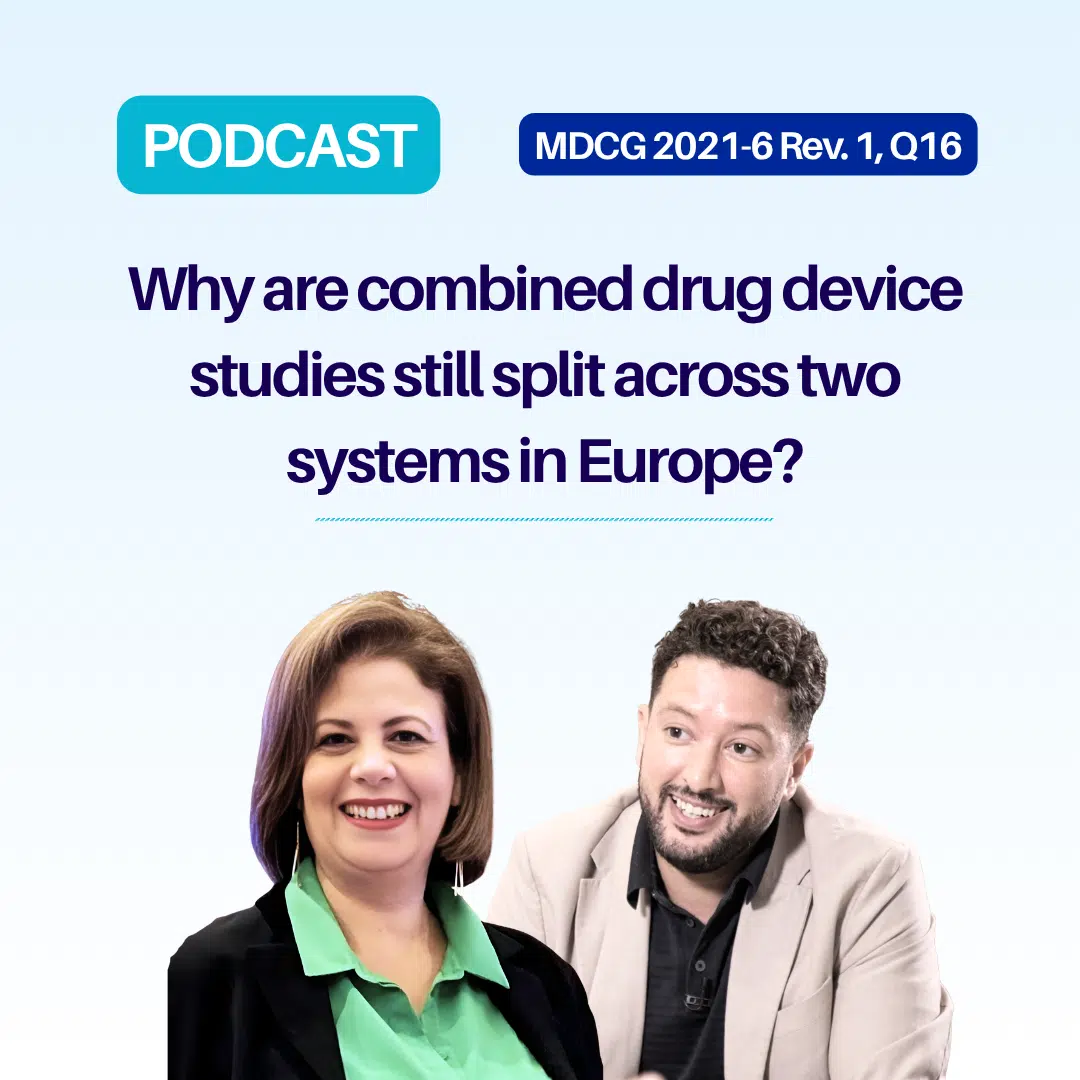
Podcast with Dr. Fatima Sanfourche and Chems Hachani on combined drug-device studies in Europe

Podcast · Combination products

Why are combined drug-device studies still split across two systems in Europe?

Chems Hachani talks with Dr. Fatima Sanfourche, PhD, Global Senior Director for QA & RA Compliance for Medical Devices, Combination Products & eHealth at Bayer and Scientific Board Member of ECLEVAR MedTech.

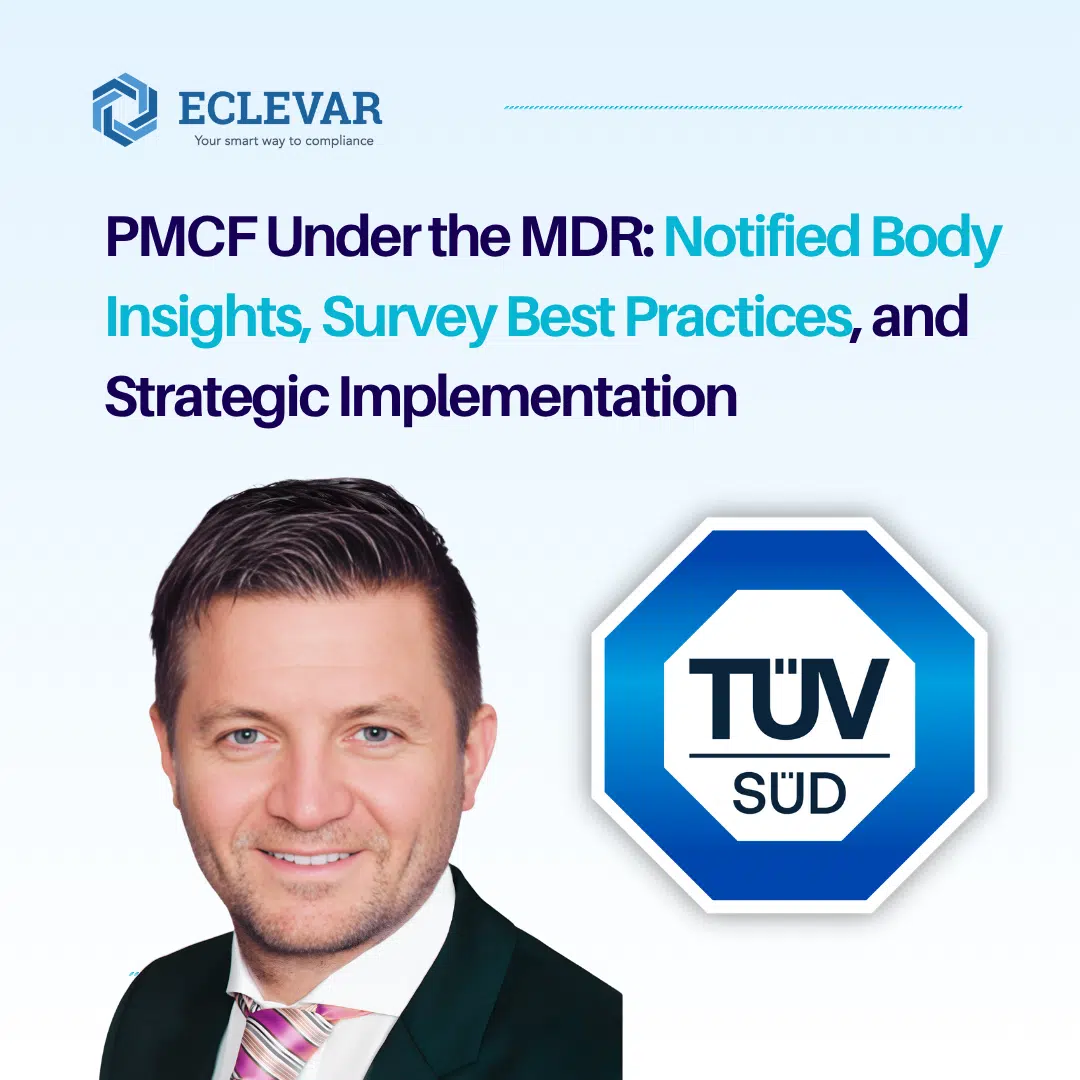
PMCF under the MDR webinar with a notified body expert

Webinar replay · Notified body insights

PMCF under the MDR: notified body insights and survey best practices

What reviewers look for in PMCF planning, and how to design PMCF surveys that stand up to scrutiny, with a notified body expert.

Webinar on level 4 surveys for orthopedic devices

Webinar replay · Level 4 surveys

Using high-quality surveys to close clinical data gaps in orthopedics

How level 4 surveys are designed and used to address clinical data gaps for orthopedic devices.

News · xShare, Pisa

MILO Match demonstrated at the xShare meeting in Pisa

On October 21, 2026, ECLEVAR MedTech presented a live MILO Match prototype alongside CVBF, using the pediatric GAPP study as the use case. The demonstration used synthetic data and simulated connections.

News · Partnership

Memorandum of understanding with Bioexcel CRO

ECLEVAR MedTech and Bioexcel CRO signed a memorandum of understanding to work together on clinical research and regulatory affairs across Europe and India.

Team

The people you will speak to

Two people from the first call: the founder for the evidence strategy and the regulatory route, and your commercial contact for scope and budget.

Portrait of Chems Hachani

Chems Hachani

Founder and CEO

Sets the evidence strategy with the sponsor and stays accountable for delivery from first scoping call to final report.

Portrait of Karina Schönborn

Karina Schönborn

Business Development Lead

Your first point of contact for scoping, budget scenarios and proposals.

The full team is on the leadership page.

Questions

What sponsors ask before they start

Is Réunion really part of the European Union?

Yes. Réunion is a French overseas department and one of the nine outermost regions of the European Union listed in Article 349 of the Treaty on the Functioning of the European Union. EU law applies there, including the EU MDR and the GDPR. A clinical investigation in Réunion follows the same authorization route as one in mainland France.

Does the FDA accept clinical data collected in Mauritius or Réunion?

The FDA can accept data from investigations conducted outside the United States under 21 CFR 812.28 when the study is well designed, well conducted and run in accordance with good clinical practice, including independent ethics review and informed consent. The sponsor also has to explain why the results apply to U.S. patients and U.S. medical practice. Acceptance is decided by the FDA for each submission, so we recommend discussing the plan in a Pre-Submission.

Can data from Mauritius support a CE mark under the EU MDR?

Data from outside the EU can contribute to the clinical evaluation when the investigation meets ethical and scientific standards equivalent to the MDR and ISO 14155, and when the clinical evaluation justifies that the results apply to the European population. Pairing Mauritius with Réunion in the same protocol gives the file EU data collected with the same methods. Sufficiency is the notified body's decision.

How are medical device trials regulated in Mauritius?

Under the Clinical Trials Act 2011 and the Clinical Trials (Medical Devices Trials) Regulations 2021. A trial needs a license from the Clinical Research Regulatory Council, which consults the ethics committee. The sponsor must insure the trial. Amendments adopted in 2026 added an expedited review route for trials designated as being in the public interest, a public clinical trial unit and accreditation of principal investigators.

How much cheaper is a study in Mauritius?

It depends on the device, the visit schedule and the number of patients, so we do not quote a general percentage. Site fees and local study staff are where the difference is largest. Réunion sites are priced at French hospital levels. Every ECLEVAR quote shows unit costs and a reference scenario so you can see the difference for your own study.

How long does approval take?

In Réunion, timelines are those of the French procedure for the relevant type of clinical investigation. In Mauritius, review time depends on the study and on the completeness of the file; the 2026 amendments set a 30-day target for expedited reviews, which is indicative and applies only to designated trials. We confirm current timelines with the authorities during feasibility and build the plan on those figures.

Can personal data move between the two islands and to the sponsor?

Réunion is covered by the GDPR. Mauritius has a Data Protection Act modeled on the GDPR but no adequacy decision from the European Commission, so transfers of EU personal data to Mauritius rely on standard contractual clauses and a transfer assessment. Study data are pseudonymized at the site and held in one validated EDC.

Has ECLEVAR already run studies on the islands?

ECLEVAR has a company in Mauritius, Second Wind, and runs multicountry device studies in Europe. Mauritius and Réunion are a new destination that we open study by study, starting with a feasibility review of sites and patient numbers for your device. You receive the findings in writing before committing to a study.


Next step

Find out whether the route fits your device

Send the device, the indication, the regulator you are preparing for and the number of patients you have in mind. We come back with a feasibility view and a budget scenario for Mauritius and Réunion.

We aim to respond within one business day. A confidentiality agreement can be signed before you share any document.

Share the evidence question

FDA submission, CE marking, PMCF gap or a study that is over budget elsewhere.

Get the feasibility view

Sites, patient numbers, authorization route and data flow on each island.

Decide on a costed plan

Go or no-go, country mix, unit-cost budget and a reference scenario.