Clinical evidence gaps under the EU MDR

How to collect clinical data at lower cost to answer a notified body

When a notified body such as BSI or TÜV SÜD finds the clinical evidence insufficient, three routes can generate new data: a PMCF survey, a PMCF study or a pre-market clinical investigation. The gap decides the route. Where you run it decides most of the cost. ECLEVAR runs all three with sites in Mauritius and in Réunion, which is EU territory.

Three routes, one question: what is the gap?

PMCF survey

Structured outcomes from clinicians or patients on a device already in use.

PMCF study

Prospective patient-level follow-up of a CE-marked device under a protocol.

Pre-market investigation

Clinical data on a device, variant or indication that is not yet CE marked.

You receive a written recommendation on the route and a line-by-line budget before any study cost is committed.

Work aligned withEU MDR 2017/745MDCG 2020-6MDCG 2020-7ISO 14155:2026GDPR

Start from the finding

Read the finding before choosing a study

Most overspending starts with the wrong study type. A survey cannot answer a question that needs patient-level safety data, and a clinical investigation is too much for a usability question.

Turn the finding into a question

Which claim, which population, which outcome and which follow-up period does the reviewer consider unsupported? That sentence defines the endpoint.

Match the level of evidence

MDCG 2020-6 ranks twelve types of clinical evidence. A general survey sits near the bottom, a high-quality survey can reach level 4, and clinical investigations sit at the top.

Then choose where to run it

Once the design is fixed, the location sets the cost per patient. One EU site in Réunion and lower-cost sites in Mauritius can share one protocol.

Three routes compared

Survey, PMCF study or pre-market investigation

The table shows what each route can and cannot support. The right answer is often a combination: a survey for breadth and a study for the outcome the reviewer questioned.

TopicPMCF surveyPMCF studyPre-market investigation
Answers this kind of gapPerformance and safety in routine use, user experience, residual risks, long-term outcomes reported by users.A specific clinical outcome, subgroup, variant or follow-up period that needs patient-level data.No sufficient clinical data on the device itself, a new indication or a significant change.
Device statusCE marked and in use at the sites.CE marked, used within its intended purpose.Not CE marked, or used outside its intended purpose.
Evidence levelLevel 8 for a general survey. Level 4 when case-based, with a justified sample size and predefined endpoints.Upper levels of the hierarchy when designed and conducted as a high-quality study.Top of the hierarchy when well designed and well conducted.
Relative effortLowest.Medium.Highest.
Main cost driversNumber of cases, case report design, data verification.Patients, visits, follow-up length, monitoring.Authorization, safety reporting, device supply, monitoring intensity.
Mauritius and RéunionWorks where clinicians already use the device. We check this first.Réunion as the EU site, Mauritius for additional enrollment.Pilot or pivotal sites under a trial license in Mauritius and under the EU MDR in Réunion.

Evidence levels refer to Appendix III of MDCG 2020-6, which applies to legacy devices and is widely used as a reference for the hierarchy of clinical evidence. Sufficiency is always the notified body’s decision.

Go deeper

One page for each route

Each page explains when the route fits, how it is authorized on each island and where the cost goes down.

Route 1

PMCF surveys

Level 4 surveys with clinicians on the islands, for devices already in use there.

Route 2

PMCF studies

Prospective follow-up with Réunion as the EU site and Mauritius for enrollment.

Route 3

Pre-market investigations

Pilot and pivotal investigations under one ISO 14155 protocol.

Cost

Lower the cost without lowering the evidence

A cheaper study that the reviewer rejects is the most expensive option. These are the savings that do not weaken the file, and the two that do.

Run it where sites cost less

Per-patient fees and local study staff in Mauritius reflect a lower-cost economy. Réunion adds EU data under the same protocol.

Fix the endpoint before the budget

One primary endpoint tied to the finding, with a justified sample size, avoids collecting data nobody will read.

Capture data electronically

One EDC with built-in checks and remote monitoring reduces on-site days.

Use the data more than once

The same dataset feeds the clinical evaluation report, the PMCF evaluation report, the PSUR and the SSCP.

False saving: cutting the sample size

A sample that cannot support the conclusion leads to a second study.

False saving: a general survey for a level 4 question

It costs less and does not close the gap.

What a reviewer checks

Six things a notified body reviewer looks at first

ECLEVAR leadership includes former notified body reviewers. This is the reading order we design for, whichever route you choose.

Is the endpoint linked to a claim or a requirement?

Each endpoint traces back to a clinical claim, a general safety and performance requirement or a residual risk.

Is the sample size justified?

A statistical rationale written before data collection, not after.

Is the population representative?

Baseline characteristics compared with the intended European population.

Can the data be verified?

Source documents, audit trail and monitoring records.

Was the analysis planned in advance?

A statistical analysis plan dated before database lock.

Does the conclusion match the data?

No claim in the report that the dataset does not support.

Clients

Medical device manufacturers we work with

Manufacturers of wound care products, implants, monitoring systems and dental devices use ECLEVAR for clinical investigations, PMCF and registries. More in our client success stories.

Client: RegenLab

Multicountry prospective PMCF in wound care

A two-cohort program in chronic wounds, diabetic foot ulcers and venous leg ulcers, run across European sites under one protocol and one data model.

160

participants

14

sites

5

European countries

Client: Perouse Medical, Vygon Group

Six registered observational studies across a vascular portfolio

ECLEVAR structured the program architecture and supports delivery. Intended evidence use: clinical evaluation and PMCF.

6

registered observational studies

3

device families

1,150+

subjects

5 years

follow-up

These programs were run in Europe. They show how ECLEVAR runs multicountry device studies under one protocol; they are not studies conducted in Mauritius or Réunion.

Client interview

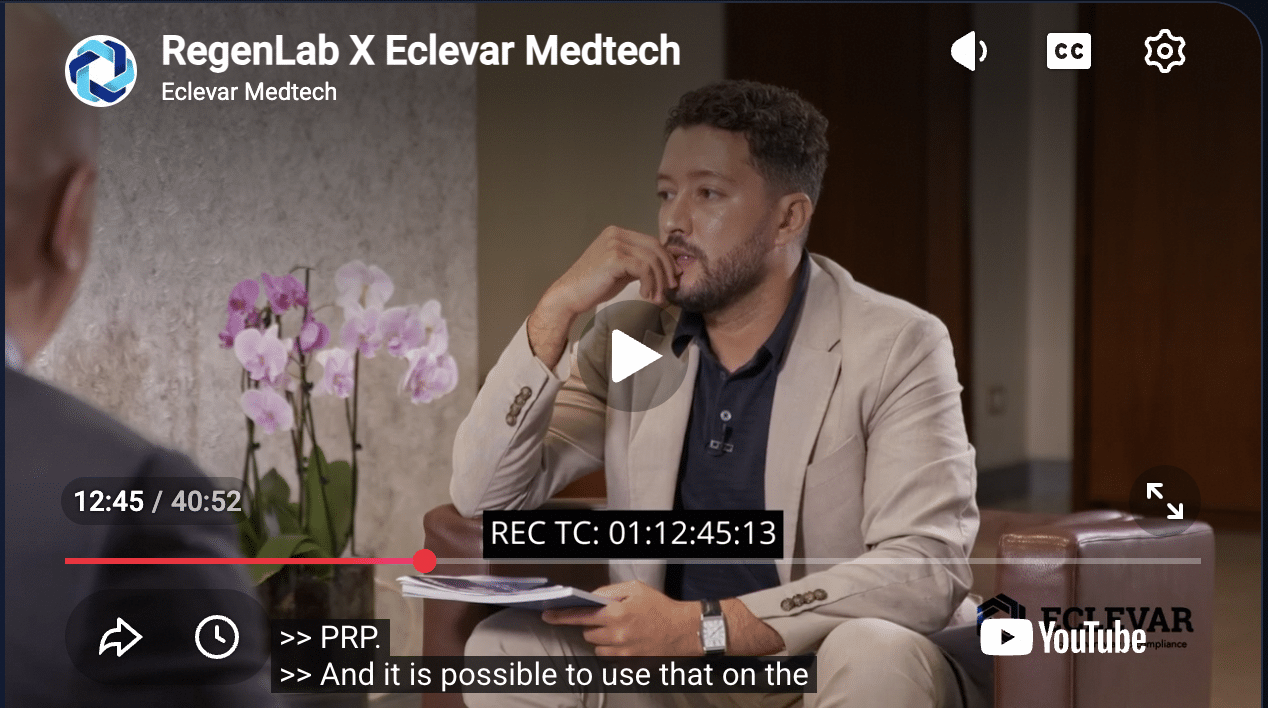
Watch RegenLab's CEO describe working with ECLEVAR

A manufacturer's view of the working relationship, in his own words. The video opens on YouTube in a new window.

Still from the interview with Antoine Turzi, CEO of RegenLab
“ECLEVAR provides a unique, tailor-made approach”

Antoine Turzi, Chief Executive Officer, RegenLab. European chronic wound PMCF program, 160 participants, 14 sites.

Credentials

Published with notified bodies, present in Mauritius

Clinical evidence is judged by a reviewer. ECLEVAR starts from how that reviewer reads, and has a company on the island to run the work locally.

Mauritius · Local company

Second Wind

Second Wind is the ECLEVAR group company in Mauritius. The group also has entities in the United Kingdom, Ireland, the United States and Japan.

BSI · White paper

EU MDR white paper written with BSI

“EU MDR post-market clinical follow-up: gaining real-world evidence.” Covers clinical evaluation, PMCF strategy and the transition of legacy devices.

TÜV SÜD · White paper

Contribution to a TÜV SÜD white paper

A TÜV SÜD publication on the breakthrough device pathway under the EU MDR and what early market access requires of the evidence.

Notified body experience

400+ devices reviewed

The number of devices reviewed by the former notified body reviewers who are now part of ECLEVAR leadership.

Award

Platinum Award · CVBF & MILO Health

Awarded in the xShare / EUCROF EHDS & Clinical Research Open Call for a data-use case. It is not a ranking of CRO services.

Quality system

One ISO 14155 process for both islands

The same investigation plan, monitoring plan, safety reporting and Milo EDC at every site, so the data can be pooled and audited as one study.

Expert conversations and news

On the record with notified body and industry experts

How ECLEVAR thinks about evidence is public. Watch and listen to the conversations we host, and see what the team has been working on recently.

EU MDR Masterclass with Dr. Bassil Akra, Chems Hachani and Julia Frese

Video masterclass · TÜV SÜD and AKRA TEAM

EU MDR Masterclass: classification, clinical data and technical files

A 40-minute roundtable hosted by Chems Hachani with Julia Frese, Regulatory Expert at TÜV SÜD, and Dr. Bassil Akra, Founder and CEO of AKRA TEAM.

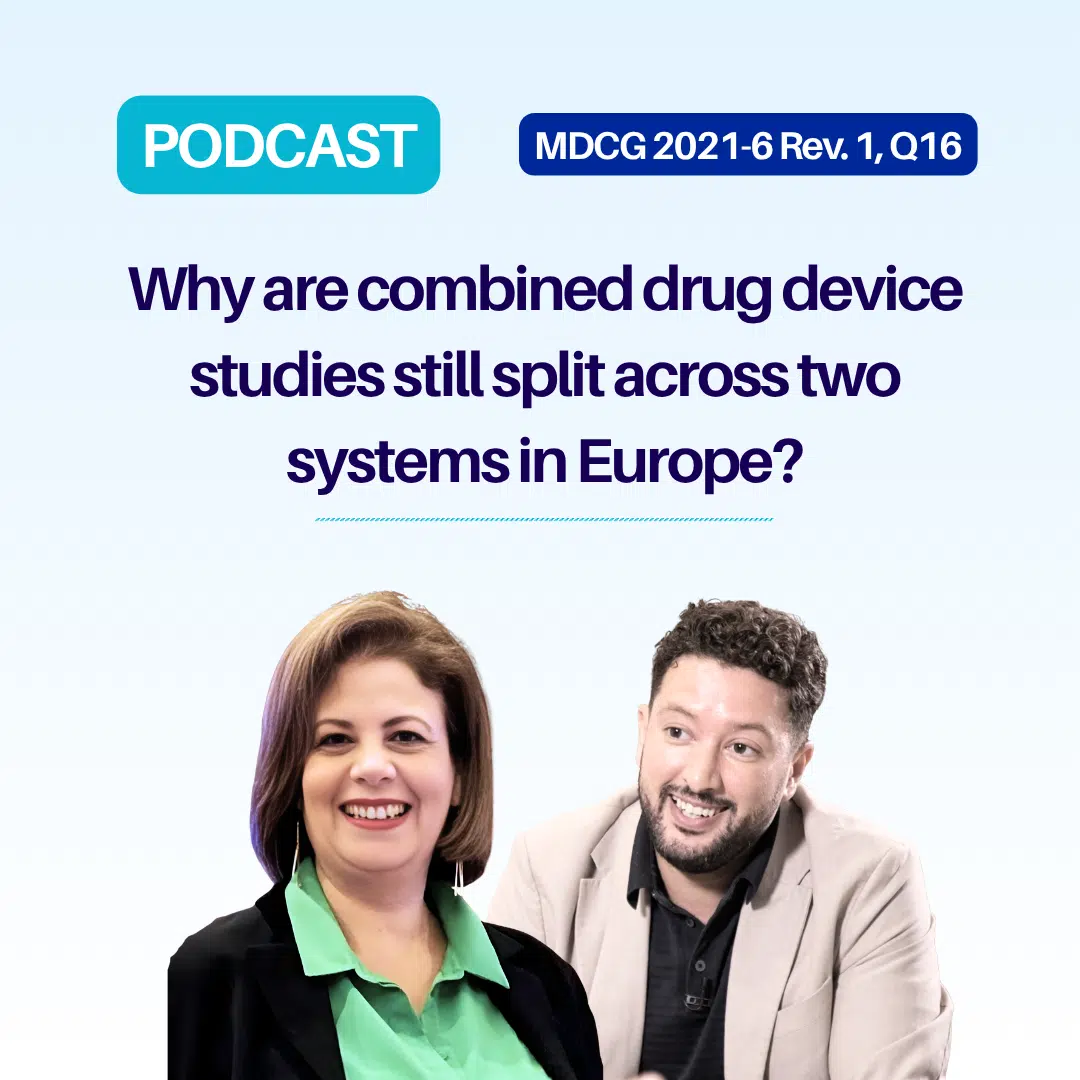
Podcast with Dr. Fatima Sanfourche and Chems Hachani on combined drug-device studies in Europe

Podcast · Combination products

Why are combined drug-device studies still split across two systems in Europe?

Chems Hachani talks with Dr. Fatima Sanfourche, PhD, Global Senior Director for QA & RA Compliance for Medical Devices, Combination Products & eHealth at Bayer and Scientific Board Member of ECLEVAR MedTech.

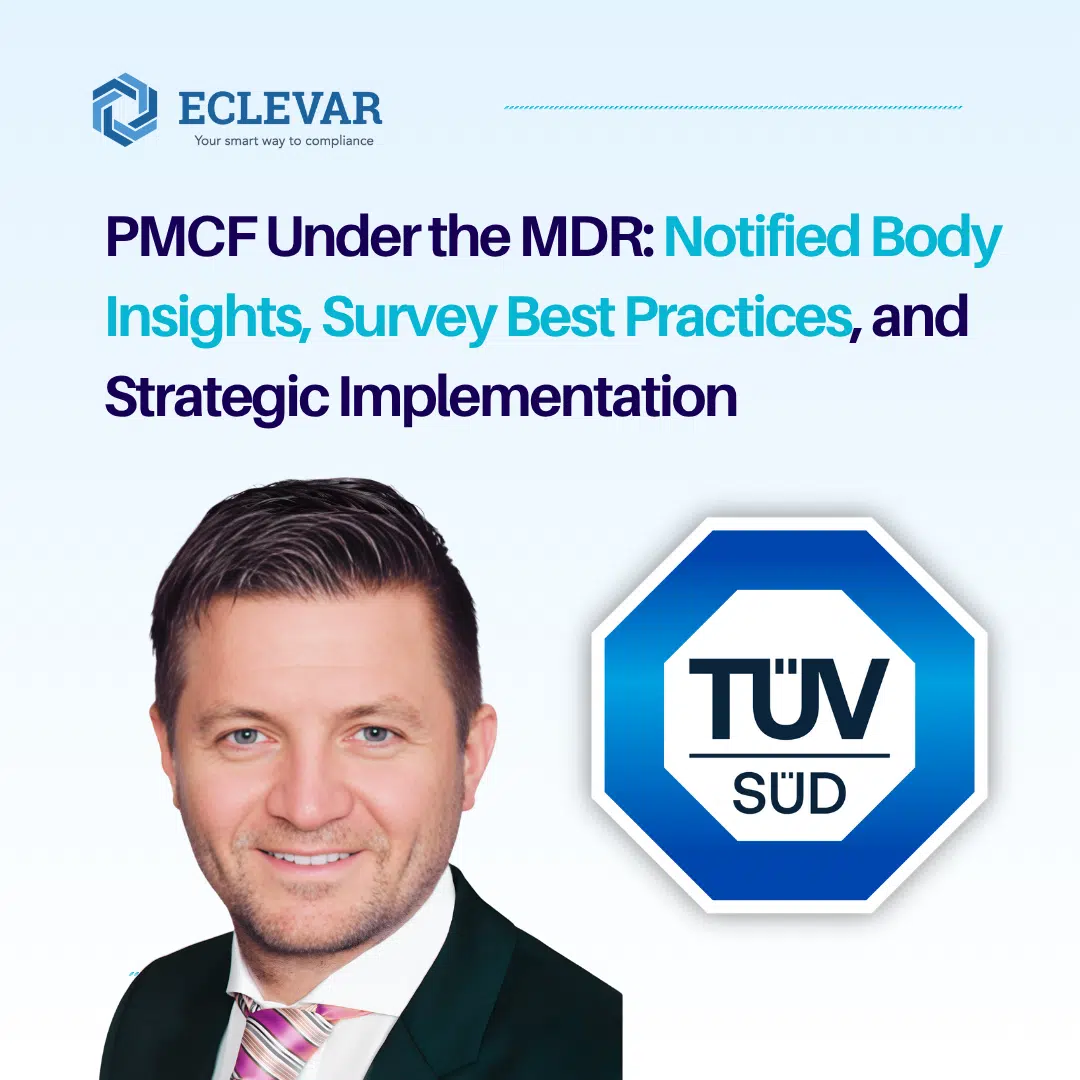
PMCF under the MDR webinar with a notified body expert

Webinar replay · Notified body insights

PMCF under the MDR: notified body insights and survey best practices

What reviewers look for in PMCF planning, and how to design PMCF surveys that stand up to scrutiny, with a notified body expert.

Webinar on level 4 surveys for orthopedic devices

Webinar replay · Level 4 surveys

Using high-quality surveys to close clinical data gaps in orthopedics

How level 4 surveys are designed and used to address clinical data gaps for orthopedic devices.

News · xShare, Pisa

MILO Match demonstrated at the xShare meeting in Pisa

On October 21, 2026, ECLEVAR MedTech presented a live MILO Match prototype alongside CVBF, using the pediatric GAPP study as the use case. The demonstration used synthetic data and simulated connections.

News · Partnership

Memorandum of understanding with Bioexcel CRO

ECLEVAR MedTech and Bioexcel CRO signed a memorandum of understanding to work together on clinical research and regulatory affairs across Europe and India.

Team

The people you will speak to

Two people from the first call: the founder for the evidence strategy and the regulatory route, and your commercial contact for scope and budget.

Portrait of Chems Hachani

Chems Hachani

Founder and CEO

Sets the evidence strategy with the sponsor and stays accountable for delivery from first scoping call to final report.

Portrait of Karina Schönborn

Karina Schönborn

Business Development Lead

Your first point of contact for scoping, budget scenarios and proposals.

The full team is on the leadership page.

Questions

What manufacturers ask before they start

Can a PMCF survey alone answer a notified body finding?

Sometimes. A high-quality, case-based survey with a justified sample size can support performance and safety in routine use, mainly for well-established and lower-risk devices. When the finding concerns a specific clinical outcome in a higher-risk device, reviewers usually expect patient-level data from a study. We tell you which case applies before you commit a budget.

Will BSI or TÜV SÜD accept data collected in Mauritius?

Notified bodies assess clinical data against the EU MDR and the MDCG guidance, whichever body reviews the file. Data from outside the EU can be used when the study meets equivalent ethical and scientific standards and the clinical evaluation shows that the results apply to European patients. Adding Réunion, which is EU territory, gives the file EU data collected with the same methods. Acceptance is decided by the notified body for each file.

Which route is the cheapest?

A survey costs less than a study, and a PMCF study costs less than a pre-market investigation. The cheapest route that actually answers the finding is the one to choose, and that depends on the gap. We do not publish general prices because they depend on the device, the number of patients and the follow-up.

How do we start?

Send the finding or the section of the clinical evaluation report that is under question, with the device description. We come back with a route, a design outline and a budget scenario for Mauritius and Réunion.

Next step

Send us the finding, we will tell you the route

Share the notified body finding or the part of your clinical evaluation that is under question. We reply with the route we would take, the design outline and a budget scenario.

We aim to respond within one business day. A confidentiality agreement can be signed before you share any document.

Share the finding

Deficiency letter, CER section or PMCF plan comment.

Get the route

Survey, PMCF study, pre-market investigation or a combination.

Decide on a costed plan

Design outline, sites on each island and a unit-cost budget.