Cardiovascular & Structural Heart · EU MDR 2017/745
TAVI clinical studies, from design to durability
Class III cardiovascular and structural heart devices, run through European sites with VARC-3 endpoints, imaging core lab, independent adjudication, PMCF and CER.
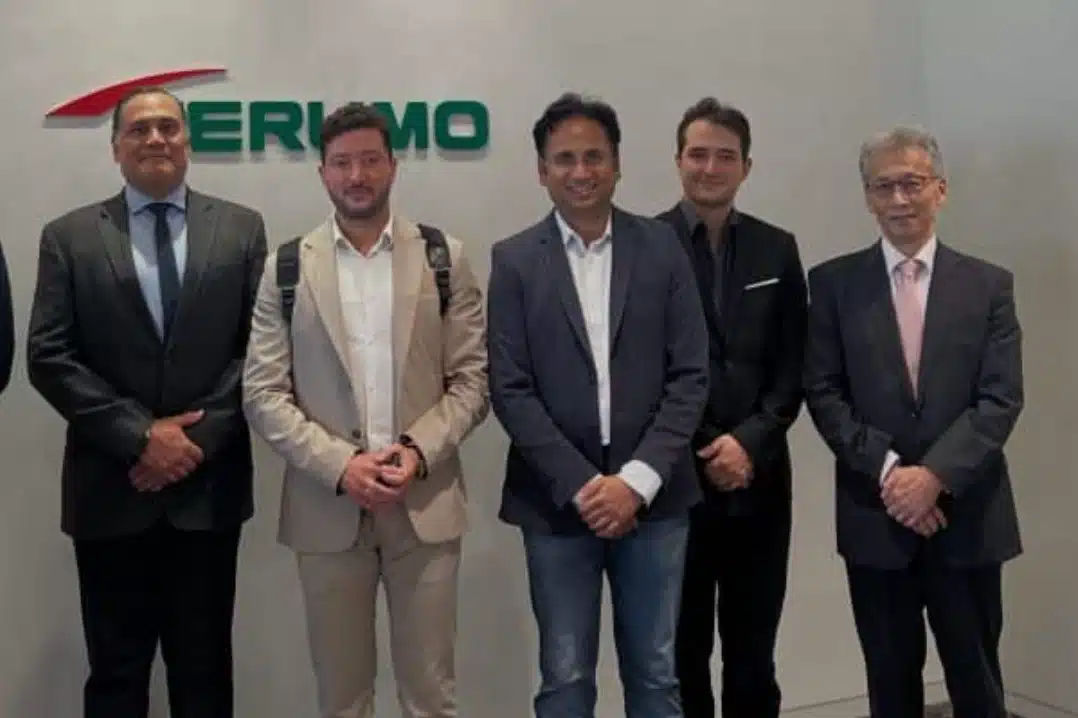
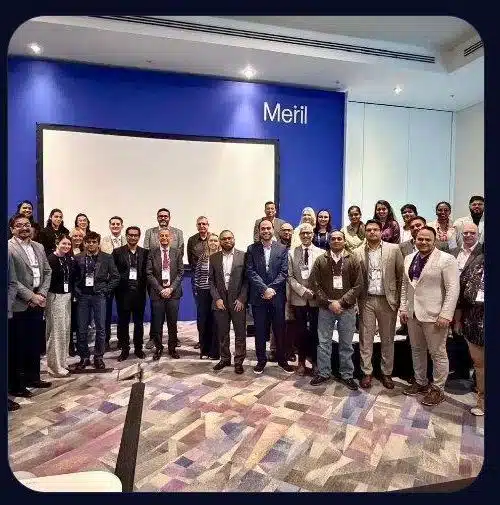
Our clinical team on site with the manufacturers who trust Eclevar to run their cardiovascular and structural heart evidence · from TAVI valves to vascular devices.
With Meril Life Sciences · TAVI clinical programWith Terumo · EU MDR vascular device strategy
Why TAVI is different
Why TAVI studies are different
TAVI has one of the most mature evidence bases among transcatheter valve technologies, and that maturity sets the bar high.
Figure 2 Three variables that shape every TAVI clinical study
A comparator evidence base exists, VARC-3 is commonly used to structure endpoint selection and adjudication in contemporary TAVI studies, and reviewers are familiar with the recurring weaknesses of TAVI programs. Three things shape every TAVI study: an elderly, comorbid population whose eligibility turns on precise CT anatomy; endpoints (paravalvular leak, new pacemaker, stroke) that are device-defining, where major safety and effectiveness endpoints often require independent adjudication; and durability claims that demand follow-up measured in years, not months. This page translates the shared structural heart challenges into concrete TAVI design decisions.
Population, comparator and endpoints all follow from the indication.
Native severe aortic stenosis
Remains the principal indication in most TAVI clinical programs; risk stratum defines the comparator (surgery vs medical management vs another valve).
Valve-in-valve
Failed surgical or transcatheter bioprostheses; distinct anatomy, sizing and hemodynamic considerations.
Risk strata
High, intermediate and lower-risk populations, each with different comparator expectations and endpoint sensitivity.
Indication expansion
Expansion toward lower-risk and younger populations, where durability and comparator expectations become more demanding; bicuspid anatomy and asymptomatic disease raise further evidence-generation questions.
Population and eligibility
Patient population and eligibility
TAVI eligibility depends heavily on CT anatomy, in addition to disease severity, surgical risk and heart-team assessment, which is why screen-failure planning built on prevalence breaks the timeline.
Figure 3 TAVI eligibility by CT
Age, frailty and surgical risk. Heart-team risk assessment defines the stratum and the comparator; frailty shapes both procedural risk and endpoint interpretation.
Anatomical suitability on CT. Annular dimensions, calcification distribution and coronary height determine valve choice and eligibility; CT screening is a central eligibility gate.
Vascular access. Iliofemoral calibre and calcification decide transfemoral vs alternative access, a driver of both eligibility and complication risk.
Comorbidities. Renal function, lung disease and competing mortality all affect enrollment and outcome interpretation.
Screen-failure reality. Anatomical exclusion drives high screen-failure; enrollment assumptions must be built on eligible anatomy, not disease prevalence.
Development pathway
Clinical development pathway
A TAVI program is a sequence, each stage with its own objective and dominant risk.
Country selection drives cardiovascular center density, device adoption, registry access, imaging readiness, follow-up reliability, contracting timelines and cost per patient.
Registry access and data governance vary by Nordic country and are assessed individually during feasibility.
Endpoints
TAVI endpoints
TAVI endpoints follow the VARC-3 framework; this section maps which ones drive a TAVI program and why, not how each is defined.
Figure 5 The six endpoint families that drive a TAVI program
This section applies VARC-3 endpoints to TAVI. The definitions and hierarchy live in the endpoint reference guide.
TAVI endpoint
Why it drives the program
Device and procedural success
Correct positioning, function and absence of procedural complications, the primary efficacy signal.
All-cause and CV mortality
Time-to-event, adjudicated; competing-risk methods for the frail population.
Conduction disturbance is TAVI-specific and valve-design-sensitive, particularly for technologies with different radial force, implantation depth or interaction with the conduction system.
Paravalvular leak (PVL)
Residual PVL remains an important safety and performance signal, with severity assessed by core-lab echocardiography.
Haemodynamics and valve performance
Gradients, effective orifice area, echo core-lab read across follow-up.
Rehospitalisation and QoL
Valve-related rehospitalisation and functional status matter in an elderly cohort.
Structural valve deterioration (SVD)
The durability endpoint, only evidenced by multi-year follow-up.
Imaging is the primary evidence of device performance
In TAVI, imaging establishes eligibility, guides sizing and measures the endpoints. Standardization is designed in before activation.
CT sizing. Annular measurement, access assessment and coronary height; the foundation of valve selection and a core-lab-standardized input.
Echocardiography. PVL grading, gradients, effective orifice area and valve function across every follow-up visit; the workhorse of TAVI evidence.
Angiography. Procedural success and acute PVL assessment.
Acquisition standards and core-lab reconciliation. Defined protocols, qualified blinded readers, imaging-transfer logistics across sites, reads reconciled against the EDC.
Independent adjudication of TAVI's defining events
A Clinical Events Committee (CEC) should be considered during CIP development when primary or major safety endpoints require independent adjudication. TAVI's defining events are adjudicated against pre-specified definitions.
Stroke. Neurological adjudication, disabling vs non-disabling, is decisive for the safety profile.
Bleeding and vascular complications. Access-related events adjudicated against standard criteria.
Valve thrombosis. Subclinical and clinical, a safety and durability-related endpoint requiring clearly defined imaging and clinical criteria.
The adjudication service is covered by SS-CARD-2; this section frames the TAVI-specific need.
Data management
Dense, multi-source data that reconciles at lock
TAVI generates dense, multi-source data that must reconcile at database lock: procedural CRFs (device, sizing, access), imaging integration and core-lab reconciliation, device accountability, concomitant medication, rehospitalisation capture, adjudication datasets, and years of longitudinal follow-up.
Independent core lab & adjudicationEvery cardiovascular imaging endpoint is read and adjudicated the same way, across European sites.
Biostatistics
A statistical strategy built with the protocol
The design choice follows the indication and comparator, built with the imaging and adjudication plans.
Design. Single-arm designs with justified objective performance criteria may be considered in selected settings, while comparator-driven indications may require randomized (often non-inferiority) designs.
Sample size. Driven by endpoint, expected event rate, margin and attrition; the anatomical screen-failure rate feeds the enrollment model.
Methods. Time-to-event and competing-risks (frail population), missing-imaging handling, pre-specified subgroups, and external or historical controls where justified.
From site echo and CT to core lab reads, DICOM pseudonymisation and endpoint adjudication, we keep a single controlled pipeline, so the same clinical event never exists in three inconsistent forms.
Operator effects
Learning curve as a design variable
TAVI is technically demanding and valve-specific, so the learning curve is a design variable, not an afterthought. Early cases may show higher complication rates while operators and centers move through the learning curve, PVL and vascular events especially, so roll-in patients, proctoring readiness, site-volume criteria and, where appropriate, CUSUM handling must be built into the protocol, or the pivotal result is confounded by operator experience rather than device performance.
Regulatory and Notified Body
Class III implantables under heightened MDR scrutiny
TAVI valves are Class III implantables under heightened MDR scrutiny, and may fall within the CECP under Article 54 depending on the applicable regulatory pathway and exemptions. TAVI-specific expectations: device-specific clinical data (literature and equivalence rarely suffice for a novel valve), durability evidence proportionate to the claim, device-generation traceability across iterating valve designs, and a CER, PMS and PMCF that tell one benefit-risk story.
Class III cardiovascular evidenceFrom TAVI and transcatheter valves to durable long-term follow-up under EU MDR 2017/745.
PMCF and registry
Durability-driven post-market strategy
TAVI PMCF is durability-driven and runs for years: prospective PMCF studies, registry-based PMCF, imaging surveillance for structural valve deterioration, reintervention tracking and long-term safety. For aortic valve devices specifically, a fit-for-purpose national registry, such as GARY in Germany, may support part of the durability-surveillance burden where it captures the relevant device, population and follow-up.
Heart Team coordination, high-volume structural heart centers, proctoring logistics and monitoring, with VARC-3 endpoints and reimbursement-grade evidence built in from the protocol onwards.
Eclevar TAVI expertise
Clinical oversight and review experience in one workflow
Cardiac clinical oversight, former Notified Body review experience, core lab, CEC, data management and biostatistics, delivered in one TAVI workflow.
Cardiovascular clinical oversight
Dr Mark Da Costa
Cardiac surgeon Former TÜV SÜD cardiovascular reviewer
TAVI delivery capabilities
VARC-3-mapped TAVI design
CT and echo core lab
Clinical Events Committee
Data management
Biostatistics
MILO EDC integration
Scientific advisory board, including Prof. Georg Nickenig. [confirm public-reference rights before go-live] TAVI delivery record: [anonymised program count / references to add]
Explore the cluster
Cardiovascular & structural heart, end to end
Related Eclevar pages across the cardiovascular and structural heart program, from clinical strategy and device evidence to core lab, PMCF and country delivery.
Get a structured read on population, CT screening strategy, endpoints, core lab, sample size and durability follow-up for your valve, grounded in what TAVI reviewers and expert panels expect.