
Client: RegenLab
Multicountry prospective PMCF in wound care
A two-cohort program in chronic wounds, run across European sites under one protocol and one data model.
160
participants
14
sites
5
European countries
Registry feasibility
Historical records can answer a post-market question, but only some of them, and only for some endpoints. A short feasibility test on sampled records tells you which before you pay for full abstraction.
Feasibility at a glance
The decision
Can existing records answer the defined question?
The test
Device, endpoint and follow-up checked on a sample of records.
The deliverable
Site-level yield, data risks and a recommended design.
Aggregate information is enough for a first discussion.
The record
Define the decision first. Then specify the device, indication, population, index date, endpoint, follow-up and baseline. A procedure code is often too broad for a revision endpoint, so implant logs or procurement records may be needed.
Find the most dependable source for the exact model or version. Billing codes rarely carry it.
Define the event, its date and its source. Record the cases where the outcome cannot be determined.
Confirm how long each patient can be observed, and where care at another hospital would be missed.
Use a dated, reproducible source population and document why each record is included or excluded.
The pilot
A pilot costs days. Discovering the same gaps after full abstraction costs the study.
Each site lists its record systems, the years covered, access rules, staffing and retrieval time per record.
Sampling, abstraction instructions and discrepancy resolution are written before anyone opens a chart.
Cover different years, operators and device versions. A sample of complete notes overstates the yield.
Each exclusion reason, the abstraction time and each open query are recorded, because they become the budget.
The yield
Yield is the number of records that meet every critical requirement, divided by the records screened. Keep the denominator and the order of exclusions. Differences between sites or periods often matter more than the pooled figure.
Illustrative single-site example: 28 of 60 records usable, a yield of 46.7%. These are not client data.
The decision
The feasibility report should say what would change the decision. Responses to a missing identifier, an unrecorded outcome or a follow-up gap are agreed early.
| Finding | Study decision |
|---|---|
| Model, outcome and follow-up are traceable across sites | Proceed with the retrospective design. Specify the analysis population, the site selection and the repeat checks. |
| A model identifier was added partway through the period | Restrict the date range or validate a link to implant logs, then estimate yield and case mix again. |
| Records identify the device but lack baseline symptom scores | Use the records for a device or revision analysis. If change from baseline is required, enroll a prospective cohort. |
| A critical event happens outside the record system | Test a permitted linkage or another source. Otherwise revise the endpoint or choose another route. |
Deliverables
Four documents, written so that a clinical, regulatory or finance reader can each find the answer to their question.
Yield, data risks and retrieval effort for each site, not a pooled average.
Which system holds which variable, for which years, and who can access it.
Records screened, excluded and retained, with the reason at each step.
Costs split by activity, with the assumptions shown where retrieval time or yield varies.
The evidence gap is named first, and the sources, endpoints and follow-up are justified against it in the PMCF plan. Ethics, data protection and governance are settled before records are accessed. The PMCF evaluation report then states what the data support and what limits them. For use in the United States, the dataset is assessed against FDA real-world evidence guidance. Related: registry-based PMCF and registry site feasibility.
Track record
Of the 56 studies Eclevar has delivered, 21 are PMCF studies and registries. The method on this page comes from that work.
56
Studies delivered
As of November 2026
By study phase
Studies by country
A study running in several countries is counted once in each country.
400+
Devices assessed by former notified body reviewers now in Eclevar leadership
9
Clinical monitors (CRAs)
4
Project managers
3
Medical writers
3
Data management and biostatistics
2
Quality assurance
Clients
Manufacturers of implants, wound care products, monitoring systems and dental devices use Eclevar for clinical investigations, PMCF and registries. More in our client success stories.







Client: RegenLab
A two-cohort program in chronic wounds, run across European sites under one protocol and one data model.
160
participants
14
sites
5
European countries
Client: Perouse Medical, Vygon Group
Eclevar structured the program architecture and supports delivery. Intended evidence use: clinical evaluation and PMCF.
6
registered observational studies
3
device families
1,150+
subjects
5 years
follow-up
Team
A small senior team, with European delivery and U.S. clinical consultants for sponsors who plan evidence on both sides of the Atlantic.

Founder and CEO
Sets the evidence strategy with the sponsor and stays accountable for delivery from first scoping call to final report.

U.S. Clinical Consultant
Former clinical lead for final labeling on Medtronic’s Hugo robotic-assisted surgery launch team, where he helped design surgeon training and proctoring and started a clinical registry for the platform.
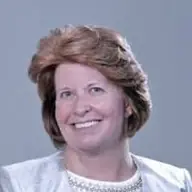
U.S. Clinical and Regulatory Consultant
Provides strategic input on U.S. medical-device clinical operations, regulatory considerations and real-world evidence programs.

Business Development Lead
Your first point of contact for scoping, budget scenarios and proposals.
Eclevar leadership includes former notified body reviewers; the full team is on the leadership page. Platinum Award · CVBF & MILO Health, xShare / EUCROF EHDS & Clinical Research Open Call. The award recognizes the submitted data use case and is not an evaluation of CRO services.
Questions
Yes, when the records identify the device, capture the endpoint and cover the follow-up period the evidence question requires. The PMCF plan should justify the sources and state the limits of the data before records are accessed.
Large enough to cover different years, operators and device versions at each candidate site. The purpose is to estimate yield and abstraction time and to find the reasons records fail, not to estimate a clinical result.
It varies widely between sites and periods, which is why it is measured and not assumed. In practice a meaningful share of screened records fails on device identification, endpoint documentation or follow-up.
Then the feasibility has done its job. The usual options are a restricted date range, a validated linkage to another source, a revised endpoint, or a prospective or hybrid design.
Next step
Share the device, the endpoint, the follow-up you need, the candidate sites, the years covered and approximate record counts. Tell us the decision the data must support and when.
We aim to respond within one business day. A confidentiality agreement can be signed before you share any document.