
Client: RegenLab
Multicountry prospective PMCF in wound care
A two-cohort program in chronic wounds, run across European sites under one protocol and one data model.
160
participants
14
sites
5
European countries
US sponsor guide
A 24-participant feasibility study and a 160-participant pivotal study need different budgets. In these worked examples, the listed sponsor-funded activities total $230,820 and $1,373,400. Every unit rate is hypothetical and can be replaced with a site or vendor quote.
Study assumptions
Early feasibility
24 participants at two US sites.
Pivotal study
160 participants at eight US sites.
What moves the budget
Screen failures, follow-up visits and time.
US dollars at hypothetical unit rates.
Assumptions
Both examples model a sponsor-funded research budget in US dollars. Every unit price is hypothetical. The examples assume simultaneous site activation, completed follow-up for every enrolled participant and no replacement participants. Obtain written site and vendor rates for your own protocol.
| Planning input | Early feasibility example | Pivotal example |
|---|---|---|
| Sites and enrolled participants | 2 sites, 24 participants | 8 sites, 160 participants |
| Screened population | 30 screened, including 6 who do not enroll | 200 screened, including 40 who do not enroll |
| Enrollment rate once all sites are open | 3 participants per site per month for 4 months | 2 participants per site per month for 10 months |
| Follow-up after enrollment | 2 study visits, at 1 and 6 months | 3 study visits, at 1, 6 and 12 months |
| On-site monitoring | 3 visits per site | 5 visits per site |
Duration. Feasibility example: 2 months of preparation, 4 months of enrollment, 6 months from last enrollment to last follow-up and 2 months to close make 14 months. Pivotal example: 3, 10, 12 and 2 months respectively, or 27 months in total.
Worked budgets
Fixed work includes preparing study documents and regulatory submissions, building the database, analysis and reporting. Ongoing oversight covers project management, routine central data review and safety coordination. On-site monitoring, travel and the data-platform license have their own lines.
| Budget line | Early feasibility calculation | Pivotal calculation |
|---|---|---|
| Fixed study work | Protocol, submissions, database build, analysis and report, $52,000 | Protocol, submissions, database build, analysis and report, $125,000 |
| Ongoing project, data and safety oversight | 14 months × $3,000 = $42,000 | 27 months × $8,000 = $216,000 |
| Site start-up and closeout | 2 sites × ($8,000 + $2,000) = $20,000 | 8 sites × ($10,000 + $2,500) = $100,000 |
| Enrollment and baseline research work | 24 participants × $2,500 = $60,000 | 160 participants × $3,200 = $512,000 |
| Planned follow-up visits | 24 participants × 2 visits × $450 = $21,600 | 160 participants × 3 visits × $450 = $216,000 |
| Screen failures paid by sponsor | 6 additional screens × $350 = $2,100 | 40 additional screens × $350 = $14,000 |
| On-site monitoring labor | 2 sites × 3 visits × $1,800 = $10,800 | 8 sites × 5 visits × $1,800 = $72,000 |
| Central assessment vendor | 24 participants × $280 = $6,720 | 160 participants × $300 = $48,000 |
| Electronic data capture license | 14 months × $500 = $7,000 | 27 months × $1,200 = $32,400 |
| Monitoring travel expenses | 6 visits × $600 = $3,600 | 40 visits × $600 = $24,000 |
| Ethics review fees and shipping allowance | One allowance, $5,000 | One allowance, $14,000 |
| Total for the listed research activities | $230,820 | $1,373,400 |
The baseline site grant covers research screening and enrollment work for participants who enroll. The smaller screen-failure payment covers only people who screen but do not enroll. The participant’s procedure and device manufacturing are outside the example.
Sensitivity
Change one assumption at a time. These increments apply to the lines shown and hold all other quantities constant. Request separate prices for any extra monitoring visit, imaging read or site overhead triggered by the same change.
| Change | Early feasibility example | Pivotal example |
|---|---|---|
| One extra visit for every enrolled participant | 24 × $450 adds $10,800 | 160 × $450 adds $72,000 |
| Additional screen failures | One adds $350. Ten add $3,500. | One adds $350. Ten add $3,500. |
| Slower enrollment, same number of participants | At 2 per site per month, recruitment takes 6 months. Two extra months × ($3,000 oversight + $500 license) adds $7,000. | At 1.6 per site per month, recruitment takes 12.5 months. Budgeting 13 whole months adds 3 × ($8,000 oversight + $1,200 license), or $27,600. |
Site billing
Prepare a coverage grid with the site’s billing team before signing. For each procedure or visit, record who pays, what the site will invoice, the contractual rate and any institutional overhead. Identify repeat procedures, unscheduled visits, participant expenses and device supply or replacement.
Coverage depends on the study and the applicable coverage conditions. CMS approval for a Category A IDE study can allow coverage of qualifying routine care; the Category A device itself is excluded. For a CMS-approved Category B IDE study, the device and qualifying routine care may be covered. The example budgets assume no Medicare offset.
Add allowances where applicable for insurance, site overhead beyond quoted rates, taxes, device manufacture, participant travel, specialist committees and any procedure funded by the sponsor. The totals above cover only the listed research activities.
Source: CMS coverage of investigational device exemption studies.
Track record
These are Eclevar’s delivered studies to date, most of them in Europe. For U.S. studies the team works with the U.S. clinical consultants shown below.
56
Studies delivered
As of November 2026
By study phase
Studies by country
A study running in several countries is counted once in each country.
400+
Devices assessed by former notified body reviewers now in Eclevar leadership
9
Clinical monitors (CRAs)
4
Project managers
3
Medical writers
3
Data management and biostatistics
2
Quality assurance
Clients
Manufacturers of implants, wound care products, monitoring systems and dental devices use Eclevar for clinical investigations, PMCF and registries. More in our client success stories.







Client: RegenLab
A two-cohort program in chronic wounds, run across European sites under one protocol and one data model.
160
participants
14
sites
5
European countries
Client: Perouse Medical, Vygon Group
Eclevar structured the program architecture and supports delivery. Intended evidence use: clinical evaluation and PMCF.
6
registered observational studies
3
device families
1,150+
subjects
5 years
follow-up
Team
A small senior team, with European delivery and U.S. clinical consultants for sponsors who plan evidence on both sides of the Atlantic.

Founder and CEO
Sets the evidence strategy with the sponsor and stays accountable for delivery from first scoping call to final report.
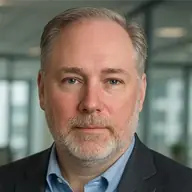
U.S. Clinical Consultant
Former clinical lead for final labeling on Medtronic’s Hugo robotic-assisted surgery launch team, where he helped design surgeon training and proctoring and started a clinical registry for the platform.
U.S. Clinical and Regulatory Consultant
Provides strategic input on U.S. medical-device clinical operations, regulatory considerations and real-world evidence programs.
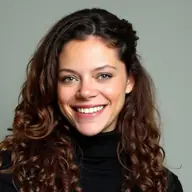
Business Development Lead
Your first point of contact for scoping, budget scenarios and proposals.
Eclevar leadership includes former notified body reviewers; the full team is on the leadership page. Platinum Award · CVBF & MILO Health, xShare / EUCROF EHDS & Clinical Research Open Call. The award recognizes the submitted data use case and is not an evaluation of CRO services.
Questions
It depends on the number of sites and participants, the follow-up schedule, monitoring and the study duration. In the two worked examples on this page, which use hypothetical unit rates, the listed sponsor-funded research activities total $230,820 for a 24-participant feasibility study and $1,373,400 for a 160-participant pivotal study.
The participant's procedure, device manufacturing, insurance, site overhead beyond quoted rates, taxes, participant travel, specialist committees and any procedure funded by the sponsor. The examples also assume no Medicare offset.
Time-based lines grow. In the feasibility example, two extra months of recruitment add $7,000 of oversight and license cost. In the pivotal example, three extra months add $27,600.
Ask each bidder to price the same quantities, and to say which lines change if an extra site opens or enrollment runs late. A budget you can recalculate is more useful than a single total.
Next step
Send the schedule of assessments, device description, target population, endpoints, planned sites, enrollment assumptions and next funding or regulatory milestone. Then plan the first US site opening.
We aim to respond within one business day. A confidentiality agreement can be signed before you share any document.