Wound care · U.S. market

FDA clinical evidence for wound care devices

Clinical studies, real-world evidence and analyses for wound dressings, skin substitutes and other wound care products going to the U.S. market. The pathway sets how much clinical data FDA expects; we design and run the studies that supply it. The regulatory strategy and the submission stay with you or your regulatory consultant.

Three questions that set the U.S. evidence

Which pathway applies?

510(k), De Novo, PMA, or regulation as a tissue product or biologic, depending on what the product is and claims.

What does the label claim?

Covering and protecting a wound needs far less clinical data than a claim to heal it faster.

What data exists already?

Bench and biocompatibility data, European clinical data, U.S. records or published studies.

We map the evidence gap before any study is designed.

Work aligned withFDA wound guidance (2006)FDA real-world evidence guidance (2025)21 CFR 812ISO 14155:202621 CFR Part 11

U.S. pathways

The pathway decides how much clinical data FDA expects

Wound care products reach the U.S. market through several routes. FDA does not use "skin substitute" as a regulatory category; each product is regulated according to what it is and what it claims.

Product typeUsual U.S. pathwayWhat it means for clinical data
Conventional dressings that cover and protect wounds510(k) premarket notificationOften bench, biocompatibility and labeling data; clinical data when the claims or technology go beyond the predicate.
Novel dressings without a suitable predicateDe Novo requestClinical data are frequently needed to show that the benefits outweigh the risks of the new device type.
Cellular or bioengineered skin substitutesPremarket approval or a Biologics License ApplicationControlled clinical trials against standard care, usually in diabetic foot or venous leg ulcers.
Human tissue products that meet the Section 361 criteriaRegulated as HCT/Ps under Section 361 of the PHS Act, without premarket reviewNo premarket clinical data required by FDA, although payers increasingly ask for comparative evidence.
Acellular matrices of animal or synthetic originOften 510(k)Clinical data depend on the predicate and on the indications claimed.
Dressings that contain antimicrobials510(k) today; a rule proposed in 2023 would classify them by antimicrobial resistance concernIf finalized, dressings with medically important antimicrobials would move to Class III and need premarket approval.

The pathway and the submission strategy are decided by you and your regulatory team, ideally with FDA feedback through a Pre-Submission. ECLEVAR designs the clinical evidence for the pathway you choose.

What we do

Three ways we generate U.S. evidence

Most wound programs combine them. The choice depends on the claim and on the data that already exist.

Clinical studies in the U.S. and Europe

Studies and randomized trials designed around FDA wound endpoints, with U.S. sites, European sites or both, under the IDE requirements that apply.

Real-world evidence

Retrospective studies on U.S. wound records, planned against FDA's 2025 guidance on real-world evidence for devices.

Analysis of existing data

European clinical data, registry data and published studies, reanalyzed for the U.S. claim and population.

FDA expectations

What FDA expects from wound studies

FDA's guidance on chronic cutaneous ulcers and burns sets out how wound trials should be designed. Its main points still shape what reviewers ask for.

Endpoints that match the claim

Incidence of complete wound closure for a healing claim, time to closure for an accelerated healing claim, and a design able to detect both when both are claimed.

Standard of care applied the same way

Debridement, offloading or compression, moisture balance and infection management applied consistently in all arms.

Defined populations

Wound type, size, duration and severity at entry, so that results apply to the patients on the label.

Blinded or independent assessment

Closure judged by assessors unaware of treatment, or from standardized photographs.

Durable closure

Closure confirmed at a later visit, not a single observation.

Common pitfalls

Where U.S. wound programs lose time

These problems usually surface at review, when they are most expensive to fix.

Claims chosen after the data

A label claim that the study was not designed to support, discovered at submission.

European data without a bridge

Studies run under a different standard of care or population, with no analysis of applicability to U.S. patients.

Standard care left to each site

Offloading or compression that varies across sites and hides the effect of the product.

Studies too small to convince

Too few wounds or centers to show an effect that holds across practice settings.

No FDA feedback before the study

A protocol finalized without a Pre-Submission, then challenged at review.

Real-world data that cannot be traced

Records without the provenance and quality documentation that FDA's real-world evidence guidance describes.

Go deeper

Wound care FDA topics

Each page covers one decision in detail.

510(k)

Wound dressing 510(k) clinical data

When a dressing 510(k) needs clinical data, and how to generate it efficiently. Read more

PMA and BLA

Skin substitute clinical trials

Randomized trials in diabetic foot and venous leg ulcers for cellular and tissue-based products. Read more

Endpoints

FDA wound healing endpoints

Complete closure, time to closure and the other endpoints FDA describes, and how to measure them. Read more

Real-world evidence

U.S. retrospective wound care studies

Retrospective studies on U.S. wound records for clinical and payer questions. Read more

Track record

The numbers behind the method

Of the 56 studies ECLEVAR has delivered, 21 are PMCF studies and registries. The methods on this page come from that work.

56

Studies delivered

As of November 2026

By study phase

Studies by country

France18
Germany12
United Kingdom10
Italy8
Spain6
Nordic market3
Ireland2
Other5

A study running in several countries is counted once in each country.

400+

Devices assessed by former notified body reviewers now in ECLEVAR leadership

9

Clinical monitors (CRAs)

4

Project managers

3

Medical writers

3

Data management and biostatistics

2

Quality assurance

Clients

Medical device manufacturers we work with

Manufacturers of wound care products, implants, monitoring systems and dental devices use ECLEVAR for clinical investigations, PMCF and registries. More in our client success stories.

Client: RegenLab

Multicountry prospective PMCF in wound care

A two-cohort program in chronic wounds, diabetic foot ulcers and venous leg ulcers, run across European sites under one protocol and one data model.

160

participants

14

sites

5

European countries

Client: Perouse Medical, Vygon Group

Six registered observational studies across a vascular portfolio

ECLEVAR structured the program architecture and supports delivery. Intended evidence use: clinical evaluation and PMCF.

6

registered observational studies

3

device families

1,150+

subjects

5 years

follow-up

Team

The people behind your U.S. wound evidence

U.S. and European clinical experience, with data management and statistics in the same team. The regulatory strategy and the FDA submission stay with you or your regulatory consultant.

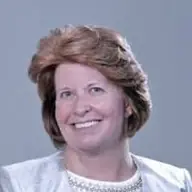
Portrait of Dawn Heimer

Dawn Heimer, PhD

U.S. Clinical and Regulatory Consultant

Her experience includes planning and executing approximately 15 FDA Pre-Submission and Q-Submission interactions and managing an Early Feasibility Study over the past three years. She contributes to ECLEVAR programs when included in the contracted advisory scope.

Portrait of Sébastien Meier Piantanida

Sébastien Meier Piantanida

Head of Data Management and Biostatistics

Data architecture, EDC and ePRO configuration, imaging and measurement data quality control, statistical analysis of healing trajectories.

Portrait of Chems Hachani

Chems Hachani

Founder and CEO

Sets the evidence strategy with the sponsor and stays accountable for delivery from first scoping call to final report.

Portrait of Karina Schönborn

Karina Schönborn

Business Development Lead

Your first point of contact for scoping, budget scenarios and proposals.

ECLEVAR leadership includes former notified body reviewers; the full team is on the leadership page. Platinum Award · CVBF & MILO Health, xShare / EUCROF EHDS & Clinical Research Open Call. The award recognizes the submitted data use case and is not an evaluation of CRO services.

Questions

What sponsors ask before they start

Does ECLEVAR prepare the FDA submission?

ECLEVAR's role is the clinical evidence: designing and running studies and analyses, and preparing the study reports. The regulatory strategy and the submission are led by you or your regulatory consultant.

Can European clinical data support a U.S. wound submission?

It can, when the population, standard of care and endpoints are applicable to U.S. patients and the study followed good clinical practice. FDA may still ask for U.S. data, and a Pre-Submission is the place to test this before a study is planned.

Can real-world evidence replace a clinical trial for a wound device?

Sometimes, for some questions. FDA's 2025 guidance describes how real-world data are assessed for relevance and reliability. For a new healing claim, a controlled trial is still the usual route; real-world evidence is more often used for label expansions, post-market questions and payer evidence.

Do skin substitutes regulated as 361 HCT/Ps need clinical trials?

Not for FDA, if the product meets all the Section 361 criteria. Payers are a different matter: coverage decisions increasingly rely on comparative clinical evidence. A product that does not meet the criteria needs premarket approval or a biologics license, with clinical trials.

Where can the studies run?

In the United States, in Europe, or both. Running part of a study in Europe can speed enrollment when the protocol, standard of care and endpoints stay consistent with what FDA expects.


Next step

Tell us the claim you need to support in the U.S.

Send the product, the intended claim and the data you already have. We will tell you which evidence gap matters most and how we would close it.

We aim to respond within one business day. A confidentiality agreement can be signed before you share any document.

Share the claim and the data

Product, intended claim, the pathway under consideration and existing studies.

Evidence gap review

What the existing data support, and what the pathway still needs.

Study or analysis plan

Design, sites or data source, and a scope you can take to FDA in a Pre-Submission.