
Sécurité et performances précoces
- Évaluation des ions métalliques
- Imagerie et RSA
- Fonction de la hanche et PROM
- Sécurité et défaillances du dispositif
Orthopaedics, spine and surgical robotics \'b7 Europe
Eclevar réunit stratégie clinique, déploiement européen des centres, imagerie, biométrie et rédaction médicale au sein d’un programme unique et coordonné, de la première investigation chez l’humain jusqu’au PMCF et à l’intégration au CER.

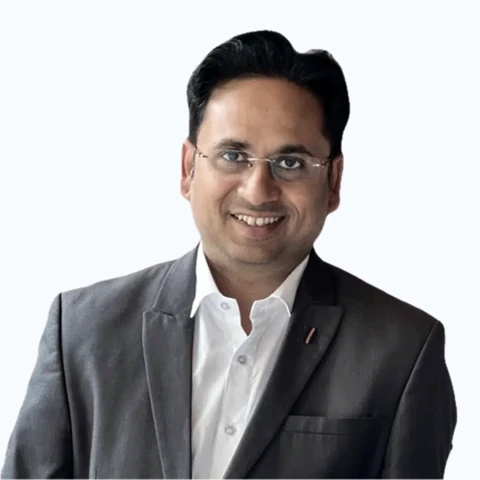
Leadership scientifique
Dr Nikhil Khadabadi
Directeur médical et responsable de l’orthopédie et du rachis
Responsable scientifique et clinique des programmes d’Eclevar en orthopédie, rachis et robotique chirurgicale.
Domaines thérapeutiques
Chaque domaine possède ses propres critères d’évaluation, profils de centres et contraintes d’exécution en Europe. Sélectionnez un domaine pour découvrir comment le programme est construit autour de celui-ci.
Selected orthopaedic programme \'b7 Hip resurfacing

JRI Orthopaedics
Programme d’investigation clinique sur un resurfaçage de hanche en céramique
Pre-market clinical investigation \'b7 In progress
Eclevar a contribué à la stratégie d’investigation clinique, au synopsis et à l’architecture des critères d’évaluation, à la planification du suivi à long terme, à l’intégration des résultats rapportés par les patients, à la collecte numérique des données et à la méthodologie statistique d’un programme clinique pré-commercialisation en deux parties.
Le programme associe une évaluation précoce de la sécurité et des performances à une évaluation à long terme de la survie de l’implant, de la fonction de la hanche, des résultats d’imagerie et des événements de révision.


Architecture d’investigation clinique en deux parties
Quatre domaines de preuve
Données cliniques soutenant l’évaluation clinique selon le MDR européen et le PMCF
Programme en deux parties
Données cliniques précoces et à long terme
Suivi à long terme
Survie, imagerie et résultats fonctionnels
Données intégrées
PROM, imagerie, sécurité et méthodologie statistique
Construire un programme de preuves cliniques en deux parties couvrant la sécurité et les performances précoces, puis la survie à long terme de l’implant, les résultats fonctionnels et l’évaluation radiographique.
Collecte numérique des données Milo
Milo accompagne les participants dans la complétion de l’Oxford Hip Score, de l’EQ-5D-5L et du score d’activité UCLA dans le cadre du suivi clinique.
Pre-market clinical investigation in progress. The device is developed and owned by JRI Orthopaedics. Eclevar contributed to clinical evidence architecture, follow-up planning and statistical methodology, and did not sponsor the investigation, recruit participants or conduct all study operations. Planned assessments are described as designed, not as completed. No clinical outcome, non-inferiority conclusion or regulatory decision is claimed. Participating institutions and planned cohort sizes are withheld.
Parcours du programme
Quatre étapes, chacune avec un livrable défini et des fonctions intégrées responsables de son exécution. Les étapes peuvent être réalisées séparément ou comme un programme continu.
Les données existantes sont évaluées au regard des exigences du MDR européen, et les pays et centres candidats sont analysés selon le protocole.
LivrablePlan d’analyse des lacunes de preuve et de faisabilité européenne
Les objectifs, critères d’évaluation, calendrier des visites et analyses sont conçus conjointement afin que les données répondent à la question réglementaire.
LivrableSynopsis, protocole, critères d’évaluation et architecture statistique
Les centres sont contractualisés, activés et monitorés par une seule équipe d’opérations cliniques, avec une gouvernance des données dès leur première saisie.
LivrableCentres activés, monitoring et données cliniques sous gouvernance
L’analyse, le reporting et l’intégration des preuves sont conçus pour anticiper les questions soulevées lors de l’évaluation de conformité.
LivrableAnalyse, rapport d’investigation clinique, livrables PMCF et intégration au CER
Robotique chirurgicale
Accuracy alone does not demonstrate clinical benefit. Robotic systems need evidence that connects technical performance with patient outcomes, the surgical team and the software the system runs.
First-in-human planning, controlled expansion and user-training readiness.
Learning curves, use errors, workflow interruptions and system interaction.
Version traceability, algorithm changes, technical and clinical endpoints and PMCF.
Découvrir les programmes cliniques en robotique chirurgicale
The full five-domain methodology, including staged enrolment, endpoint frameworks and version traceability, sits on the surgical robotics pillar page.
Exécution européenne
Each market is assessed against orthopaedic centre access, surgical volume, imaging capability, regulatory route and contracting time. Select a market to see how Eclevar delivers there.
Eclevar operating entity
In-house clinical delivery
Eclevar operating entity
In-house clinical delivery
In-house clinical delivery
In-house clinical delivery
Coverage indicates Eclevar's operating model and delivery access. Centre availability, registry access and data-governance requirements are assessed for each programme during feasibility.
Scientific and clinical leadership
Stratégie scientifique, clinical operations, programme delivery, biometrics and medical writing are led by named owners working within one integrated programme team.
Scientific and clinical lead
Directeur médical et responsable de l’orthopédie et du rachis
Dr Khadabadi leads clinical strategy, endpoint architecture and scientific decision-making across Eclevar's orthopaedic, spine and surgical robotics programmes. His role connects the surgical context of the device with the clinical and regulatory evidence required across its lifecycle.
Programme accountability
Programme sélectionné involvementLeadership scientifique for the ceramic hip resurfacing clinical investigation programme.
Nikhil on LinkedIn
Head of Clinical Operations, DACH region
Accountable for feasibility, centre selection, activation, monitoring and DACH clinical delivery.
Leads the DACH operational route
Susanne on LinkedIn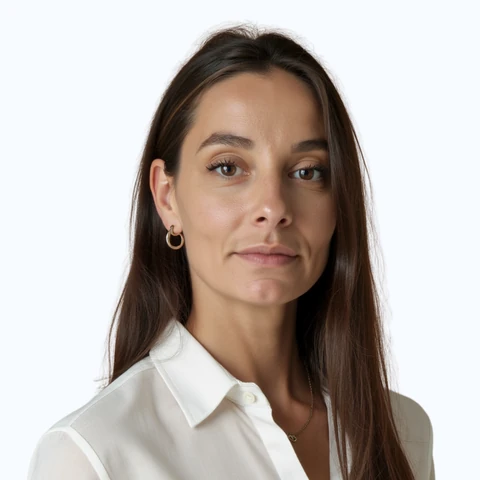
Project Delivery Lead, France and United Kingdom
Accountable for European programme mobilisation, delivery, governance and close-out.
Delivery lead on European multicentre programmes
Charline on LinkedIn
Head of Data Management and Biostatistics
Accountable for biometrics, EDC, statistical methodology, data governance and inspection readiness.
Statistical methodology on the selected hip resurfacing programme
S\'e9bastien on LinkedIn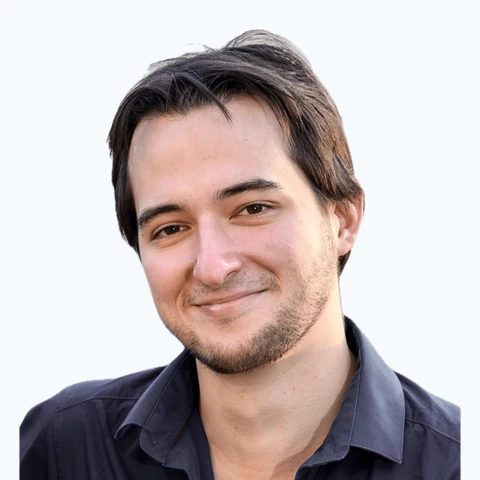
Head of Medical Writing
Accountable for clinical investigation reporting, PMCF outputs, CER integration and responses to clinical evidence questions.
CER and PMCF integration across implant programmes
Pierre-Marie on LinkedInOne accountable programme team
Programmes delivered in accordance with applicable requirements under Regulation (EU) 2017/745 and ISO 14155:2026.
Ressources et FAQ
A practical reading of clinical evidence expectations under Regulation (EU) 2017/745, written with the Notified Body BSI.
Broader study-delivery capability: Eclevar manages RegenLab's randomised PMCF programme on chronic wound devices across five EU countries, evidence of European study delivery rather than orthopaedic expertise.
Class III and implantable devices generally require clinical investigations under Article 61 of Regulation (EU) 2017/745, unless a specific exemption such as demonstrated equivalence applies. The decision depends on the device, its claims and the existing clinical evidence, which is why programmes start with an evidence-gap analysis.
Proportionately to the device risk and the residual evidence questions. For implants this usually combines validated PROMs, imaging review where indicated, and follow-up horizons that reflect implant survivorship, using surveys, observational studies or registry-based designs aligned with MDCG 2020-7.
Accuracy is a technical performance measure, not a clinical benefit. Robotic systems usually also need evidence on patient outcomes, workflow effects, training and learning curves, human factors and behaviour across software versions, selected according to the system's claims and risk profile.
Each procedure is linked to the software and algorithm version in use, and version changes are documented and assessed for their impact on the investigation. This keeps the dataset interpretable and supports evidence arguments when the system evolves after the study.
A registry can be sufficient when its population, data quality and follow-up answer the specific evidence question. A sponsor-led study is usually needed when endpoints, imaging, comparators or data completeness go beyond what the registry captures. The decision is made in the evidence-gap analysis.
Feasibility assesses surgical volume in the relevant procedure, imaging capability, research infrastructure and, for robotics studies, access to and experience with the system under investigation. Centres are proposed with a documented rationale before activation.
Related pages
Radiostereometric analysis and centralised imaging review for arthroplasty programmes.
CER writing and updates for implantable devices under EU MDR.
Post-market clinical follow-up plans, studies and evaluation reports.
Country, centre and investigator selection before the protocol is fixed.
Start the conversation
Share your device type, development stage and target markets. Eclevar's clinical team will identify the principal clinical, operational, data and regulatory workstreams for an initial discussion.
Discuss your orthopaedic or spine programme
Tell us the device type, the indication, your development or certification stage and the evidence question you need answered.